
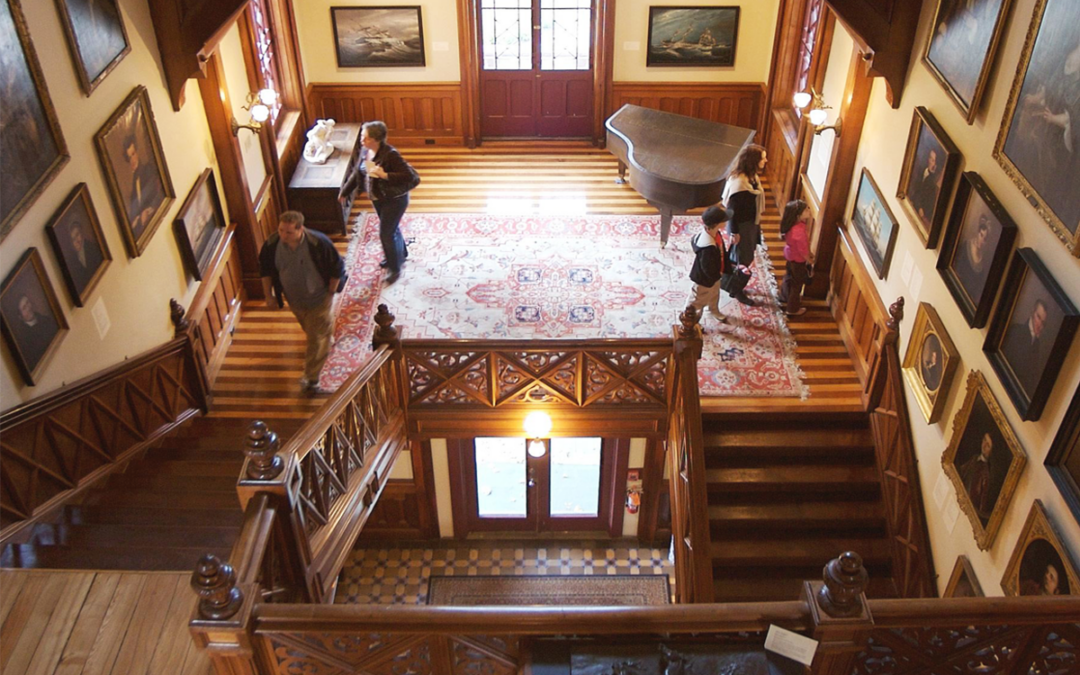
Richard Morris Hunt (1827–1895) is one of the most noteworthy architects of the last half of the 19th Century. One of his important contributions was transforming American architecture from a simple stacking of plans into a more three-dimensional synthesis of horizontal and vertical spaces. One of the things that allowed this to occur was his sophisticated design of formal staircases and double (and even triple) height spaces that were much more than just simple architectural devices allowing people to move from one level to another.
Hunt is notable for being the first American-born graduate of the École des Beaux-Arts. He absorbed the sophistication of European public architecture and, as a result, Hunt helped transformed vertical circulation into something altogether grander across the many landmark buildings of his career. In these buildings, he was demonstrating (in wood, marble, and stone) that the staircase was simultaneously a decorative centerpiece, a theatrical stage, and the definitive boundary between a house’s public grandeur and its private life.
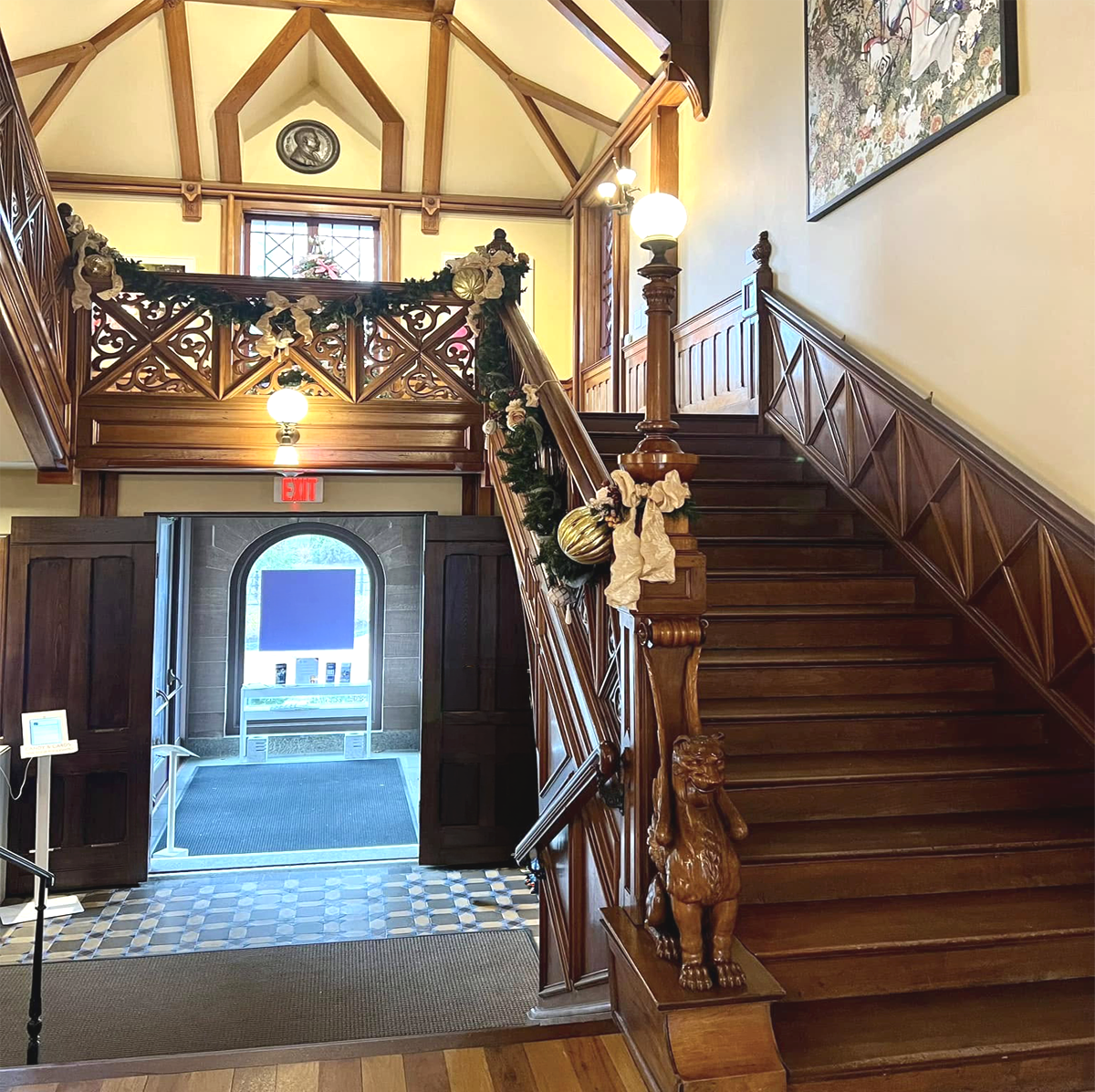
JNA Griswold House, Hunt, Newport
At the earliest of Hunt’s Newport commissions, the JNA Griswold House (1864), the staircase announces his intentions even in a relatively modest Stick-style cottage. The main feature of the stair hall is a broad double-dog-leg stair, with the exterior theme of applied timber carried inside through exposed wooden trusses under the balconies, paneled beams, and stringers. A carved griffin statue stands guard at its base clearly dividing the public from the private. Even here, the stair is a decorated portal — its guardian figure presiding over the boundary between the public realm and the more intimate rooms above. The large landing serves the role of an elevated stage from which the owners could easily command the attention of all their guests.
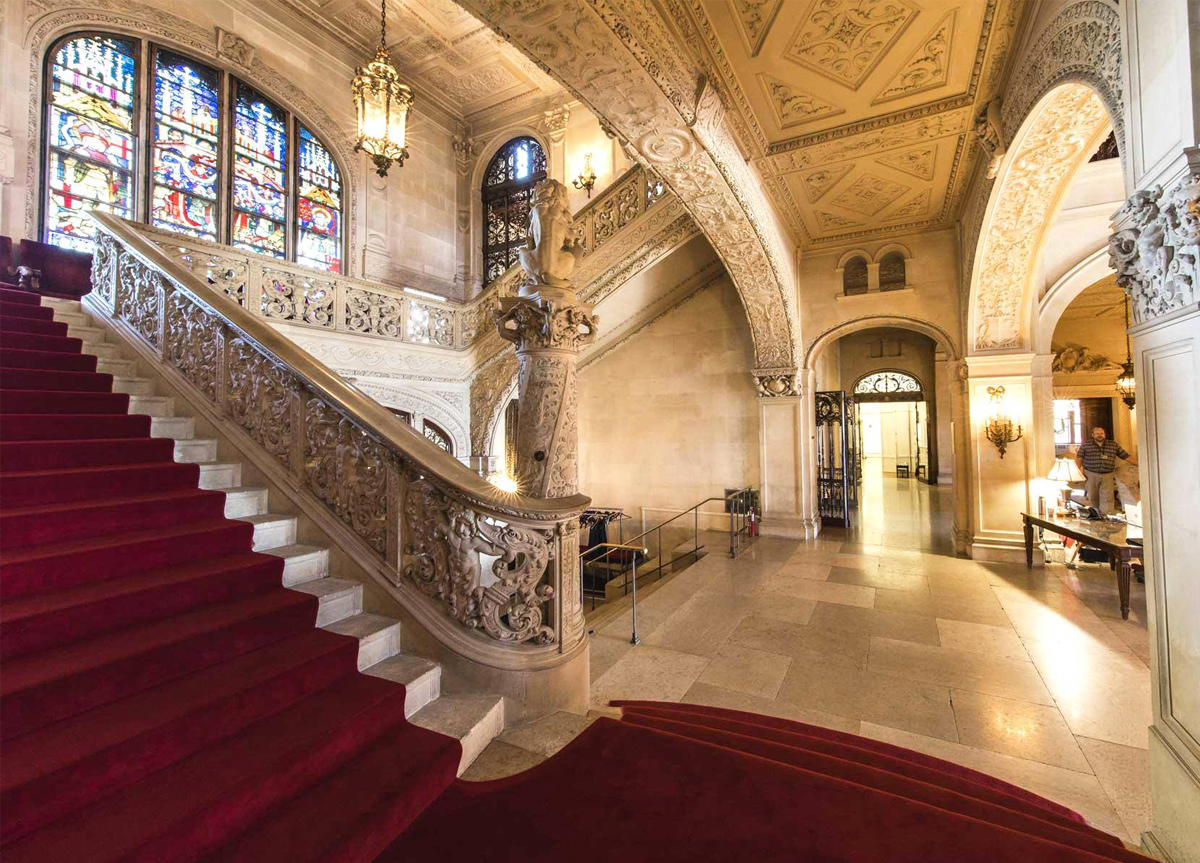
Ochre Court Grand Stair, Hunt, Newport
At Ochre Court (1892), designed and built for banker Ogden Goelet, Hunt elevated his staircase design to palatial scale. The entire building is organized around a three-story atrium with an elaborate arcade surrounding it and an extraordinary trompe l’oeil mural painted on the ceiling in the Renaissance fashion. The Grand Staircase, an architectural tour de force with elaborately carved balustrades and dramatic proportions, rises within a Great Hall, creating a breathtaking first impression for guests arriving for the Goelets’ legendary summer parties. Guests ascended to the ballroom were, by design, ascending into spectacle itself. Similar to his earlier designs, the stair landing (framed from behind by an antique European stained glass window integrated in the design) serves as the perfect background for establishing a setting of honor for the owner to address and descend to level of the ballroom.
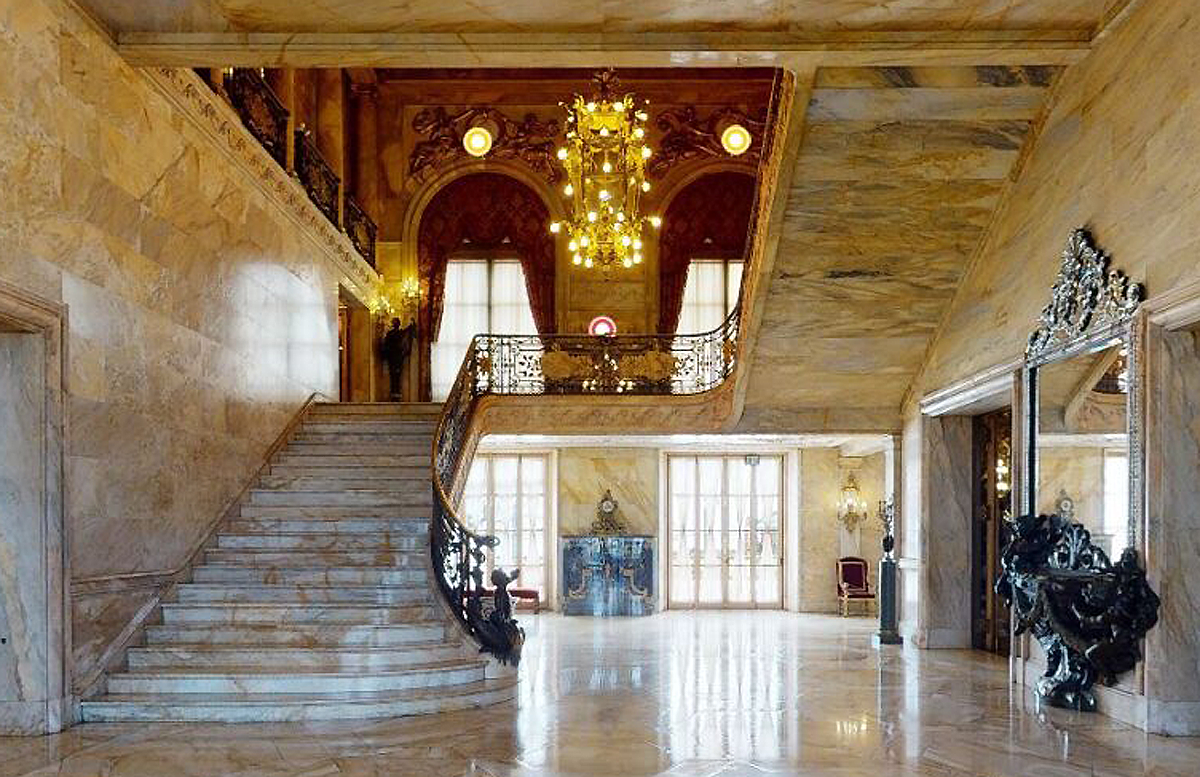
Marble House Stair Hall, Hunt, Newport
Nowhere did Hunt make the staircase more explicitly theatrical than at Marble House (1892), the Beaux-Arts palace he designed for Alva and William Kissam Vanderbilt. The Stair Hall is a vast, high ceilinged two-story room featuring walls and a grand staircase of yellow Siena marble, with a wrought iron and gilt bronze staircase railing based on models at Versailles. Designed with a wide, shallow rise, it allowed Alva to descend slowly and elegantly in her elaborate gown, creating a dramatic and unforgettable impression on the guests gathered below. The staircase (and entire house) was a highly theatrical setting proclaiming the Vanderbilt’s status, and the perfect stage for one of the Gilded Age society’s most accomplished self-promoters.
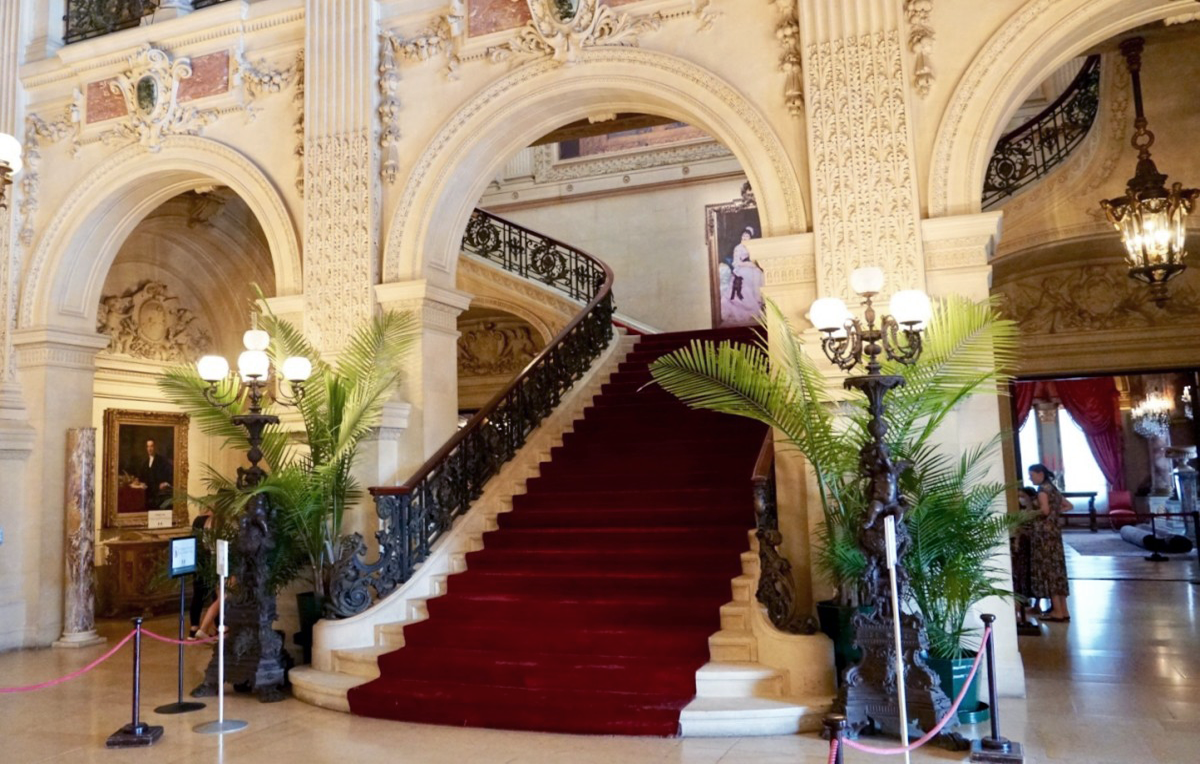
The Breakers Great Hall, Hunt, Newport
At The Breakers (1895), Hunt’s final and most magnificent Newport commission for the Vanderbilts, the 50-foot-high great hall contains a curving grand staircase, with alternating engaged and freestanding columns surrounding the room. A relatively ornate secondary, or private, staircase is enclosed between the entrance hall and the library, while a utilitarian service stair occupies a passage between the butler’s pantry and the kitchen— a three-tier hierarchy of movement that physically encoded the social order of Gilded Age domestic life. Public grandeur, family circulation, and servant invisibility were each assigned their own vertical pathway within the house.
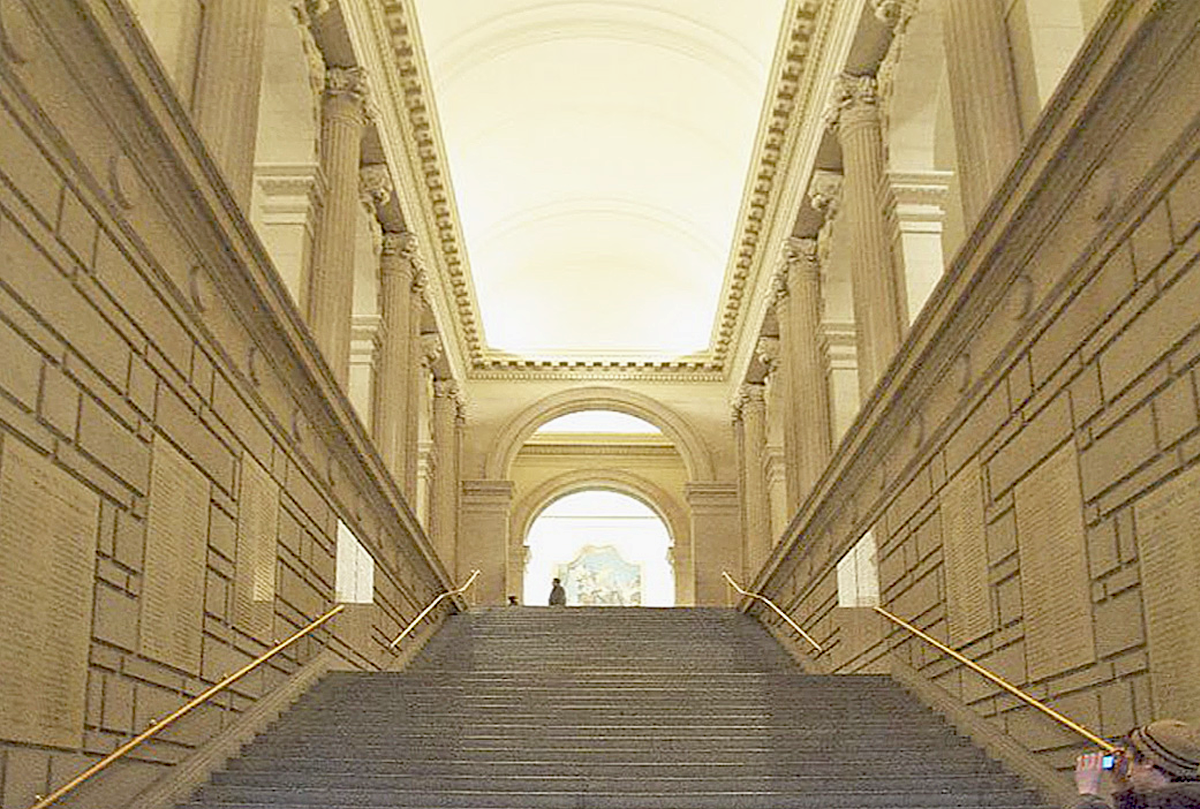
Metropolitan Museum of Art, Hunt, New York City
Finally, at the Metropolitan Museum of Art (completed 1902, construction overseen after Hunt’s death by his sons), the grand staircase transcended more domestic ceremony to serve an entire city. This monumental Beaux-Arts staircase, constructed of Tennessee marble, features broad steps and sweeping landings that convey a sense of gravitas and importance, designed to handle massive crowds while simultaneously inspiring awe. The New York Times declared the great staircase and large hall “unlike anything else in the city,” comparing them in scale and elaboration to the grand court of the Louvre.
Across thirty years and his many buildings, Hunt’s staircases show a consistent evolution showing that the moment of ascent (or descent) is also the moment of arrival from social, cultural, and architectural perspectives. They were never merely functional. They were the most eloquent spaces in the buildings and helped elevate American Architecture rise to new levels that had never been seen in North America before.
If you would like your home or building to be more than just a simple collection of functional spaces to become a beautiful work of art that makes your life richer and more enjoyable, please reach out to the award-winning team at A4 Architecture, located in Newport, Rhode Island. We look forward to working with you.
Ross Sinclair Cann, AIA is an historian, educator, author, and practicing architect living and working in Newport for A4 Architecture He holds architectural degrees from Yale, Cambridge and Columbia Universities and is a member of a numerous committees, commissions, and boards.