
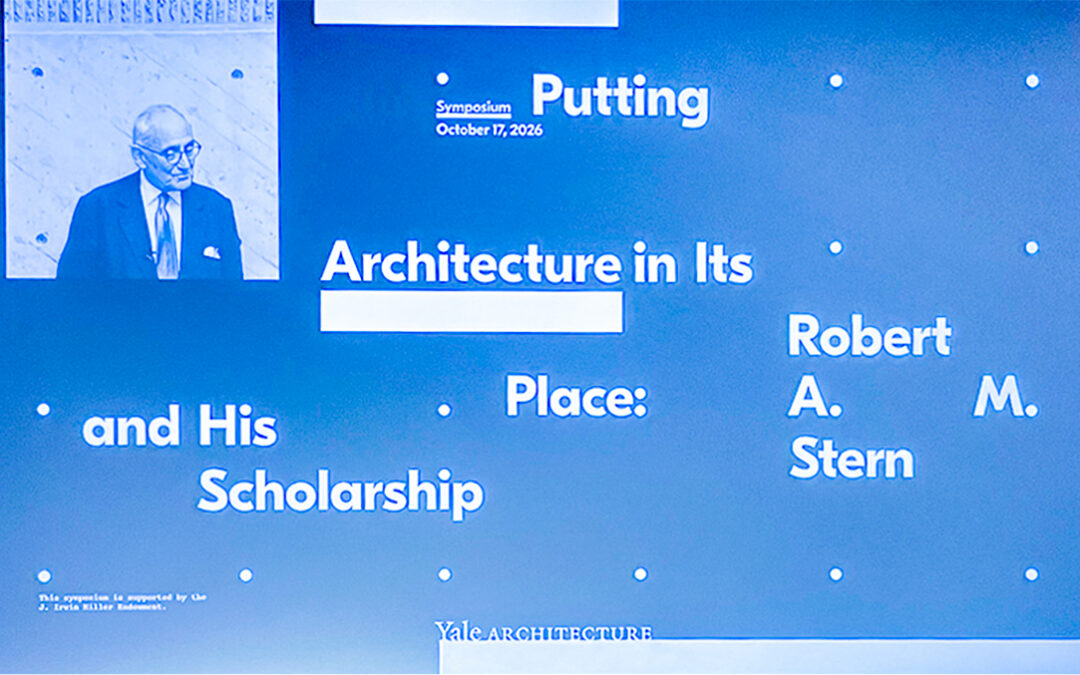
Stern Symposium, 2026
On October 17, 2026 architects, historians and other friends returned to Yale from around the country and even across the ocean to remember and honor Robert Arthur Morton Stern (1939–2025), who was universally called “Bob” by those who knew him. Stern passed away on November 27, 2025, and was a formidable figure whose career greatly impacted the teaching and practice of architecture in America. For 18 of those years, he was the Dean of Architecture at Yale University, serving longer in that post than anyone else. It was my honor to serve as his teaching Assistant for his architectural history classes for two years when I was an architectural graduate student and he was a Professor of Architecture at Columbia University.
Over his life he distinguished himself as a student, an influential teacher and graduate school dean, and as an exceptionally successful practitioner. In his work and teaching, Stern fundamentally reshaped American architecture by championing tradition and contextual design during eras dominated by modernism.
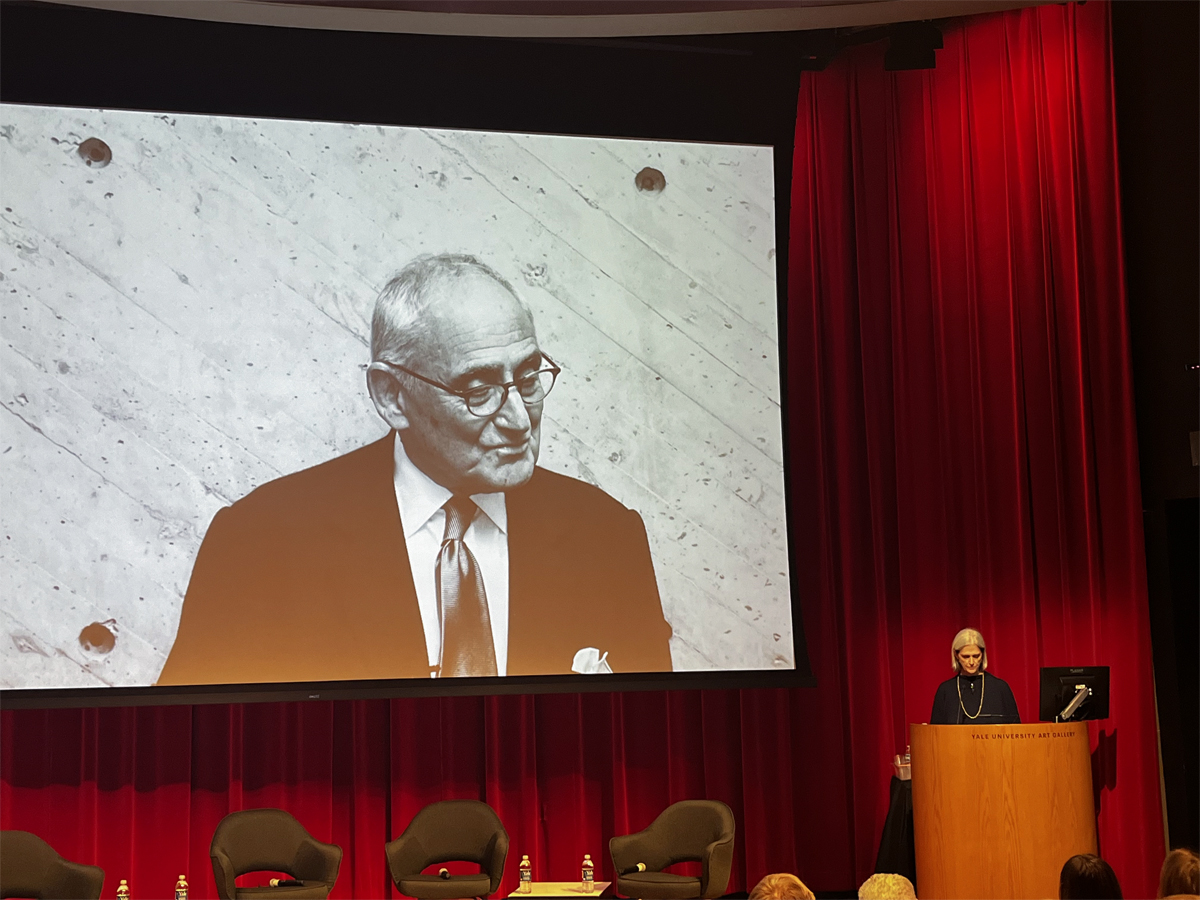
Stern Symposium 2026 Opening Image
The Symposium, organized by his former collaborator and friend Leopoldo Villardi, began with a looming image of Bob, looking down over his spectacles at the podium, where Dean Deborah Berke welcomed all the presenters and attendees to the full day conference recalling and celebrating Robert Stern and his prodigious career practicing and teaching architecture.
His Early Foundation: Student, Author, and Teacher
Stern’s journey began as a student at Columbia University, where he received his B.A. in history in 1960, and later at Yale University, where he earned his Master of Architecture in 1965. His time at Yale was critical as he was mentored by the noted historian Vincent Scully and by Philip Johnson. He became an advocate for historical architecture, editing the influential graduate student journal Perspecta at a time and place where modernists like Paul Rudolph and Louis Kahn were predominant intellectual forces.
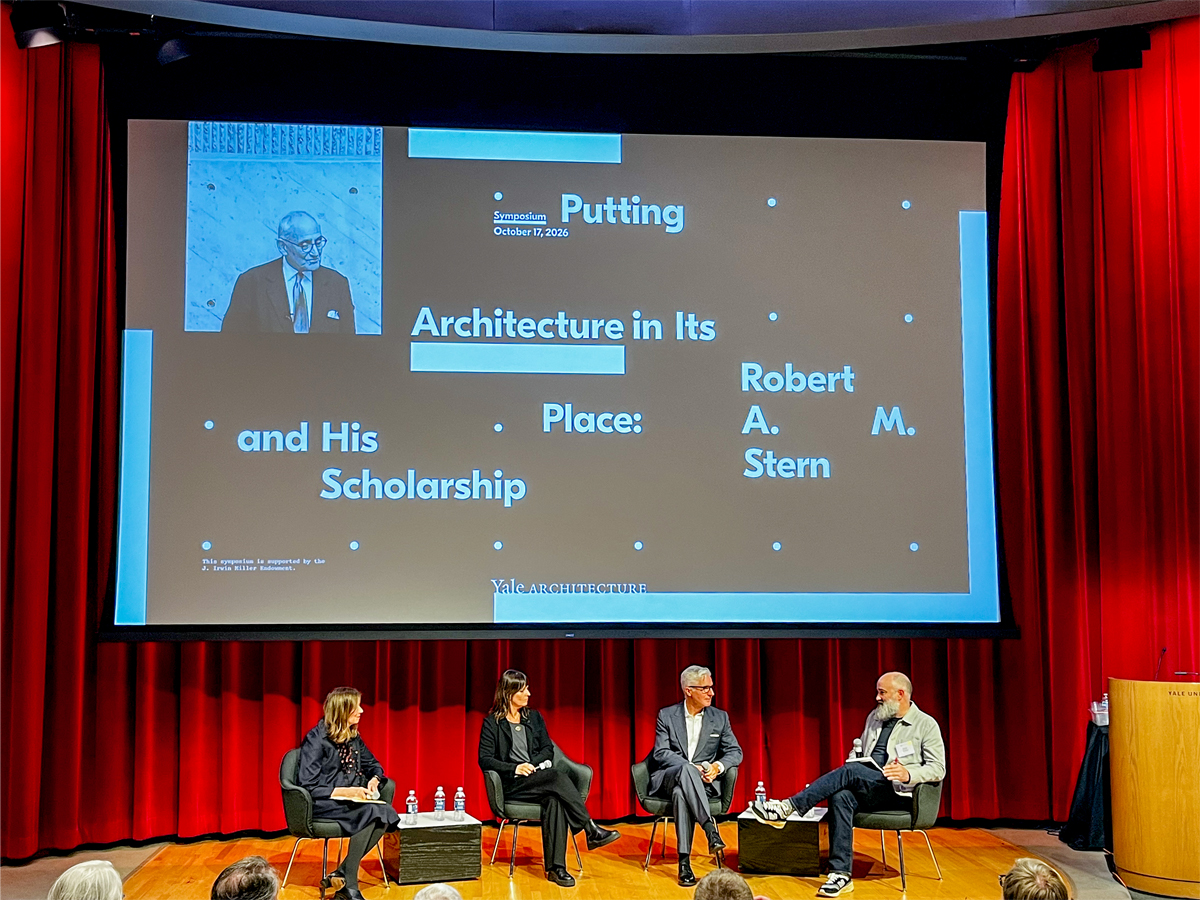
Panelists at Stern Symposium, 2026
This foundation to his education led to directly to his academic career. Beginning in 1970, Stern taught at Columbia University, eventually becoming a tenured professor and founding director of the Temple Hoyne Buell Center for the Study of American Architecture. He also authored or co-authored monumental books, most notably his multi-volume history of New York City’s architecture, which cemented his status as a rigorous scholar who viewed the past as a resource, not a relic. This six-volume compendium was just part of his more than 50 book oeuvre of academic research—a truly momentous accomplishment.
The Ivy Tower: Dean and Educator
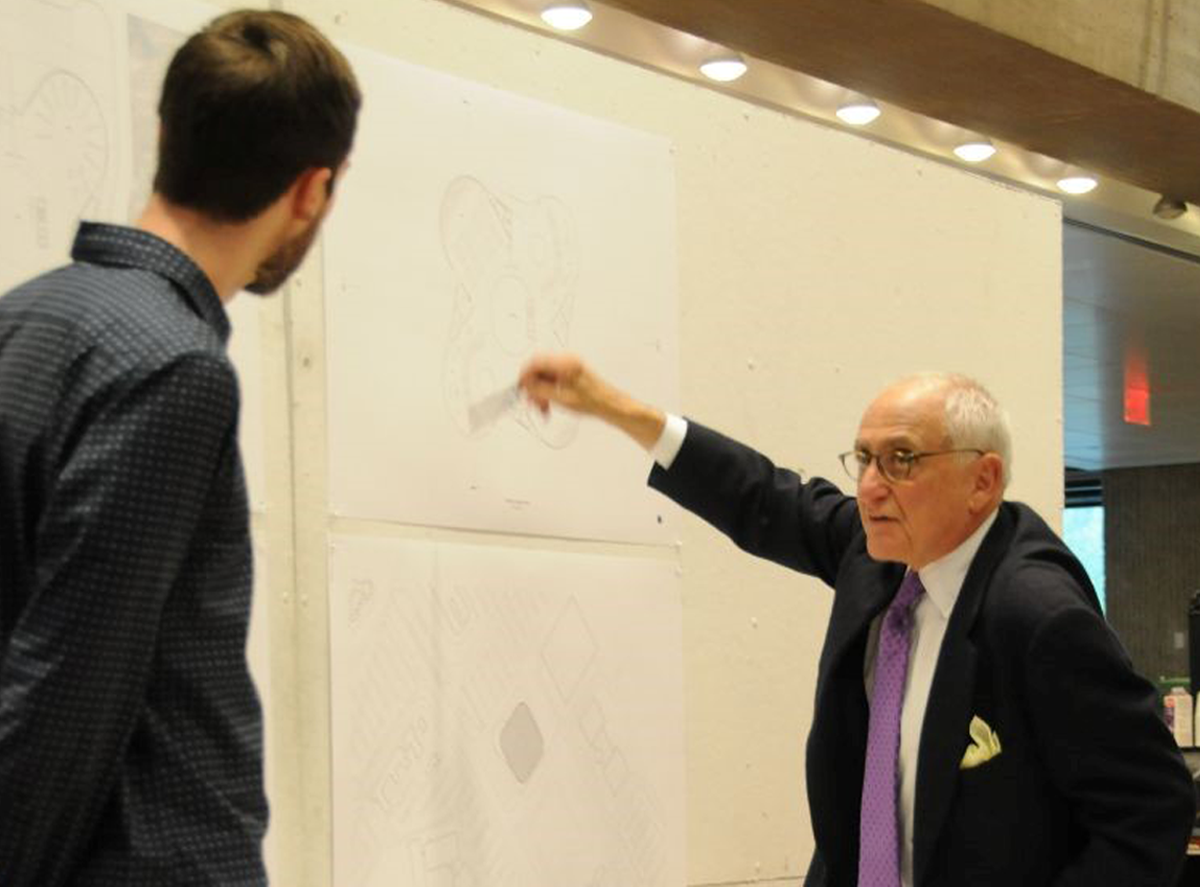
Robert Stern, Dean of the Yale School of Architecture
Stern’s impact on education culminated in his amazing 18-year tenure (1998–2016) as the Dean of the Yale School of Architecture. Returning to his graduate alma mater, he transformed the school, advocating for architectural pluralism and restoring the importance of history, drawing, and traditional principles. He attracted leading scholars and practitioners, fostering a diverse and rigorous environment that profoundly influenced a generation of architects. In honor of his accomplishments, he was awarded the 2017 Topaz Medallion for Excellence in Architectural Education, recognizing his deep and lasting influence. Many were initially concerned that his traditional temperament would skew the school in that direction, but in practice he was always very open and welcoming to a wide spectrum of architectural philosophies in his tenure as Dean.
His Legacy: Practitioner and Broad Impact
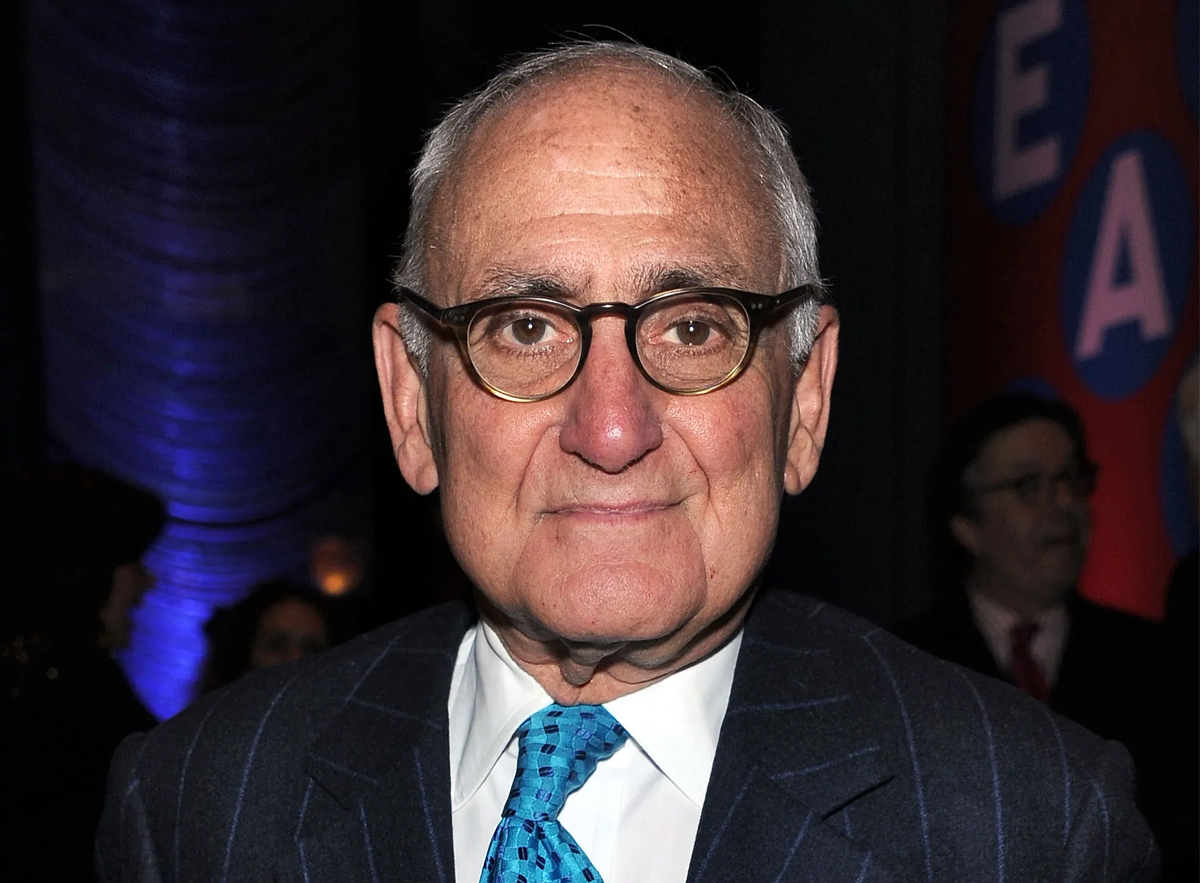
Robert Stern
As a practitioner, through his firm Robert A.M. Stern Architects (Known as “RAMSA” for short), Stern started his design career in the spirited debates of the 1970s as a Postmodernist, which was the philosophy of using traditional architectural elements in new ways. His work soon evolved into a robust New Classical style, characterized by contextual sensitivity and traditional craftsmanship of using traditional architectural elements in traditional ways. His firm grew to be one of the largest in New York and designed notable buildings around the world.
His lifetime impact on American architecture is enormous, primarily for reintroducing the notion of the dignified, masonry-clad urban tower back to the major cities, and most notably in New York. While many of his projects for Disney, such as the master plan for the town of Celebration, are well-known, his magnum opus is often cited as the New York apartment building 15 Central Park West. Completed in 2008, this limestone-clad building was an unprecedented commercial and critical success. It redefined luxury residential design in Manhattan, rejecting the glass-box modernist aesthetic and proving that a contemporary building could seamlessly honor the city’s pre-war architectural lineage. Stern’s advocacy for buildings that “engage with the larger whole” ensured that his creations, whether towering skyscrapers or collegiate Gothic complexes (like Yale’s Pauli Murray and Benjamin Franklin Colleges), were always respectful of their place and history. Stern had planned on retiring later that year, handing over control of his eponymous firm to his trusted senior partners. Like many of the great architects before him, like Richard Morris Hunt, Frank Lloyd Wright, Mies Van Der Rohe, Louis Kahn, and Philip Johnson, Stern devoted his full life and energy to teaching and practicing architecture and it was my privilege to get to see him at work up close, first as a student and then as his teaching assistant. The various lectures, panels and discussions were a warm and fitting way to remember a man who contributed so much to architecture over his life as a practitioner, historian, and a teacher of architecture.
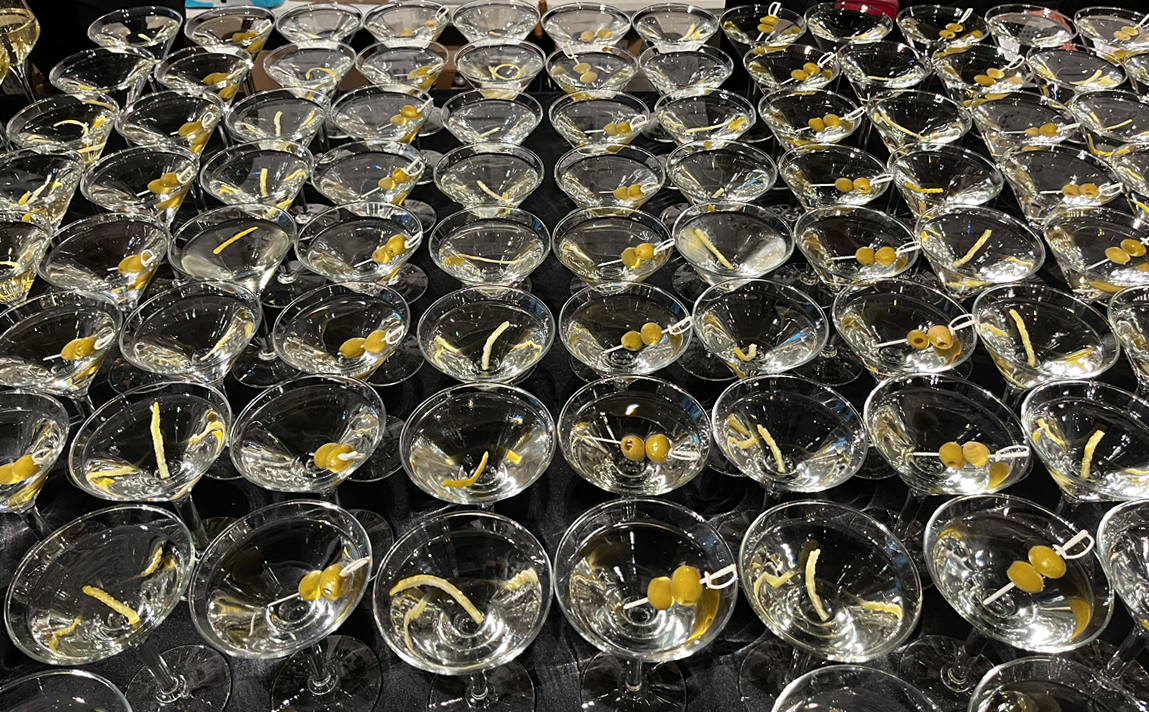
Reception’s Vodka Martinis
The day ended with a reception where the attendees and presenters gathered in the A&A gallery to raise a final toast to Bob, with his favorite drink: a dry vodka martini with a twist of lemon. stirred and not shaken.
Ross Sinclair Cann, AIA, LEED AP, is a historian, educator, author, and practicing architect living and working in Newport for A4 Architecture and is Founding Chairman of the Newport Architectural Forum. He holds honor degrees in Architecture and Architectural History from Yale, Cambridge, and Columbia Universities, teaches in the Circle of Scholars program at Salve Regina, and has been a licensed architect since 1993.