
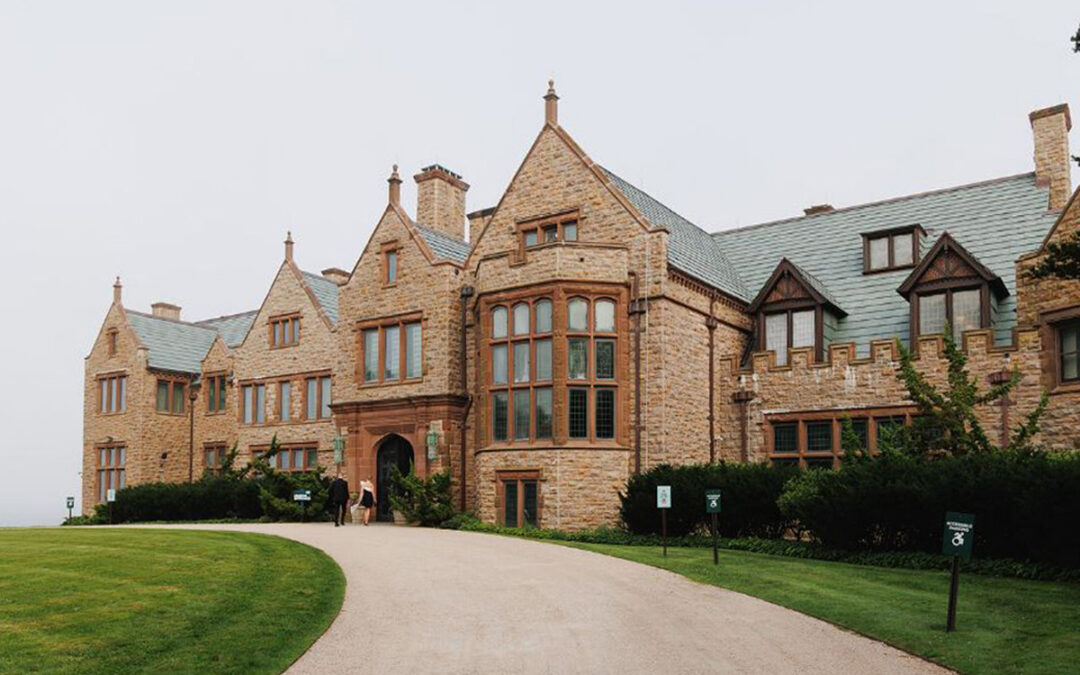
(Rough Point Newport, RI – Photographed by Julie Skarratt)
The great mansions of Newport were designed to be imposing, grand, and spacious. But more than anything else, they were designed to allow their owners to entertain in a style that would impress their guests. This is certainly true of Rough Point Mansion, located at 680 Bellevue Avenue in Newport, Rhode Island. Begun in 1887 and completed in 1892, it was originally designed in the English Manorial Style by the noted Boston architectural firm Peabody & Stearns. Named for a magnificent outcropping of rock jutting out into the Atlantic Ocean near the end of famed Bellevue Avenue, this red sandstone property was originally built for Fredrick William Vanderbilt and his family to enjoy in the summer months by the ocean. The family later rented the home to “Tinplate King” William Batemen Leeds in 1906 and eventually the house was purchased by James Buchanan Duke, a tobacco magnet. In 1922 the mansion underwent serious renovations at the hands of Philadelphia architect Horace Trumbauer. Two additional wings were added to the already giant home, expanding it to 105 rooms in total. Like any good renovation, Trumbauer neatly fit the new design to be compatible and complimentary to the original structure so that the completed building held together as a unified structure. Mr. Duke not only built this great house and an industrial empire–he also funded the construction of Duke University in North Carolina to give the south an Ivy League quality educational institution.
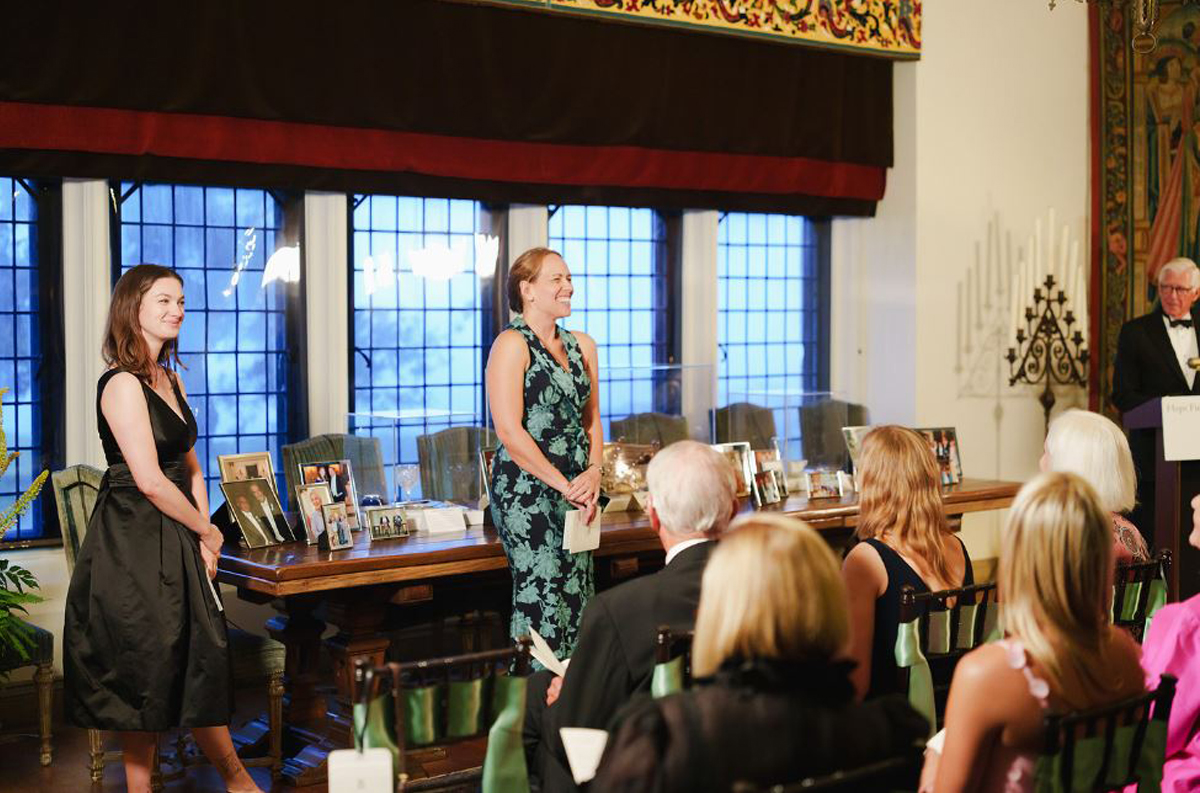
(Hope Fund’s “Women in Science” Lecture at Rough Point – 2026)
In 1925 James Buchanan Duke died at age 68 and ownership of Rough Point and his many other properties fell to his only child, Doris Duke, who was only 12 years old at the time. Doris Duke used Rough Point from her early childhood until her eventual passing at age 80 in 1993. Doris was gifted not only with great wealth but was also tall, beautiful, and athletic and so she cut quite the social figure during the 1940s and 1950s, when she was broadly known as “the richest girl in the world.” Doris Duke loved not just Rough Point but Newport as well. She spent her summers there and was central in founding and financing the Newport Restoration Foundation (NRF). This organization has purchased, renovated, and continues to own and rent many dozens of the Colonial Era structures in Newport’s Point and Historic Hill neighborhoods. “Miss Duke,” as she was generally known about town, reportedly said to her good friend and fellow socialite Katherine Warren (one of the primary founders of the Preservation Society of Newport County), something to the effect of, “You take care of the Gilded Age, and I will take care of the Colonial,” and each did as they promised.
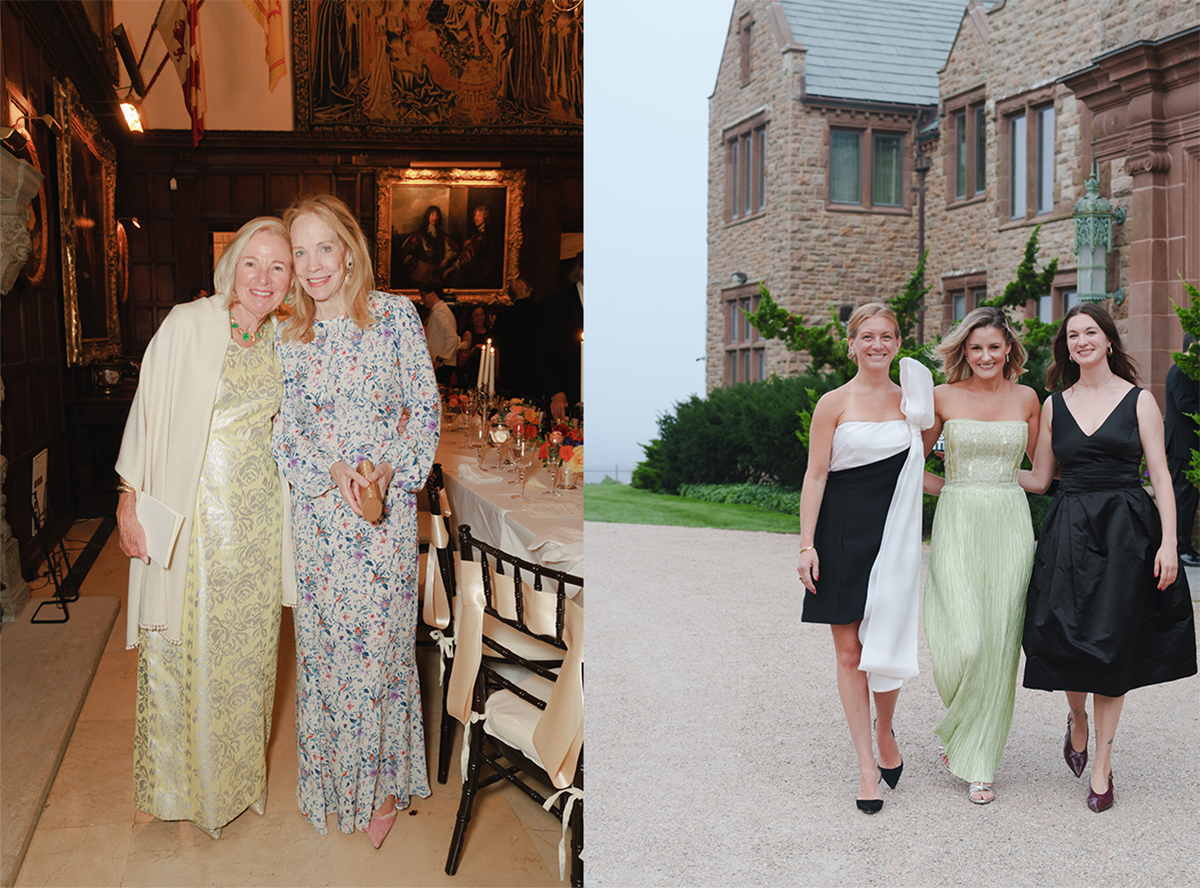
(Fashionable Women at Hope Fund’s “Women in Science” Gala – 2026)
On August 6, 2026, the Hope Funds for Cancer research was privileged to be able to use the facility for its annual “Women in Science” lecture and gala dinner. The organization researched Miss Duke’s menus and favorite drinks and ladies were encouraged to wear ball gowns by the designers that Miss Duke favored during her lifetime to the black-tie event. The dining room was set up theater style, and the guests were pleased to hear from a series of eloquent speakers ranging from the Episcopal Bishop of Rhode Island and a Nobel Prize winner, who was honored by the Hope Funds in the summer before he won this famous award. The lectures deftly interwove to tell the story of why scientific research is so important and why women scientist and philanthropist like Doris Duke have been so important to the effort since the time of Marie Curie,
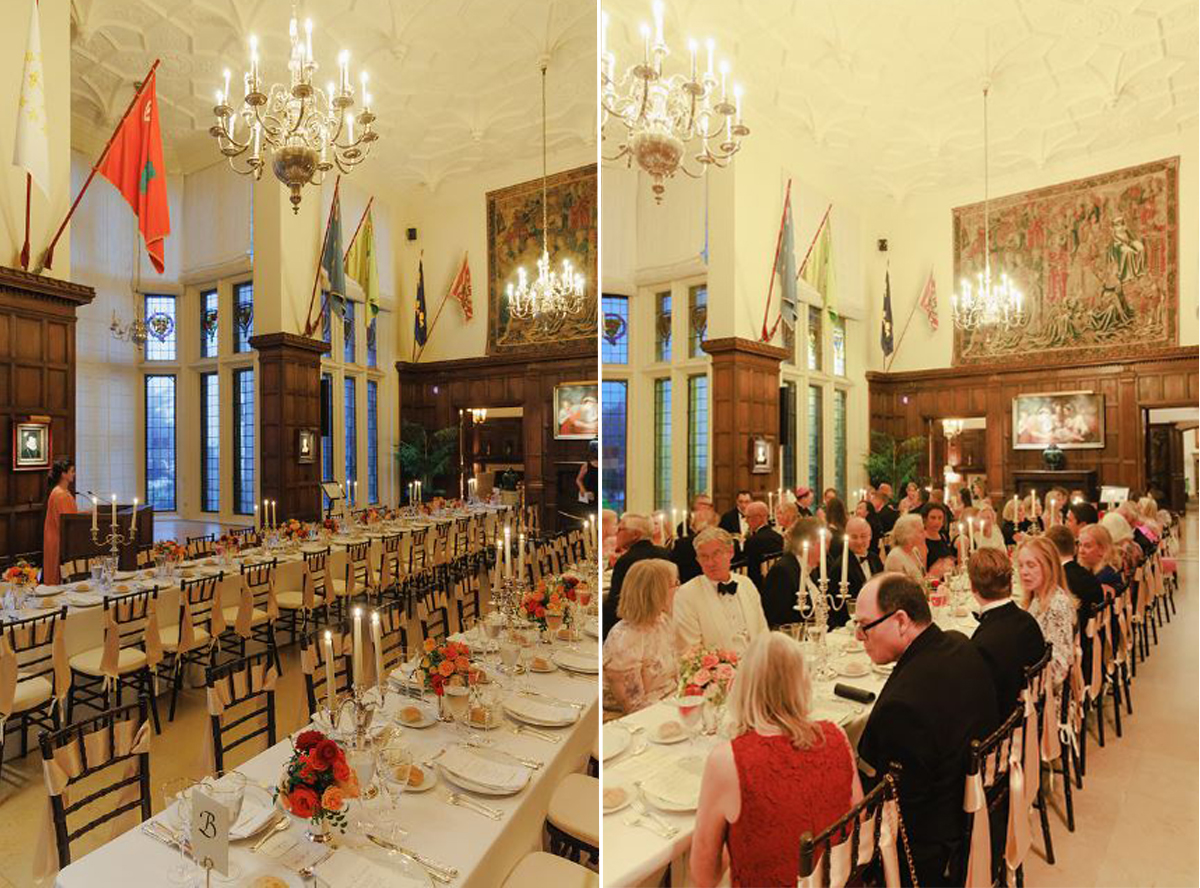
(Grand Hall during “Women in Science” Gala Dinner at Rough Point – 2026)
The Grand Hall was set up with two long tables, like a state dinner, and guests enjoyed dinner conversation in this beautiful hall with the sounds of a live jazz quintet playing some of her favorite jazz artists wafting into the space from the nearby music room. Although the evening was every bit in the style and grandeur of an event that Miss Duke might have held in the 1950s, it was also surprisingly intimate in the Rough Point truly feels like Doris Duke’s house and not an enormous (and slightly anonymous) house museum like some of the other noteworthy Newport mansions. Her rare Medieval paintings lined the wall and her porcelains sat delicately upon pieces of furniture she personally selected. As a result, her presence was felt everywhere and every minute of the evening.
When Doris Duke died in 1993, her will directed that Rough Point be preserved and opened to the public through the Newport Restoration Foundation. Rather than being sold, subdivided, or converted for private use, the estate became a house museum and one of the very few Gilded Age Newport “cottages” preserved precisely as its owner left it (down to the Architectural Digests neatly stacked on a table overlooking the grand stair) rather than as a generic period re-creation. Thankfully this space is available for rental to non-profits like the Hope Funds so that the house can live again for the purpose it was made: to entertain grandly and to celebrate the vision of a person who was a woman before her time: independent, supportive of women’s causes, dedicated to furthering medical research, and deeply philanthropic in spirit.
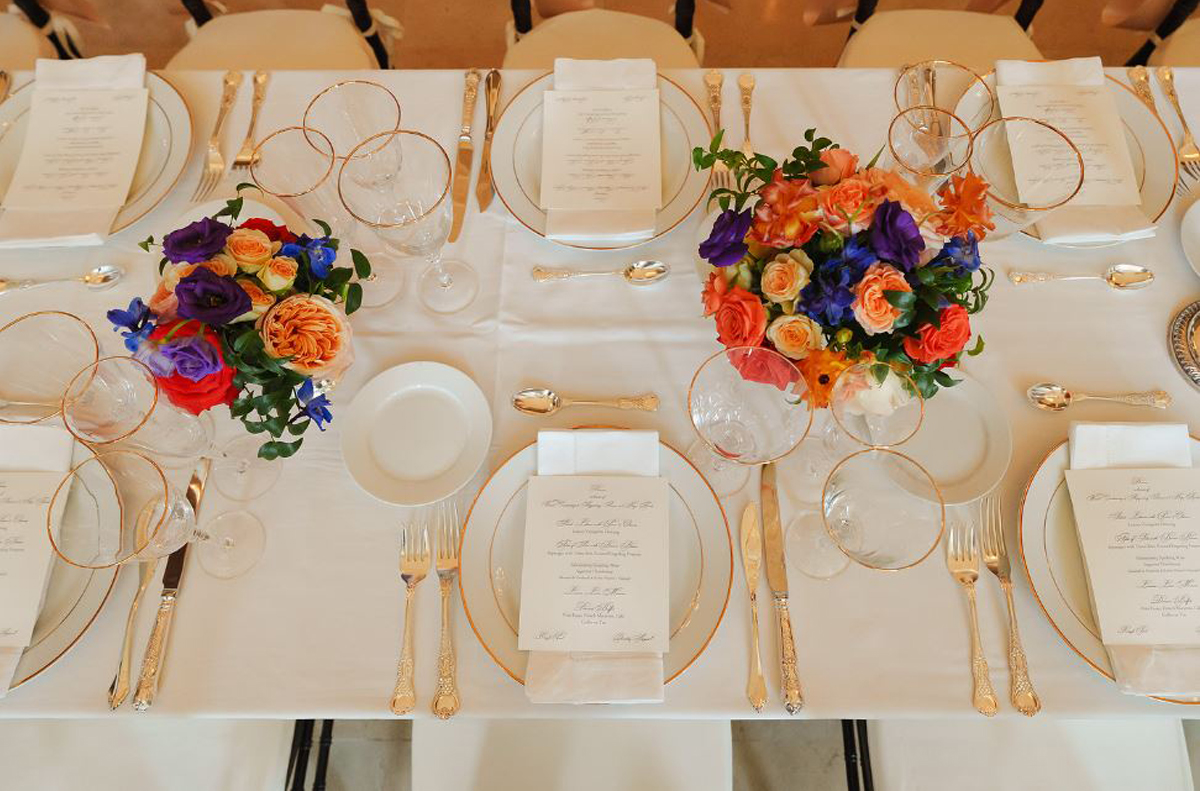
(Table Setting for “Women in Science” Gala Dinner – 2026)
Whether you have a charming Colonial or a grand Gilded Age mansion in Rhode Island (or elsewhere in New England), the award-winning team of designers and preservationists at A4 Architecture would be pleased to discuss your plans to preserve and improve your building for the future. We look forward to being in communication with you soon.
Ross Sinclair Cann (AIA, LEED AP) is an historian, educator, author, and practicing architect living and working in Newport for A4 Architecture. He is the founding Chairman of the Newport Architectural Forum and holds honors degrees in Architectural History and Design from Yale, Cambridge, and Columbia Universities
All images courtesy of Julie Skarratt Photography