
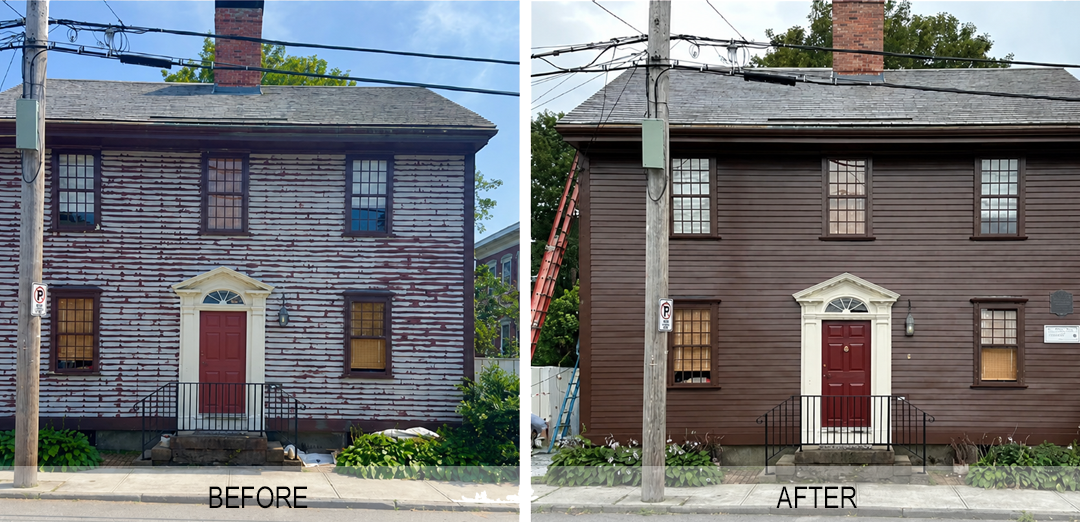
(The Before & After of 6 Elm Street, Newport, RI)
Doris Duke: The Heiress Who Saved Colonial Newport
When tobacco and hydroelectric fortune heiress Doris Duke surveyed Newport, Rhode Island in the late 1960s, she saw something that most of the world had long overlooked: a city quietly disappearing. Colonial-era homes were being torn down, neglected, or converted into apartments. Streets that had once helped defined American architectural identity were disappearing block by block. “Miss Duke” (as she was known around town), who had long made the Newport cliffside estate known as Rough Point her summer-time home, resolved to stop the deterioration, and fortunately she had the economic means to accomplish her goal.
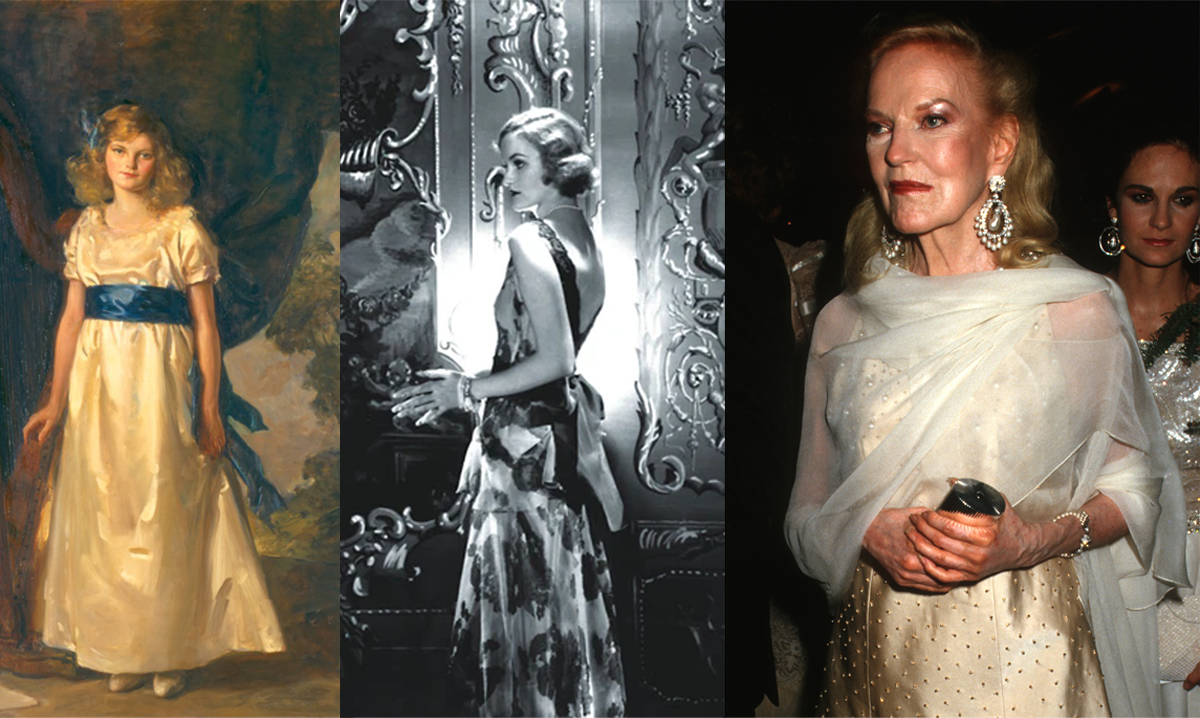
Doris Duke (age 11, 25, & 75)
A City Worth Saving
Newport’s architectural significance is difficult to overstate. The city’s Point and Historic Hill neighborhoods contain some of the finest surviving examples of 17th and 18th-century American colonial architecture in existence. From triple-decker timber frames, to gambrel-roofed colonials, to Federal-style houses built by merchants, craftsmen, and sea captains, Newport was rich in early-American architectural history. By the mid-20th century, however, Newport’s post-war economic decline had left many of these structures in precarious condition. Preservation organizations existed, but they lacked the financial resources to address the scale of what was being lost. Doris Duke provided that economic muscle.
The Founding the Newport Restoration Foundation
In 1968, Duke established the Newport Restoration Foundation (NRF) with a straightforward but ambitious mission: acquire, restore, and steward threatened historic properties throughout the city. Over the following decades, she personally funded the purchase and rehabilitation of more than 80 colonial-era structures. This was a staggering intervention that amounted to one of the most concentrated private preservation efforts in American history and gave confidence to other home buyers in these neighborhoods. What were once run-down streets are now among the most desirable neighborhoods in a very desirable community.
Duke’s approach was meticulous and uncompromising. She insisted on historically accurate restorations, employing period-appropriate materials and traditional craftsmanship rather than the shortcuts common to commercial renovation. Paint colors were researched, hardware reproduced, and architectural details carefully documented. The NRF became a nationally recognized model for how private philanthropy could rescue urban historic fabric at scale.
These restored properties were not converted into museums or left empty as monuments. Instead, Duke made them available as rental residences, allowing working families to live in authentically preserved colonial homes while the Foundation retained stewardship. This living-history approach ensured the buildings remained inhabited, maintained, and woven into the fabric of Newport’s neighborhoods.
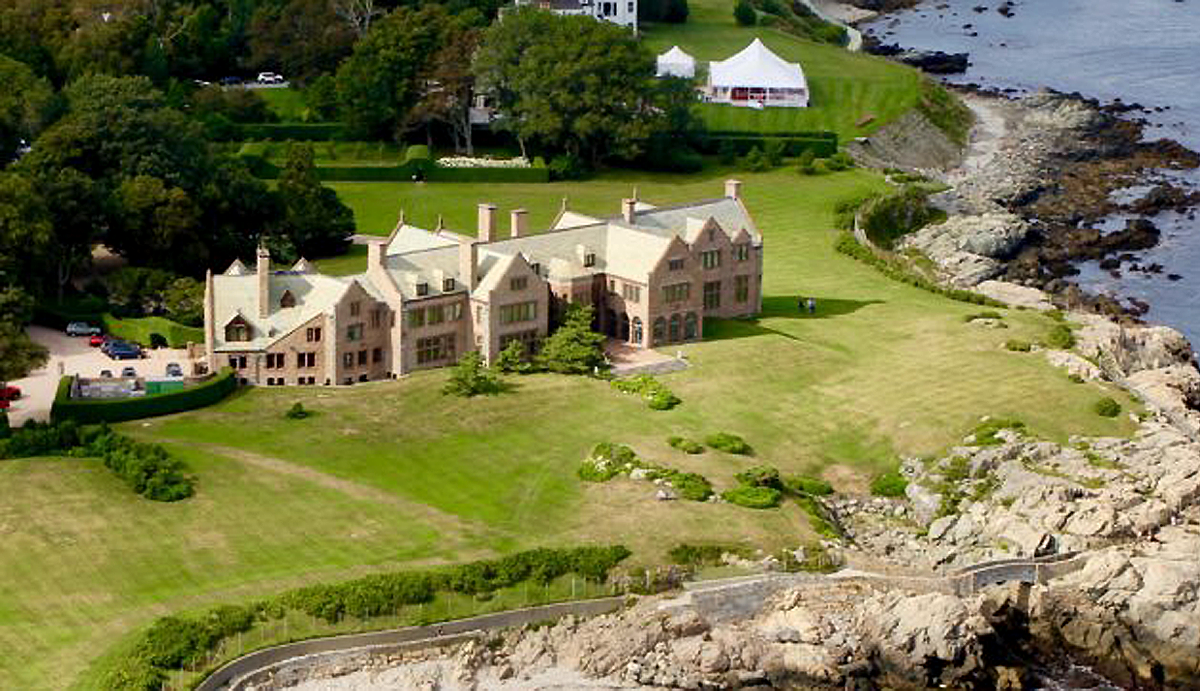
Rough Point (Newport RI)
Rough Point: A Gilded Age Mansion Open to the Public
Doris Duke’s own Newport home, Rough Point, tells a parallel preservation story. The sprawling 105-room Gilded Age mansion perched on Bellevue Avenue, high above the Atlantic Ocean, was originally built in 1887 and later expanded into an English manor-style estate. At fourteen years-old, Duke inherited it from her father, James Buchanan Duke, and spent all the summers of her life there, from her childhood until her passing many decades later. Over her lifetime, she filled the house with an extraordinary collection of European paintings, antiques, tapestries, and Chinese porcelain accumulated over decades of international travel.
When Doris Duke died in 1993, her will directed that Rough Point be preserved and opened to the public through the Newport Restoration Foundation. Rather than being sold, subdivided, or converted for private use, the estate became a house museum and one of the very few Gilded Age Newport “cottages” preserved precisely as its owner left it (down to the Architectural Digests neatly stacked on a table overlooking the grand stair) rather than as a generic period re-creation. Visitors today walk through rooms that retain Duke’s personal furniture arrangements, her extensive art collection, and the idiosyncratic touches of the woman who inhabited the space.
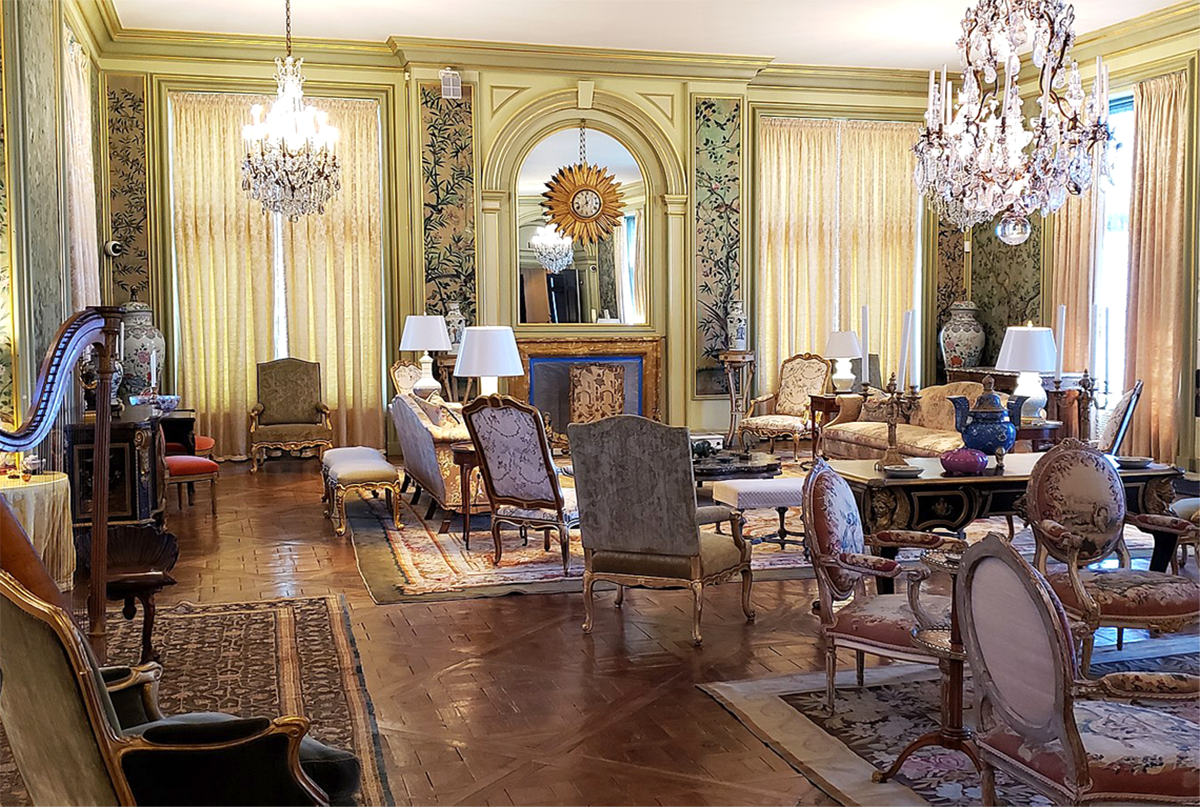
Rough Point Interior (Newport RI)
Duke’s Enduring Legacy
The Newport Restoration Foundation continues its work today, maintaining its portfolio of historic properties and keeping Duke’s preservation philosophy alive. Rough Point draws tens of thousands of visitors annually, functioning both as a cultural landmark and a direct link to one of Newport’s most significant benefactors.
Doris Duke was, by many accounts, a complex and private figure. But in Newport, her legacy is clearly written in wood, brick, and stone, both in the colonial homes she helped preserve, but also in the windswept Rough Point mansion where her collections remain exactly as she left them. She did not merely donate to architectural renovation; she built an institution around a philosophy of preservation.
The annual awards for architectural preservation, initiated in 2007, are administered jointly by the NRF and the City of Newport and are called the Doris Duke Historic Preservation Awards in her honor and memory. This is perfectly appropriate, as Newport’s architectural survival owes her a considerable debt.
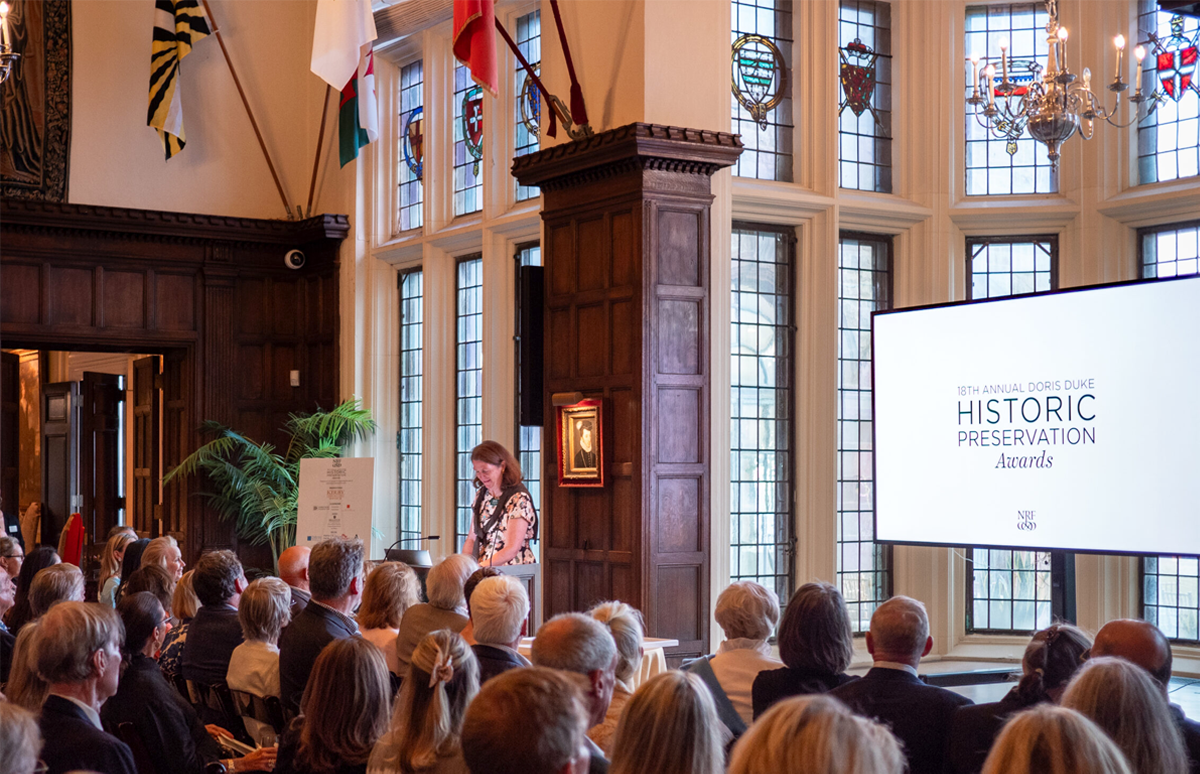
Annual Doris Duke Historic Preservation Awards (at Rough Point, Newport)
Whether you have a charming Colonial or a grand Gilded Age mansion in Rhode Island (or elsewhere in New England), the award-winning team of designers and preservationists at A4 Architecture would be pleased to discuss your plans to preserve and improve your building for the future. We look forward to being in communication with you soon.
Ross Sinclair Cann (AIA, LEED AP) is an historian, educator, author, and practicing architect living and working in Newport for A4 Architecture. He is the founding Chairman of the Newport Architectural Forum and holds honors degrees in Architectural History and Design from Yale, Cambridge, and Columbia Universities. His firm has helped his clients, win several Doris Duke Preservation Awards over the years.