
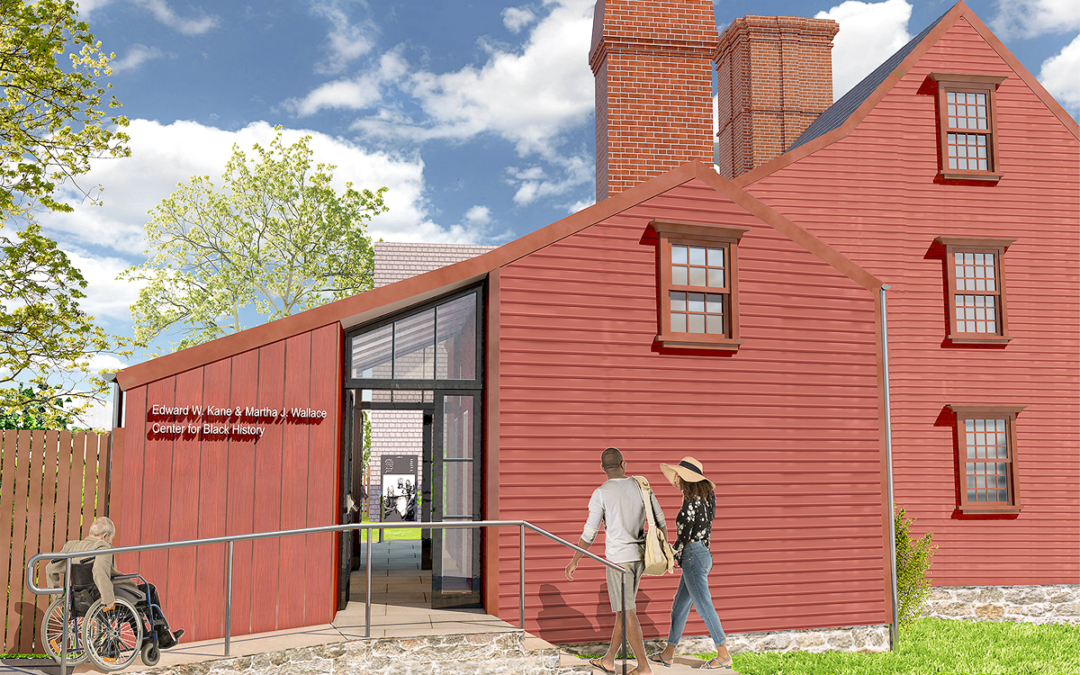
The Edward W. Kane & Martha J. Wallace Center for Black History (Newport, RI)
On June 19, 2026, the city of Newport, Rhode Island will open a space dedicated to a history that its own civic memory long worked to erase. The city, founded in 1639 by religious dissenters seeking freedom of conscience, nevertheless was the third point of the Triangle Trade and has much to answer for in its early history.
The Edward W. Kane & Martha J. Wallace Center for Black History, developed by the Newport Historical Society in partnership with Newport’s Black community, debuts with three days of programming, including a ribbon-cutting ceremony, a free family day, and an opening celebration featuring author Heather McGhee.
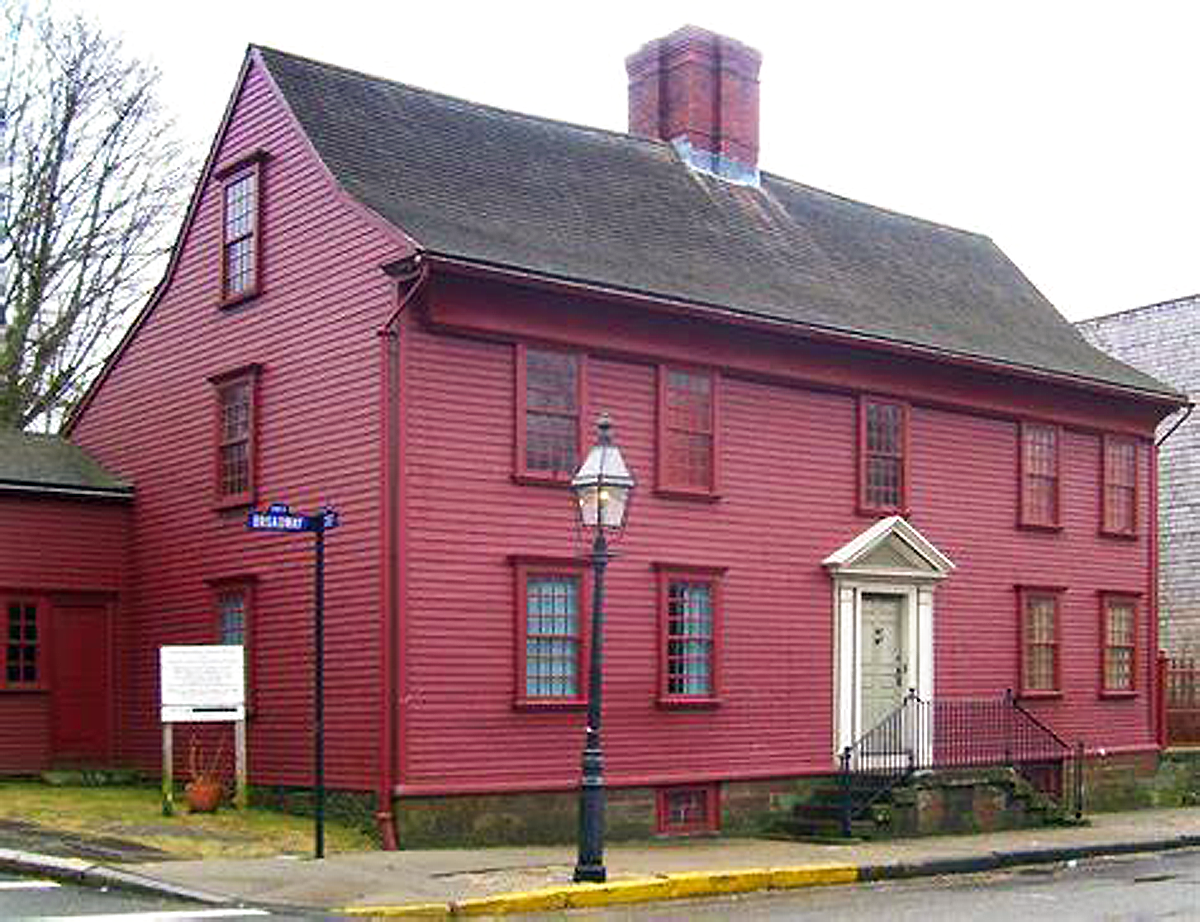
The Wanton-Lyman-Hazard House, c.1697 (Newport, RI)
The story the center tells runs against Newport’s popular image as a Gilded Age resort town of mansions and yachts. Dr. Akeria De Barros Gomes, the new center’s director, notes that roughly 60 percent of the slave ships that sailed from American ports to West Africa were registered in Newport and financed by its merchants — a fact that sits uneasily beside the city’s later self-image as an abolitionist stronghold. She has described a regional pattern of minimizing this history, in which enslavement was treated as a Southern phenomenon while New England’s version was recast as a gentler, almost familial form of servitude. That softened narrative, she says, eventually erased the subject altogether — to the point that she grew up on Aquidneck Island without learning that Black history existed there at all.
The center is housed in a building that is itself a primary source: the Wanton-Lyman-Hazard House, built c. 1697, making it among Newport’s oldest surviving homes. According to de Barros Gomes, several people were enslaved in that house, and they would have entered only through the kitchen or back door — never the front. The museum’s new entrance follows that same path, doubling as an accessibility ramp and a deliberate historical statement.
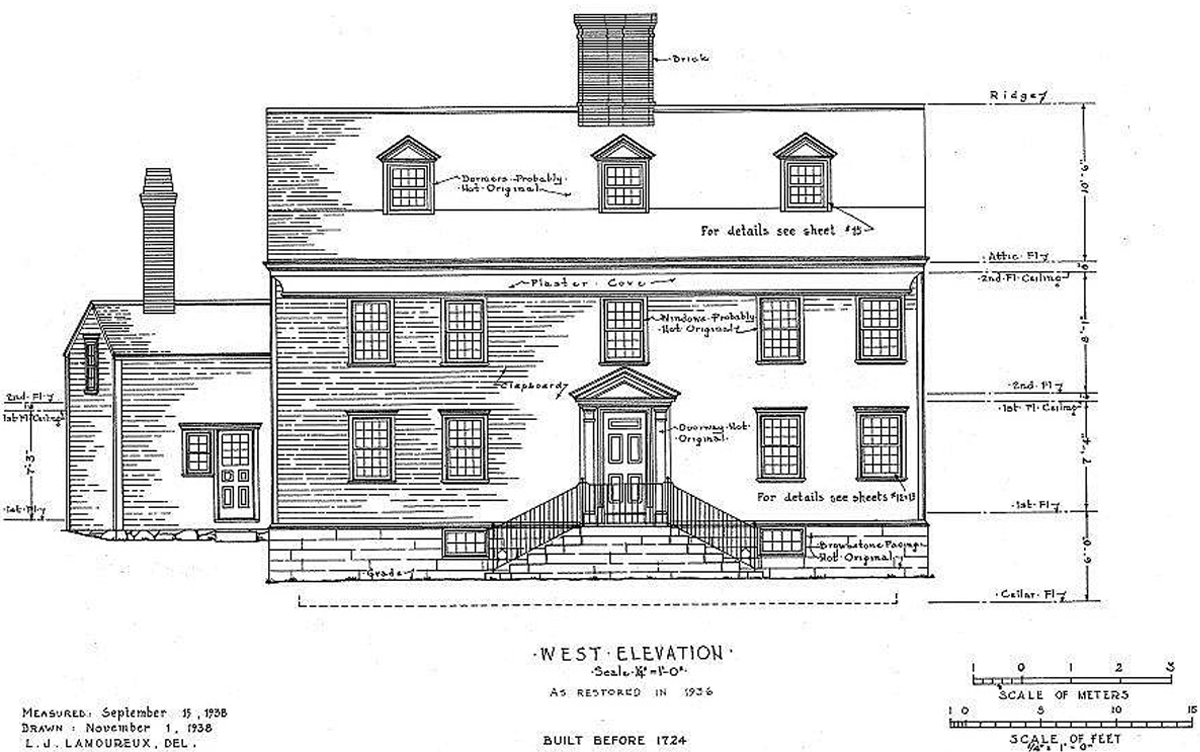
The Wanton-Lyman-Hazard House, West Elevation
Recovering that history has been the work of years. The Historical Society’s Voices research project, launched in 2024, has digitized more than 5,600 pages and compiled records on over 1,800 named people of African and Indigenous descent, and recently partnered with the genealogy organization American Ancestors to reach more than 400,000 additional researchers. That archival work now anchors the center’s exhibitions, which include a spiritual bundle once carried by an enslaved person to maintain ties to African culture, displayed in a gallery devoted to Newport’s place in the transatlantic slave trade, alongside galleries on Black craftsmanship, labor, and the daily realities of freedom-making and enslavement inside the house itself.
The $5 million project was funded through the Society’s Voices capital campaign, launched in 2024, and timed deliberately: organizers note that as Newport prepares to mark the nation’s 250th anniversary, no historic site in New England had been dedicated to telling this particular story. Nearby, the opening coincides with other efforts to fill that gap, including a new statue of 19th-century abolitionist and restaurateur George T. Downing, set to become Newport’s first public artwork honoring a person of color.

Dr. Akeia de Barros Gomes
For de Barros Gomes, the center is as much about connection as correction. She has spoken of finding beauty in tracing a diaspora that links her, as a Black Newporter, to relatives scattered across the world — a legacy that emerged from violence and trauma but is now something to celebrate. Nearly four centuries after Newport’s founding, the city is finally building a permanent place to tell the fuller story of its early years.
Ross Sinclair Cann, AIA is a historian, educator and practicing architect. He is the Founding Principal of A4 Architecture in Newport, Rhode Island and holds architecture degrees from Yale, Cambridge, and Columbia Universities. A4 Architecture is working to create high-quality, multi-family developments through Rhode Island and the surrounding states.