
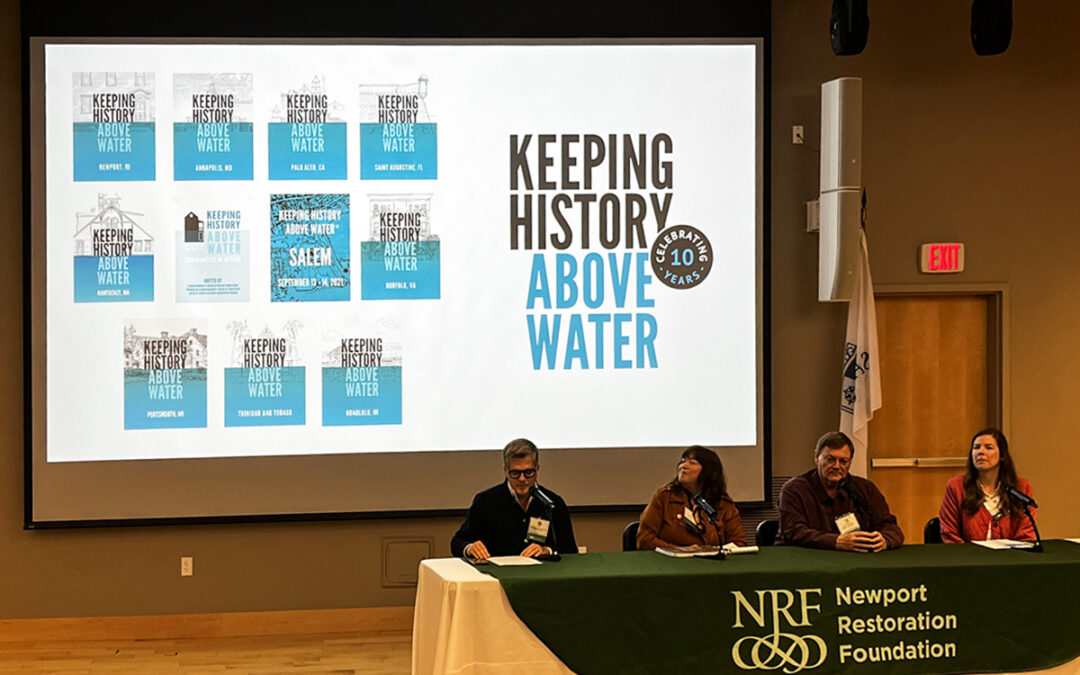
(Newport Restoration Foundation – Keeping History Above Water Conference)
In April of 2016, the staff at the Newport Restoration Foundation (NRF) were becoming concerned about sea level rise, as nearly half of the 80 or so Colonial-era properties they owned as caretakers were located in “Special Flood Hazard” districts. To address the issue, and to bring experts from around the country to bear on the problem, they organized the first “Keeping History above Water” conference and symposium. From October 21-23, 2026 this annual conference return to Newport for the first time since its creation, returning the conversation back to the city where it first began.
The 10th anniversary edition of Keeping History Above Water, was appropriately subtitled “Looking Back, Moving Forward,” and brought together preservationists, policy planners, and community leaders for a wide variety of lectures, panel discussions, and site visits. Just as importantly, in between the sessions and tours, the assembled participants met, networked, and exchanged useful resources and preservation stories.
Where it started
The first “Keeping History Above Water” Conference convened April 10–13, 2016 at the Newport Marriott. The Newport Restoration Foundation organized it with a wide variety of partner organizations including Roger Williams University, Salve Regina University, the University of Rhode Island’s Coastal Resources Center, Preserve Rhode Island, and the National Trust for Historic Preservation. Both the state and the national preservation communities took notice. The Rhode Island House of Representatives passed a resolution honoring the NRF’s leadership. The conference aimed to approach sea-level rise from a multi-disciplinary perspective, developing practical approaches to mitigation, protective adaptation, and general resilience.
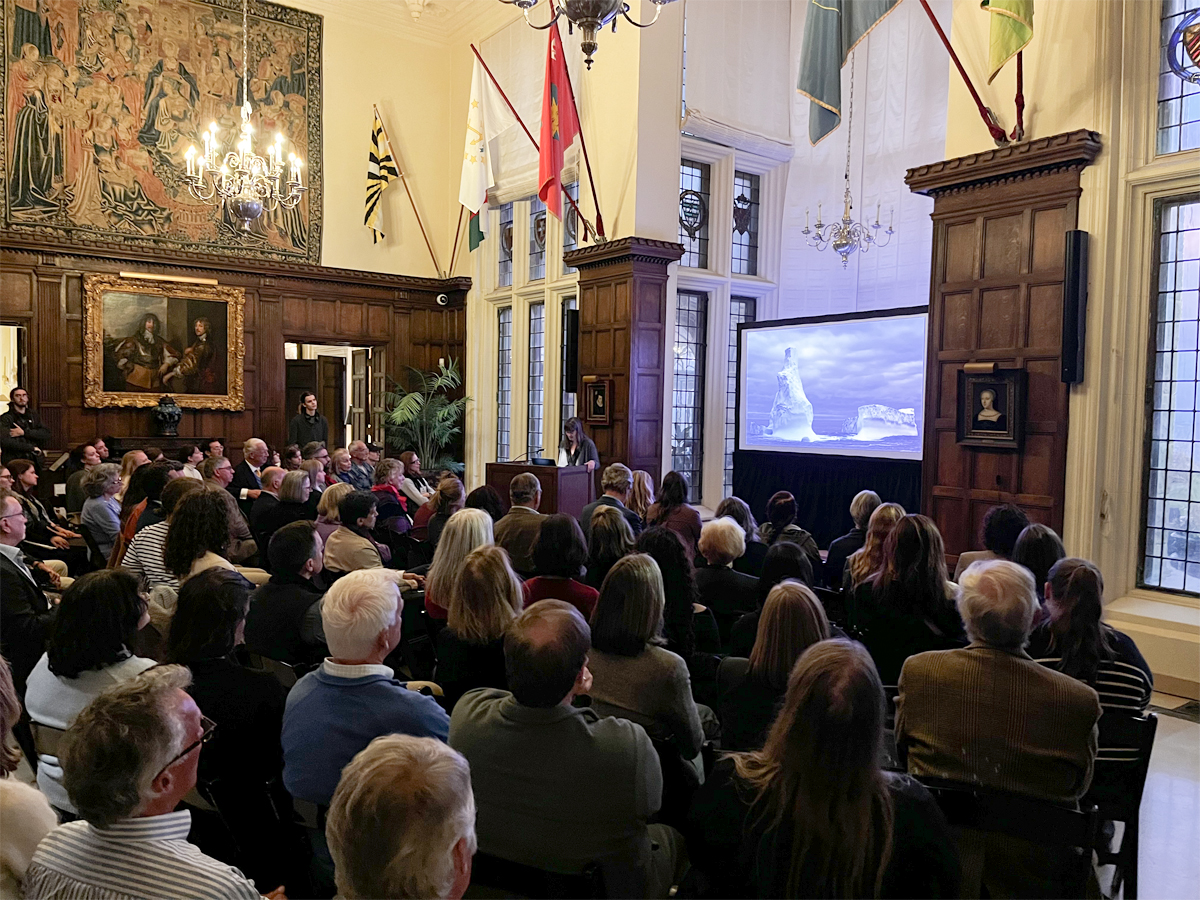
Keynote Presentation at Rough Point
From one event to a movement
While Newport was the first destination, it was not the last. A second conference was scheduled for Annapolis, Maryland, from October 29 to November 1, 2017. St. Augustine, Florida, hosted the third in May 2019. Portsmouth, New Hampshire, later announced it would host the annual conference as part of its 400th anniversary in 2023. That announcement noted that the first conference looked at best practices, not just from Newport, but from waterfront communities around the country and world that had been struggling with the universal challenge of rising sea levels.
Over time, the annual conference became about more than a single issue or community gathering. “Keeping History Above Water” now brings interdisciplinary conferences and workshops to vulnerable regions across the country and around the world, focused on protecting historic assets, cultural resources, and neighborhoods. The NRF also invites other communities to bring the program to their own cities and to put a local spin and flavor to the individual conferences.
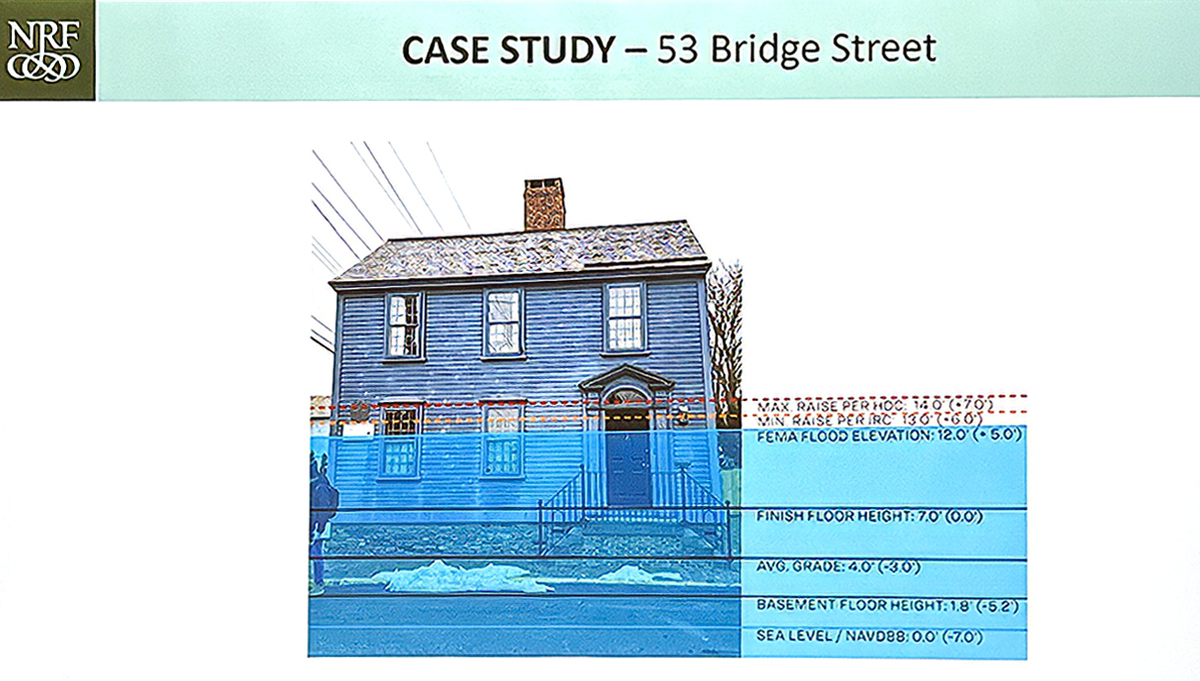
Case Study – 53 Bridge Street
The 2026 homecoming was billed as more than a simple symposium. The NRF framed the gathering as a celebration of ten years of advocacy, resource sharing, and resiliency building, with professional workshops, walking tours, special exhibitions, and a conference. Most of the symposium took place at the spacious Bazarsky Lecture Hall of Salve Regina University’s O’Hare Hall, located on Ochre Point Avenue. This academic setting, overlooking the Atlantic Ocean, was a tangible reminder of the beauty of waterfront locations but also the challenges that rising sea levels pose.
Looking back, moving forward
The subtitle of the tenth conference reflects how the field has changed. Back in 2016, the main task was lifting sea-level rise onto the larger preservation agenda. Early discussions weighed scenarios for individual buildings, with options at various costs and degrees of intervention to the building and its surrounding landscape. After a decade of meetings in Annapolis, St. Augustine, Portsmouth, and elsewhere the danger of sea-level rise is now widely accepted and the conference has refocused on building a a network of practitioners who can share what works and what doesn’t with one another.
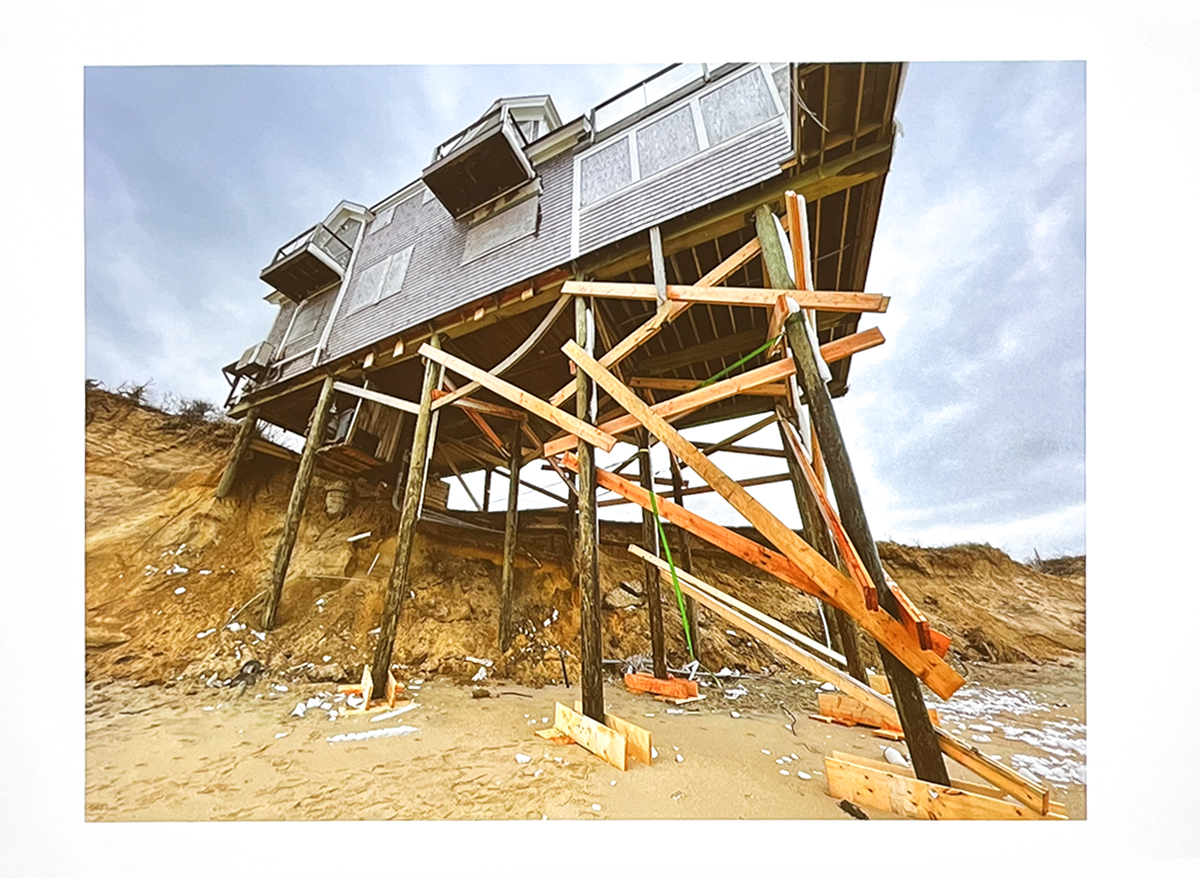
Raised House – Effected by Beach Erosion
The risk has not gone away or been solved. Tides and storms keep threatening historic waterfronts, and the buildings that anchor communities’ identities remain at ever greater danger. But the people responsible for these buildings are no longer working in isolation. The conversation that the NRF initiated a decade ago has turned into a worldwide collaboration, but one that recognizes how much work remains to be done in the future if we hope to keep our beloved historical buildings above rising water levels.
Whether you have a charming Colonial or a grand Gilded Age mansion in Rhode Island (or elsewhere in New England), the award-winning team of designers and preservationists at A4 Architecture would be pleased to discuss your plans to preserve and improve your building for the future. We have often worked on historical structures within “Special Flood Hazard” zones look forward to being in communication with you soon.
Ross Sinclair Cann (AIA, LEED AP) is an historian, educator, author, and practicing architect living and working in Newport for A4 Architecture. He is the founding Chairman of the Newport Architectural Forum and holds honors degrees in Architectural History and Design from Yale, Cambridge, and Columbia Universities and is a LEED Accredited Professional.