
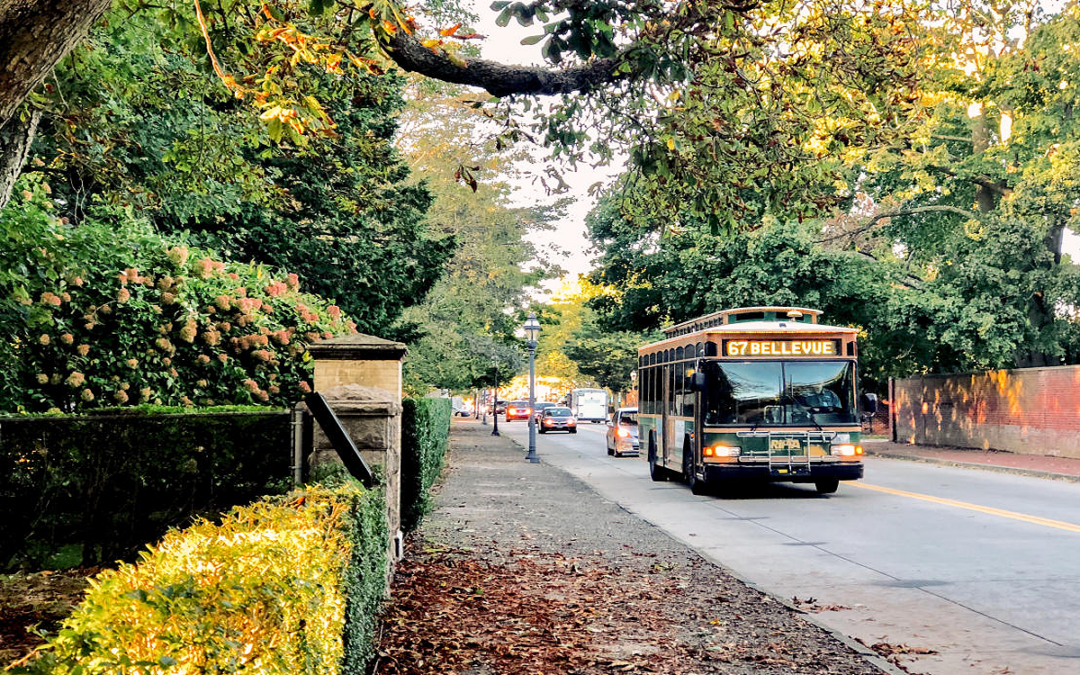
Route 67 Trolley (Bellevue Ave, Newport).
What a Free Trolley Teaches Us About the Case for Free Transit
Every summer, a fleet of trolleys rolls through the cobblestone streets of Newport, Rhode Island, carrying tens of thousands of riders to mansions, beaches, and museums without a single fare being collected. Route 67, the city’s “hop-on, hop-off” trolley, has quietly become one of the more compelling small-scale demonstrations of what happens when a community removes the price and inconvenience barrier from public transit.
The numbers tell a striking story. Trolley service on Route 67 and the connected Route 68 is funded by Discover Newport and the Episcopal Diocese of Rhode Island, with RIPTA reporting over 180,000 passenger trips across the two routes in a single year. Parking vouchers tied to the program, which offer discounted parking for riders who use the trolley, were redeemed more than 6,800 times in one season alone, showing how directly the free service pulled cars off the over-crowded roadways.
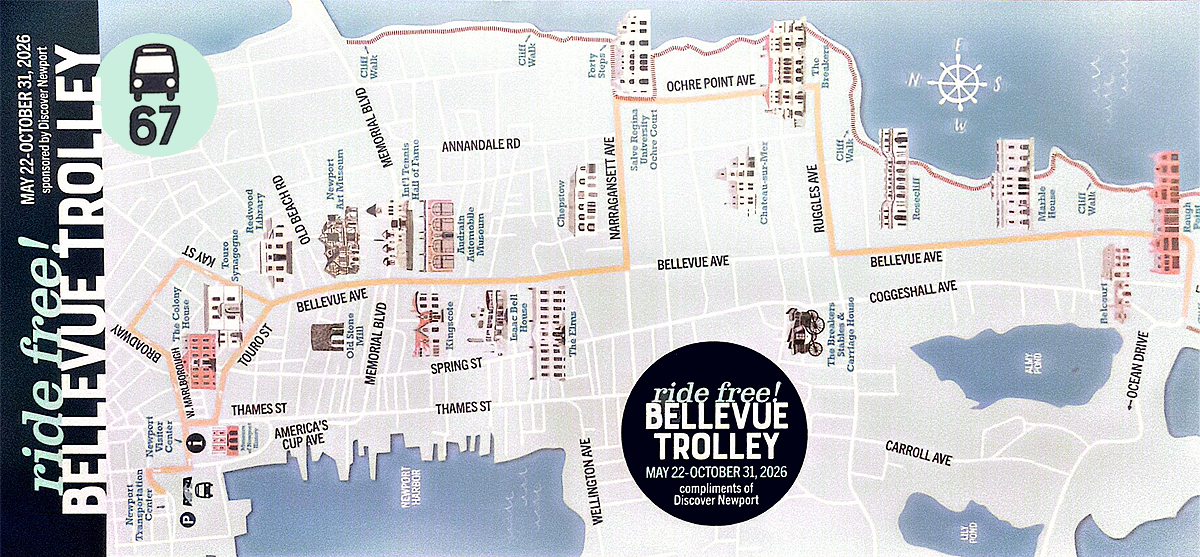
Bellevue Trolley Summer Route, Newport
That traffic reduction is the program’s central selling point. RIPTA’s CEO has described the partnership as a creative solution for easing congestion during peak tourist season while also benefiting the local community. Newport is a compact city with narrow colonial-era streets, and summer tourism multiplies the number of vehicles competing for limited road space and parking. A free trolley system that visitors and residents alike can use without a second thought turns car trips into trolley trips, easing pressure on roads and parking lots never designed for modern traffic volumes.
The program also illustrates a point free-transit advocates often make: removing fares doesn’t just attract new riders, it changes how people think about transit altogether. Discover Newport’s president has noted that the program’s success shows real interest from both visitors and locals in alternative ways of getting around, and that offering an easy, sustainable option helps divert cars from the road during the busy summer and fall seasons. When a service is free, it stops being a transaction people calculate and starts being a default choice, the same way a free shuttle at an airport gets used by people who would never dream of hailing a cab for the same short trip.
There’s also an equity dimension that’s easy to overlook in a tourist town. Newport’s mayor has tied the program to broader goals of improving traffic, mobility, and equity in the city, framing it as part of a longer relationship between residents and public transit. A free route doesn’t just serve out-of-town visitors snapping photos along the Cliff Walk; it serves service workers, students, and residents who rely on transit daily but for whom even a small fare can be a meaningful barrier.
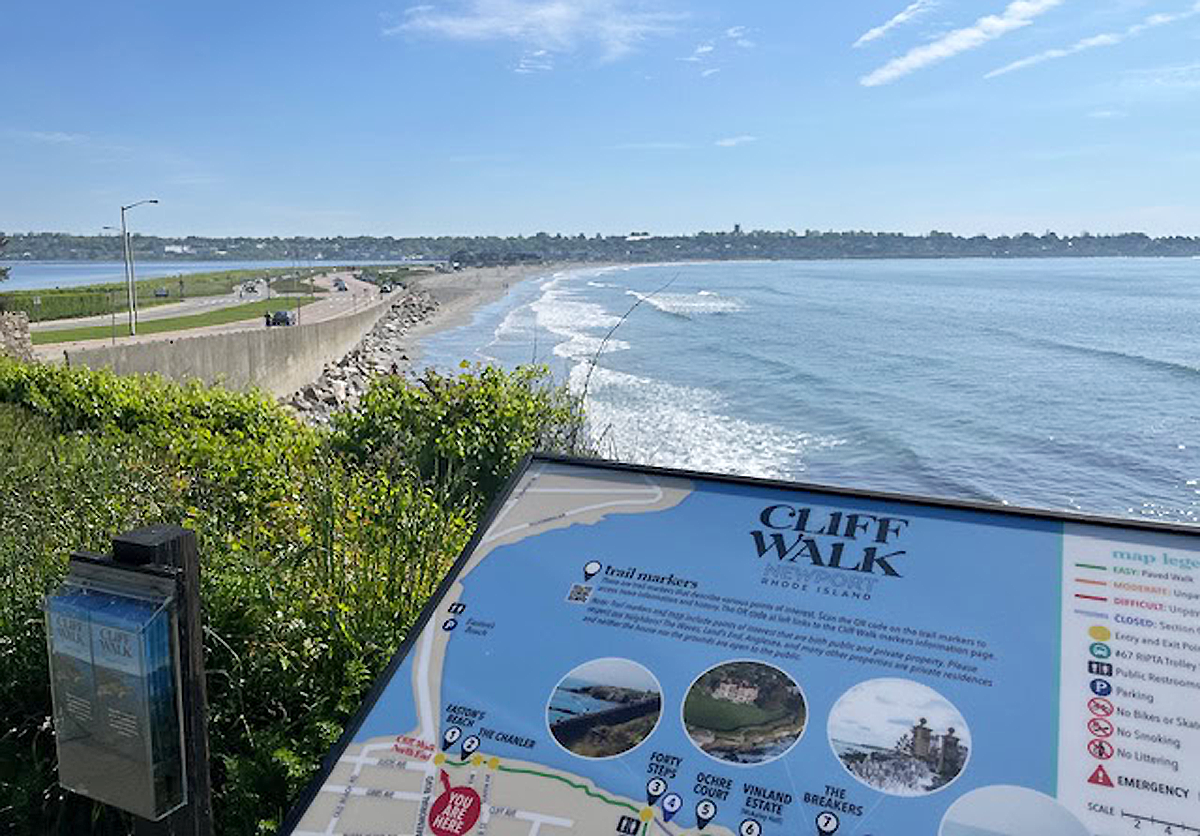
Cliff Walk (Newport, RI)
Additionally, in historic cities where the roadway system is complex and not really scaled for modern vehicles, getting tourists out of their cars increases the safety of pedestrians and bicyclists who share the roadways. This is a benefit for the “Complete Streets” approach to urban roadway design. Improving and increasing mass transit also makes Transportation Oriented Development (TOD) more feasible and successful, helping address the housing shortage that Rhode Island and many other states suffers from.
Newport’s Route 67 is not a citywide subway system, and its lessons don’t automatically scale to a major metropolitan network. But its evidence base is hard to dismiss: a measurable, repeatable drop in car trips, sustained ridership growth over multiple years, and a public-private funding model that doesn’t rely on taxpayer subsidy alone, since the service has run on support from RIPTA and Discover Newport for the better part of a decade. In a small coastal city wrestling with the same congestion and parking challenges as much larger places, a free trolley has become a working proof of concept for an idea many cities have only considered in theory.
A4 Architecture is partnering with high-quality developers of multi-family housing to use clever and efficient design approaches to help create new housing units for families and individuals that are desperately needed. We look forward to working with more like-minded people and companies that want to address this critical market segment by building new housing for the community while keeping the design and construction quality of these new units high.
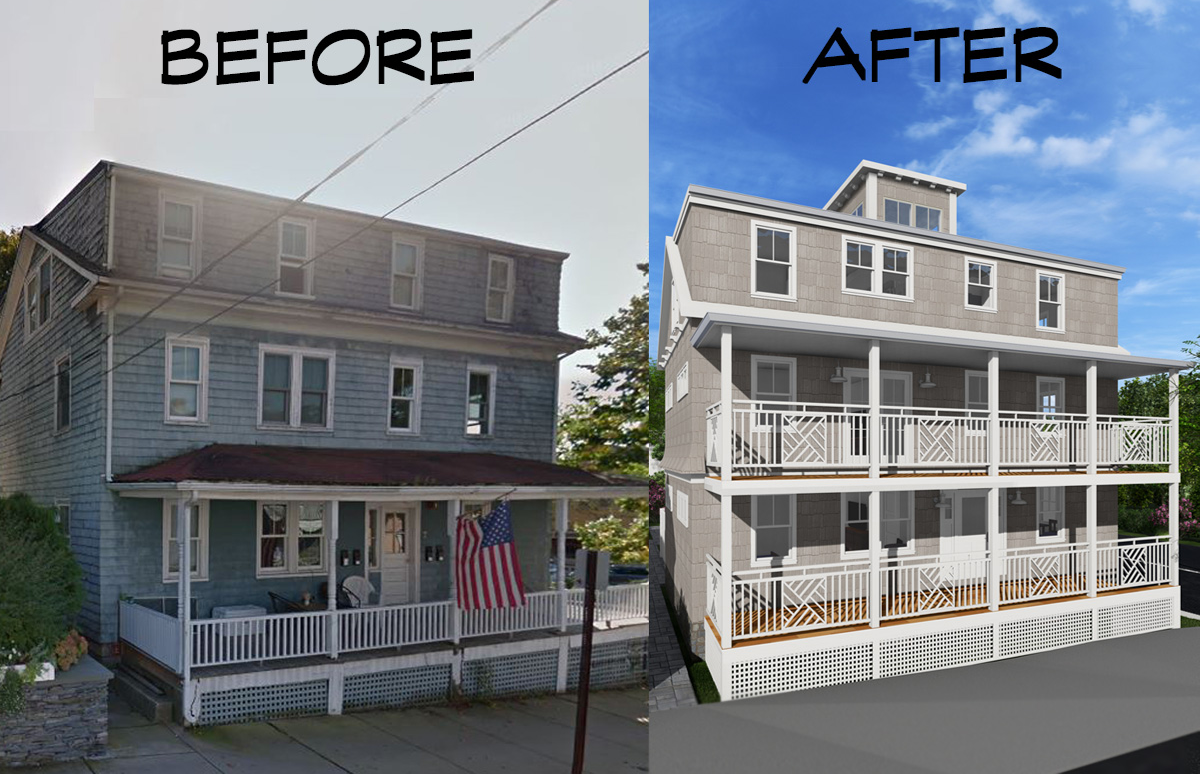
A4 Architecture Single Home design Developed into a Multi-family
Ross Sinclair Cann, AIA is a historian, educator and practicing architect. He is the Founding Principal of A4 Architecture in Newport, Rhode Island and holds architecture degrees from Yale, Cambridge, and Columbia Universities. A4 Architecture is working to create high-quality, multi-family developments through Rhode Island and the surrounding states.
Hi Ross, Great job! I wish I could open the transit map to see it.
That single family re-do into multiples is fantastic. How would I find a place like that (through a real estate person? )
I’ve enjoyed your lectures (salve, Newport Historical) when are you speaking again please? Thank you.