
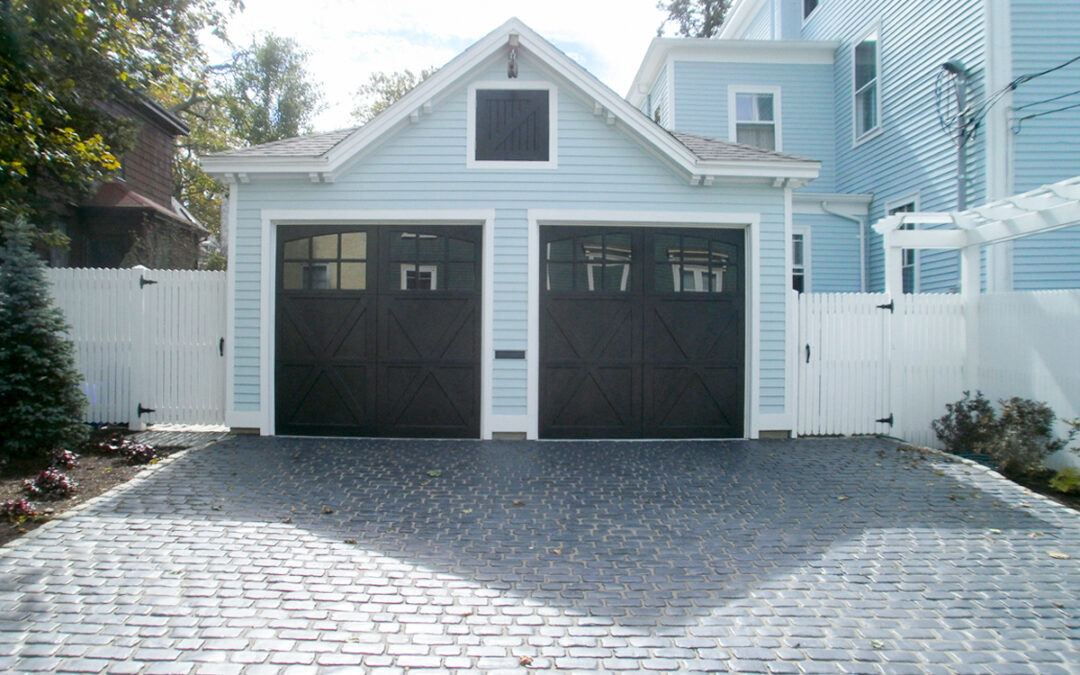
(Washington Street Newport, RI Permeable Driveway by A4 Architecture)
Newport Proposes a New Stormwater Fee, Joining a Growing National Trend
Newport, Rhode Island, is potentially moving toward a significant change in how it pays for managing rainwater runoff. The city’s Water Pollution Control Division is developing a dedicated stormwater fee that, unlike the current system, would be charged based on how much impervious surface (including driveways, roofs, parking lots, and other hard, water-shedding surfaces) sits on a given property. Right now, stormwater management in Newport is funded through the sewer rate, meaning the cost is bundled in with wastewater bills regardless of how much runoff a particular property actually generates. Under the proposed restructuring, that would change. Properties with more pavement and roofline would pay more, and those with more permeable, green space would pay less.
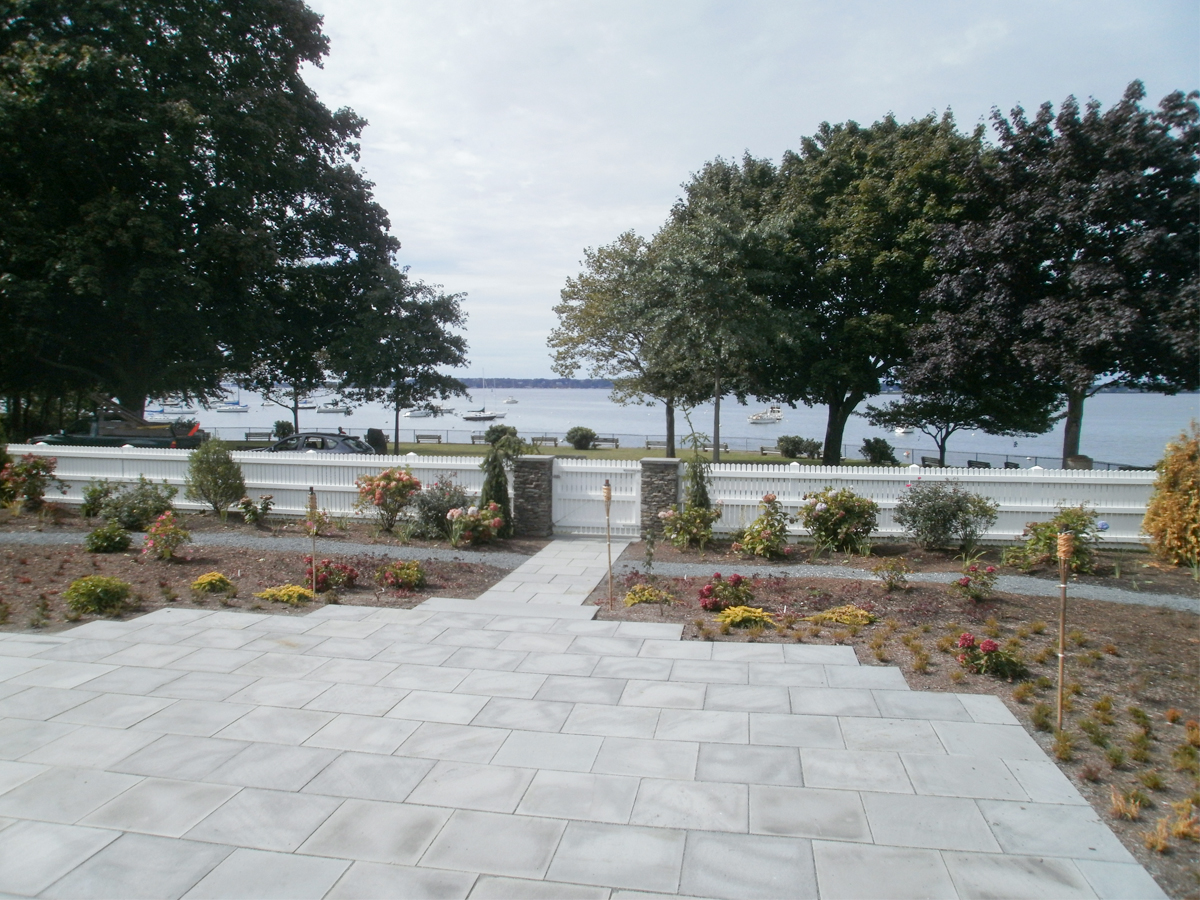
(Washington Street Newport, RI Permeable Paving by A4 Architecture)
The idea is not simply to raise money, city officials say — it’s about fairness. Impervious surfaces are the single biggest driver of how much polluted runoff washes into storm drains, and eventually into Narragansett Bay, during a storm. Newport’s stormwater infrastructure is aging, with some pipes dating back to the 1870s, and much of the city’s southern neighborhoods still rely on a combined sewer system that carries both stormwater and wastewater — meaning heavy rain can overwhelm treatment capacity and threaten water quality. Under the proposal, the city says total revenue collected would not necessarily increase; rather, revenues would be allocated so that the properties creating the most runoff would bear a fairer share. The plan also calls for restructuring sewer charges, including lowering the volumetric rate residents pay per gallon. At this point, nothing is final: any change requires two public hearings before the Newport City Council, to be followed by state approval.
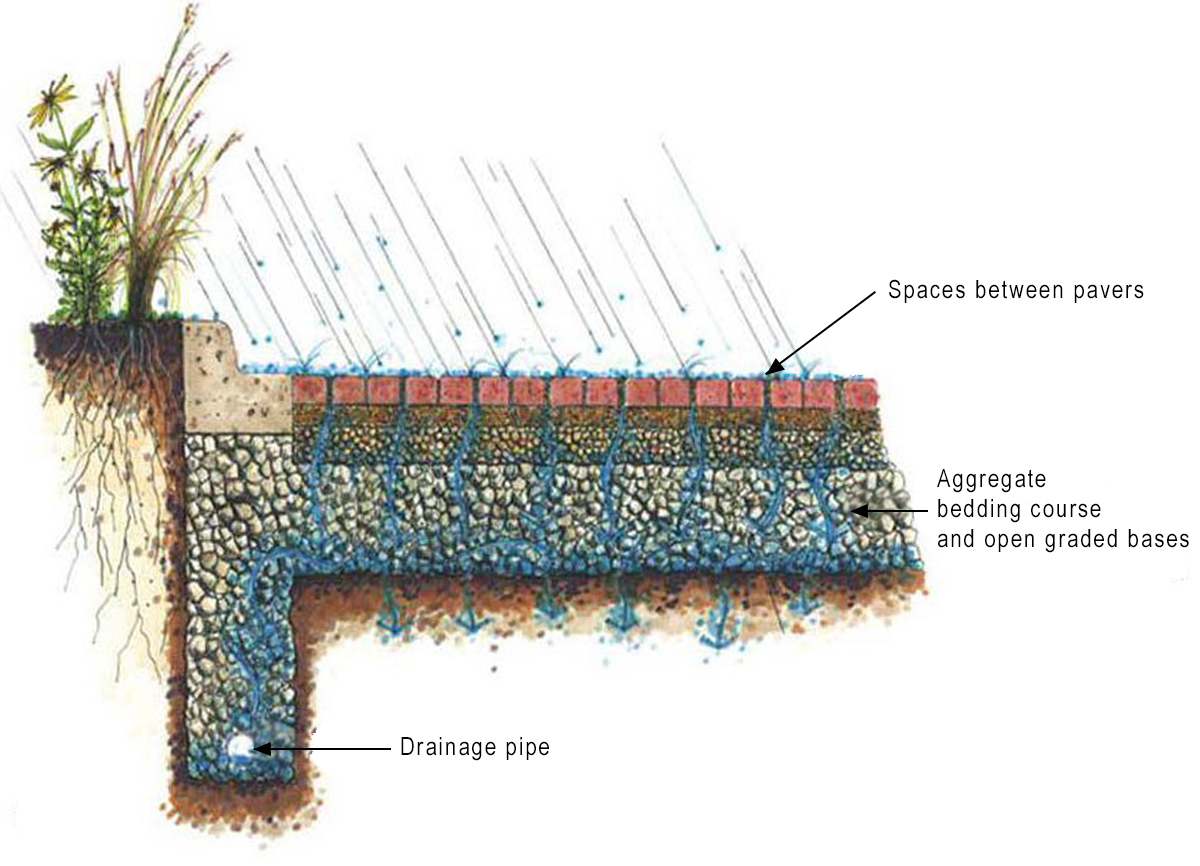
(Permeable Paving Diagram)
In this approach, Newport is not out ahead of the curve so much as catching up to broader trends. Stormwater utility fees tied to impervious surface area, have become increasingly common across the country as cities grapple with aging drainage systems, more frequent intense storms, and shrinking federal infrastructure dollars. A 2025 assessment from the American Society of Civil Engineers found that the estimated 20-year capital need for the nation’s stormwater systems has grown nearly fivefold over the past decade, far outpacing what’s currently being invested. Industry surveys suggest that the vast majority of stormwater utilities already base their charges primarily on impervious area, and municipalities from suburban Georgia to small cities in Iowa and Utah have rolled out or raised similar fees just this year. Proponents argue the approach is simply fairer than folding stormwater costs into property taxes or general sewer bills, since it ties what a property owner pays to the runoff their own land actually produces — and it nudges owners toward permeable pavement, rain gardens, and other green infrastructure that can lower their bill. For Newport residents, the coming public hearings will be the moment to weigh in before any fee takes effect, but the direction of tying municipal payments to the impervious area of each property is clear.
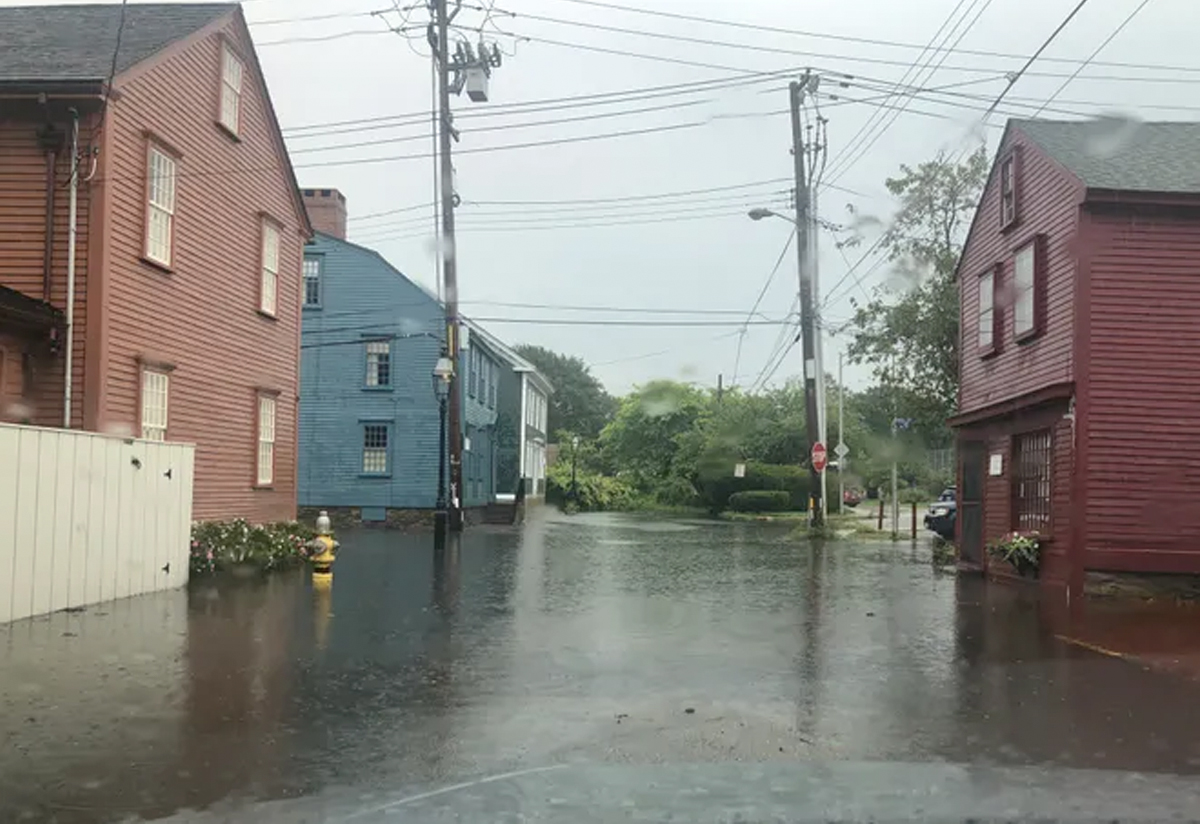
(Newport Flooding – 2022)
A4 Architecture is expert in utilizing pervious paving materials for driveways and walks. Not only is this the more sustainable approach to design, with taxes on impervious areas likely to increase, this is a smart approach to keep property taxes lower in the future. We look forward to working with more like-minded people and companies that want to address these critical design elements in their projects.
Ross Sinclair Cann, AIA is a historian, educator and practicing architect. He is the Founding Principal of A4 Architecture in Newport, Rhode Island and holds architecture degrees from Yale, Cambridge, and Columbia Universities. A4 Architecture is working to create high-quality, architectural projects through Rhode Island and the surrounding states.