
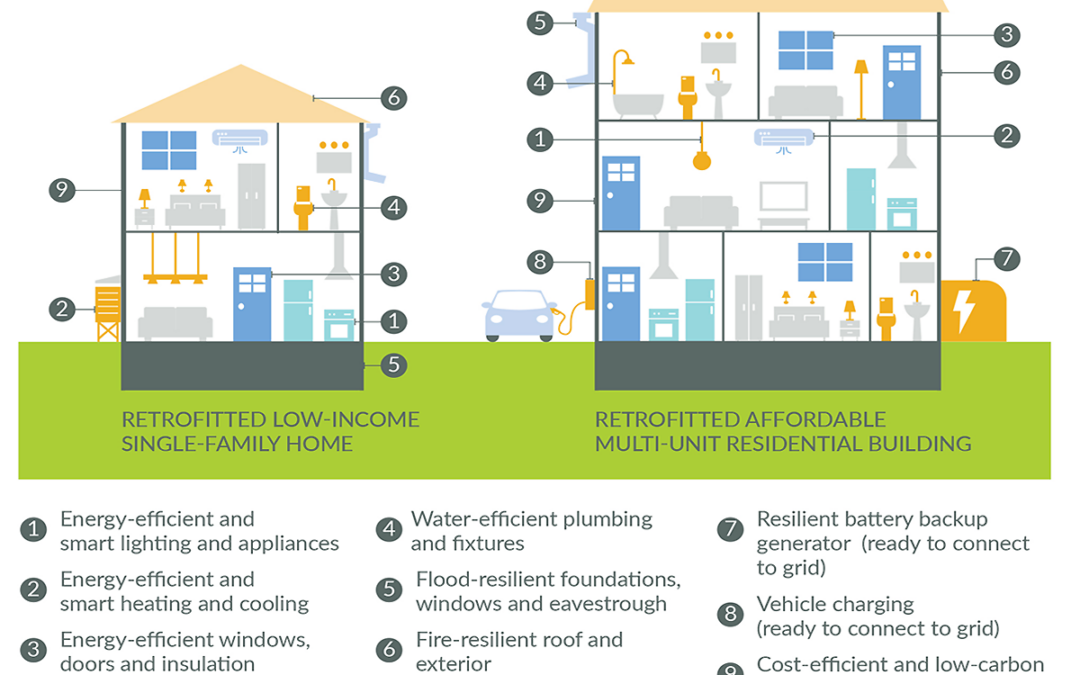
As energy costs rise and the awareness of rapid climate change grows, homeowners and building managers are increasingly considering deep energy retrofits (DERs), which are comprehensive upgrades that tackle insulation, windows, and heating and cooling systems all at once. It’s a significant undertaking, and like most major investments, it comes with real advantages and some genuine drawbacks. This article will briefly summarize the Pros and Cons of this renovation typology so that you can better understand what is involved and whether this approach is right for you and your building.
What Is a Deep Energy Retrofit?
A DER goes far beyond swapping out a furnace or adding attic insulation. It’s a whole-building approach: sealing and super-insulating the building envelope, replacing outdated windows with high-performance glazing, and upgrading mechanical systems (often with heat pumps or other efficient technology). The goal is typically to cut energy consumption by 50% or more.
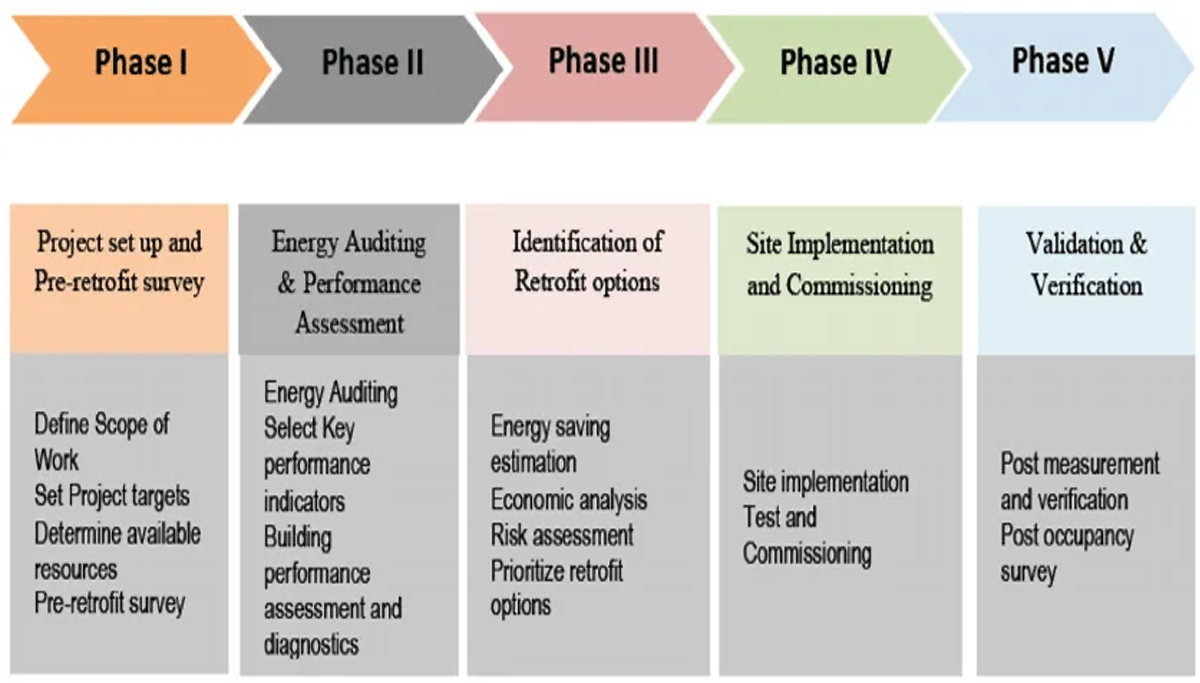
Phases in Deep Energy Retrofits
What are the Pros?
Dramatic Energy Savings: The most obvious benefit is a steep reduction in utility bills. A well-executed DER can slash heating and cooling costs by 50–75%, meaning the building simply needs far less energy to stay comfortable year-round. Over a decade or two, those savings add up considerably.
Improved Comfort: Cold drafts, hot spots, and humidity problems often trace back to a leaky, poorly insulated building shell. New windows eliminate condensation and radiant cold; better insulation keeps temperatures even from room to room. Occupants routinely report that comfort improves as dramatically as energy bills drop.
Higher Property Value: Energy-efficient buildings command premium prices in most markets. Buyers and tenants increasingly factor operating costs into their decisions, and a certified high-performance building stands out in listings.
Reduced Carbon Footprint: For anyone motivated by environmental impact, a DER is one of the highest-leverage actions available. Pairing a tight building envelope with an electrified heat pump essentially decouples the home from fossil fuels — especially as the electrical grid gets cleaner over time.
Better Air Quality and Durability: Modern retrofits pair air-sealing with controlled mechanical ventilation, which filters incoming air and controls moisture. This reduces allergens, radon infiltration, and the mold risk that plagues leaky older buildings.
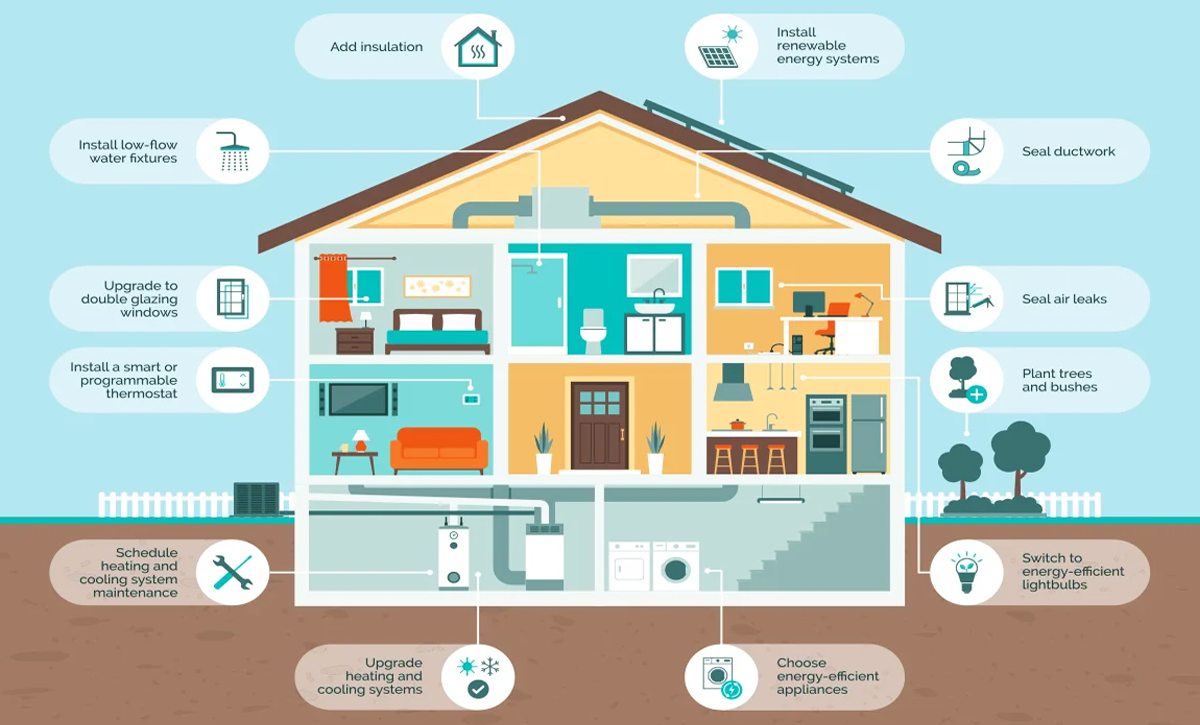
DER Home Improvements
What are the Cons
High Upfront Cost: This is generally the biggest barrier. A thorough DER on a single-family home can run anywhere from $50,000 to $150,000 or more, depending on the building’s size, age, and starting condition. Even with rebates and tax credits, the initial outlay is substantial.
Long Payback Period: Because energy costs are spread over time, payback periods of 10–20 years are common. Owners who plan to sell in a few years may not recoup their investment, though improved resale value partially offsets this. Still, this represents an annual Return on Investment (ROI) of 5-10% which is not bad, with all the savings after the return period going directly to the building owners’ bottom lines.
Disruption During Construction: A full retrofit often means temporary displacement, walls opened up, and months of contractor activity. For occupied buildings — especially multifamily or commercial properties — managing that disruption is a severe logistical challenge. This is not something that should be undertaken lightly, but makes better sense as part of a larger renovation.
Risk of Getting It Wrong: A partial or poorly sequenced retrofit can cause problems. (For example) Over-tightening a building without providing adequate ventilation, can trap moisture and pollutants. Sequencing matters. The envelope must be addressed before downsizing mechanical systems, or the new equipment will be undersized for the load. Professional assistance is essential for a good DER.
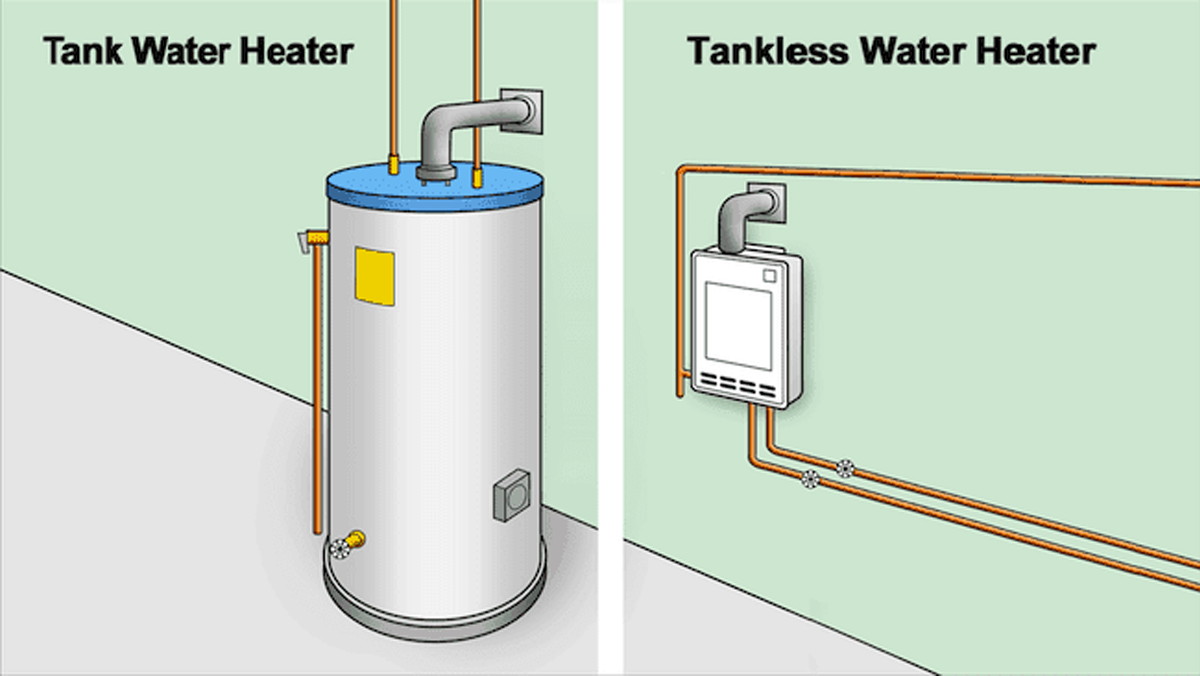
Before & After DER Water Heater Improvement
The Verdict
A deep energy retrofit is one of the most impactful investments a building owner can make — but it demands careful planning, qualified contractors, and a long-term ownership horizon. For those willing to commit, the combination of lower bills, better comfort, and reduced environmental impact makes a compelling case. There are many new construction products like double pane windows, induction cooktops, tankless heaters (among many others) that can greatly improve the performance and sustainability of your home as part of a renovation. Not doing a deep energy retrofit when you are doing a whole house renovation is to miss a tremendous opportunity for long term financial gain and improvement of living quality.
If you would like your New England building designed to not only be more comfortable but also more sustainable and energy efficient, please reach out to the award-winning professionals at A4 Architecture and we will be pleased to help you achieve your project’s goals.
Ross Cann, RA, AIA, LEED AP, is an author, historian, and practicing architect living and working in Newport, RI. He holds degrees with honor in Architecture from Yale, Cambridge, and Columbia Universities. He studied Molecular Biophysics as an undergraduate at Yale and understands the science just as well as he understands the aesthetics of creating a beautiful and functional building.