

One of the biggest challenges for people who have not undertaken a renovation or new construction project before is figuring out how to get started. Some are tempted to skip the design process and just hire a contractor, but starting a construction project without a clear plan is a fast track to delays, budget overruns, and frustration. Collecting all relevant information, carefully setting project goals, and hiring a qualified architect before engaging a contractor are three interdependent steps that dramatically increase the likelihood of a successful project.
Gathering relevant information
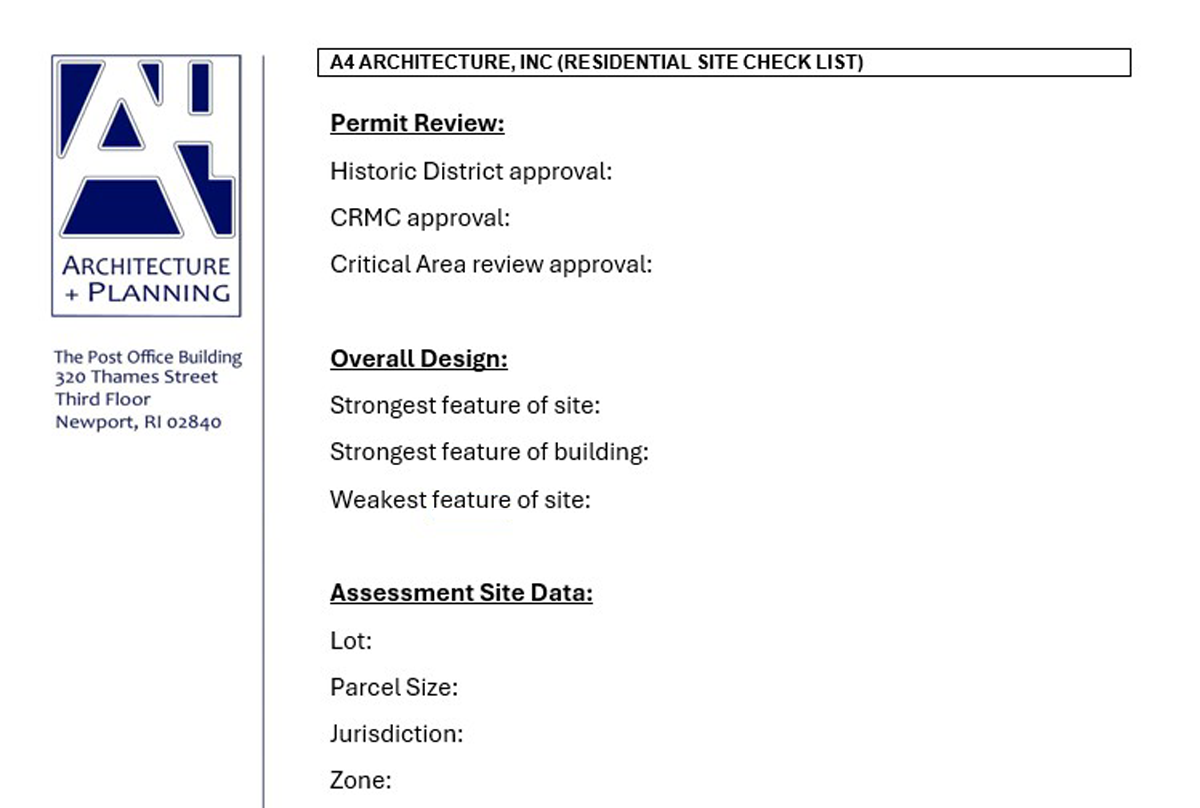
A4 Architecture Residential Site Checklist Form
The first step is to comprehensively gather all necessary documentation and information. Site analysis, zoning and permitting requirements, utility access, soil and environmental reports, and accurate cost benchmarks all inform realistic decision-making. Omitting these details invites nasty surprises—unexpected soil conditions can force expensive redesigns, and unanticipated permitting constraints can halt progress. Early information-gathering also clarifies constraints and opportunities, enabling informed choices about scale, materials, and systems that align with both regulatory demands and long-term maintenance considerations. If the project involves renovating an existing structure, collect the building plans or make sure a thorough and accurate survey of the existing building is conducted. This is like getting an Xray before conducting internal surgery of a body—it is a critical and essential step.
Define the project goals
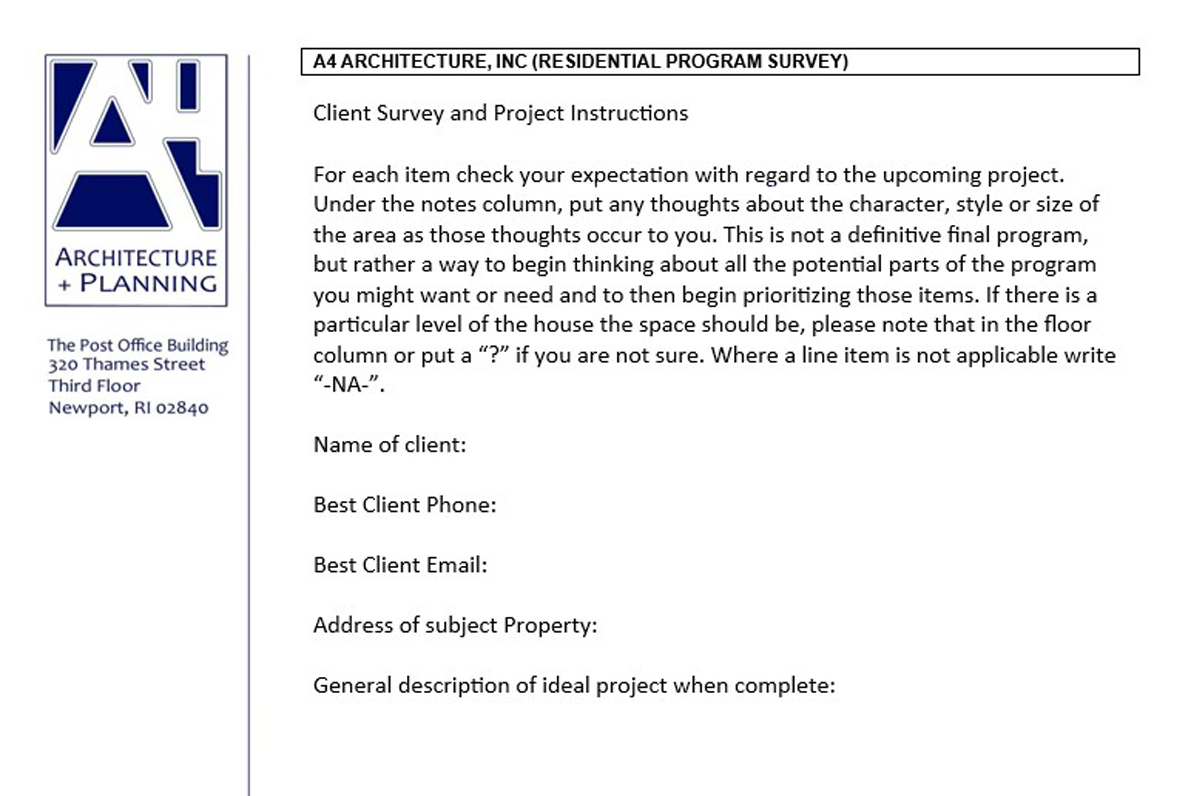
A4 Architecture Residential Site Program Survey Form
Next, define clear project goals. Precise goals translate aspirations into measurable objectives: budget limits, timeline milestones, sustainability targets, functional requirements, and aesthetic priorities. Goals act as decision filters during design and construction; when trade-offs arise, teams refer back to the project brief rather than making ad hoc compromises. Well-articulated goals also facilitate better communication among stakeholders—owners, lenders, designers, and eventual contractors—reducing scope creep and disputes driven by differing assumptions.
Engage a qualified and capable architect
Hiring a qualified architect before selecting a contractor ensures that your goals and the site’s realities are translated into coherent, buildable plans. Architects synthesize technical information and client objectives into coordinated drawings and specifications that permit accurate contractor bids. When contractors bid from incomplete or poorly coordinated documents, bid variances arise and change orders become inevitable. A qualified architect also anticipates constructability issues, recommends cost-effective assemblies, and guides material selection to meet performance criteria and budget targets. Their involvement during contractor selection supports fair evaluation of bids based on the same set of documents, reducing ambiguity and fostering competitive, comparable pricing.
Together, these steps minimize risk, protect budgets, and shorten timelines. Investing time upfront to collect data, define goals, and engage an architect transforms an uncertain and challenging problem into a much more controlled process—one where contractors build to a clear vision, and owners receive predictable value instead of costly surprises and unexpected delays.
If you would like to see your New England project designed beautifully and have the design process managed capably all the way through to a successful completion of your project, please reach out to the award-winning team at A4 Architecture to assist you in achieving your goals.
Ross Sinclair Cann, AIA is a historian, educator, and practicing architect living and Founding Principal of A4 Architecture in Newport, RI. He holds honors architectural degrees from Yale, Cambridge, and Columbia Universities and is a member of numerous committees, commissions, and boards. He has been a licensed and award-winning architect for more than 30 years.