
When planning a building project, whether a new home, a commercial space, or a significant renovation, the temptation of an owner to skip the architect and go straight to a contractor is understandable. Architects cost money, and budgets are tight, but this logic is short-sighted. Hiring a licensed architect is not an added expense; it is one of the highest-returning investments a property owner can make.
Design Errors Are Far More Expensive Than Design Fees
Amateur designs and contractor-led projects frequently suffer from the same core problem: lack of integrated planning. A contractor’s expertise lies in building what is documented in the design drawings, not in anticipating structural conflicts, code violations, or spatial inefficiencies before a single wall goes up. When problems emerge mid-construction (as they inevitably do when insufficient planning has been done) the cost to demolish, redesign, and rebuild will be far greater than what an architect’s fee would have been to avoid the problem. Studies in the construction industry consistently show that errors caught in the design phase cost a small fraction of what they cost to fix in the field.

Code Compliance and Permitting
Building codes exist for safety, and navigating them is a professional skill unto itself. Architects are trained and licensed to design within local zoning laws, fire codes, accessibility requirements, and structural standards. An amateur or an unchecked contractor who submits non-compliant plans faces permit rejections, stop-work orders, and mandatory alterations — all of which cascade into delays and cost overruns. An architect helps get it right the first time, keeping the project on schedule and legally sound.
Savings through Competitive Bidding
Having a set of building documents allows the owner to competitively (and accurately) bid a project in a way that can be actually enforced from a legal perspective. Without these drawings and architect supplied contracts, the owner will be completely in the hands of the contractor — for good or ill. Knowing that they are bidding against other qualified contractors will generally incentivize the various competing firms to give their best and lowest price. Often the savings gained from competitively bidding a project alone will be greater than the total design fees on a project, meaning that the owners are essentially getting a professional design free of charge, even before many other benefits accrue later.
Value Engineering and Budget Management

Supply New England, Newport, Renovation by A4 ARchitecture
Paradoxically, a skilled architect often saves money on the overall project budget by specifying the right materials, optimizing the structural system, and eliminating redundancies before construction begins. Contractors, left to their own devices, may default to familiar, and not always the most up-to-date methods and materials. An architect acts as the owner’s advocate, reviewing contractor bids, identifying inflated line items, and ensuring the scope of work matches the original vision for the project.
Increased Property Value and Resale Return
Architecturally designed homes consistently command higher resale prices than comparable properties built without professional design oversight. A well-designed space — one that maximizes natural light, flow, and functionality — is immediately recognizable to buyers and appraisers alike. The National Association of Realtors has noted that thoughtful design upgrades regularly yield returns of 70–100% or more at resale. Living in or using a beautifully designed building yield benefit every day from the pleasure and superior functionality of the design, which is hard to put a value on.
The Bottom Line
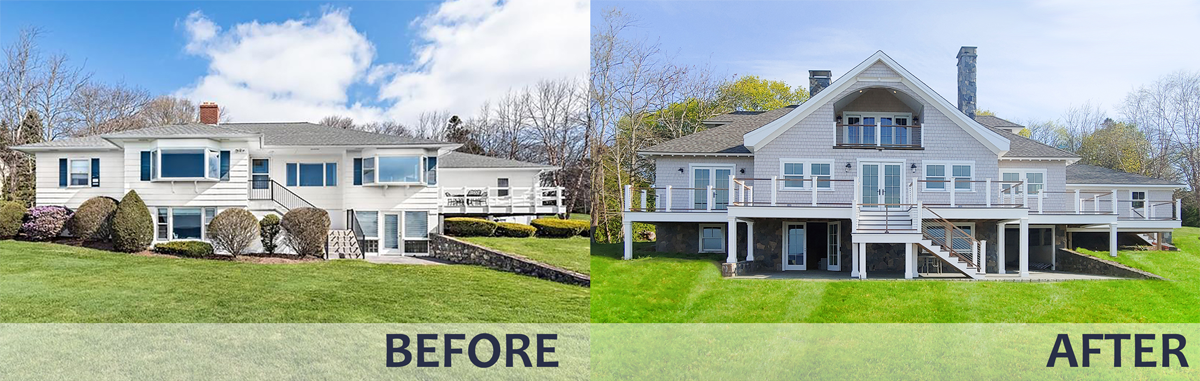
Typical Before-and-after transformation of a home redesigned by A4 Architects
Architect fees typically run between 6% and 14% of total construction cost. Against the risk of mid-project redesigns, code violations, contractor disputes, and lost resale value, that fee is not a cost — it is insurance, advocacy, and creative expertise rolled into one. The question is not what you can save by forgoing the use of an architect, it is how much the owner will lose, both in the short-term and long term, by going without one.
If you would like to see your New England project designed beautifully and have the design process managed professionally all the way through to a successful completion of your project, please reach out to the award-winning team at A4 Architecture to assist you in achieving your goals.
Ross Sinclair Cann, AIA is a historian, educator, and practicing architect living and Founding Principal of A4 Architecture in Newport, RI. He holds honors architectural degrees from Yale, Cambridge, and Columbia Universities and is a member of numerous committees, commissions, and boards. He has been a licensed and award-winning architect for more than 30 years.