
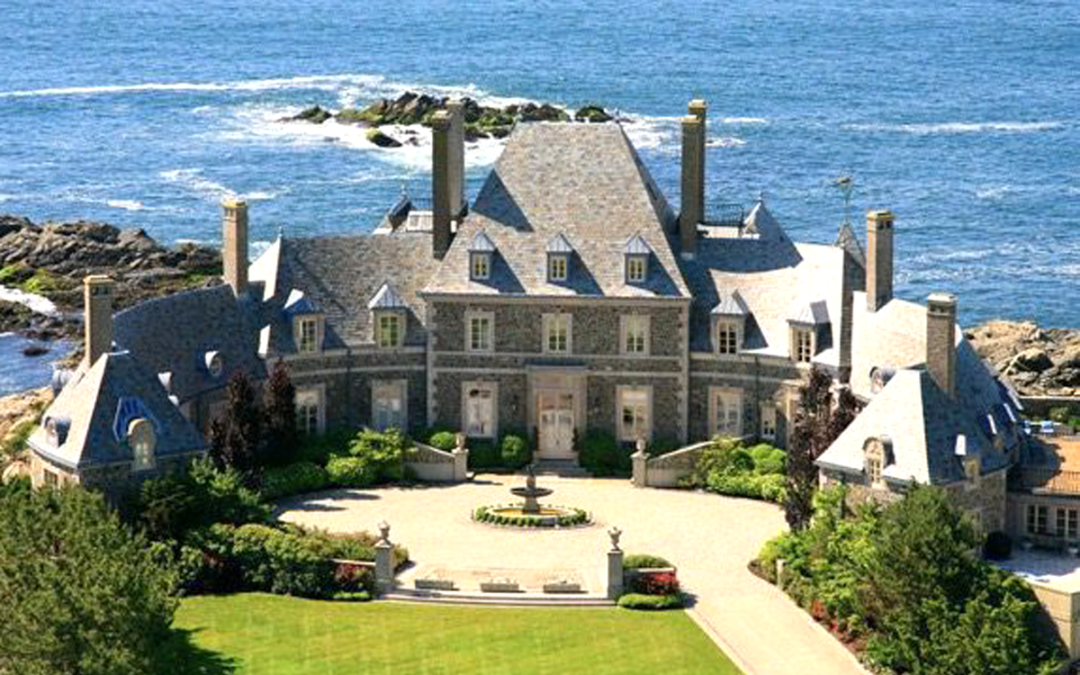
Seafair: Newport’s “Hurricane Hut”
Located on the Ocean Drive in Newport, Rhode Island, Seafair, originally named Terre Mare, is a grand French château style mansion that has kept a quiet vigil over the Atlantic since its construction in 1935. This stone sentinel that has outlasted the worst the sea could throw at it, surviving the horrific hurricane that hit Newport on the night of September 21, 1938, when it became informally known in Newport circles as “Hurricane Hut.”
Designed in the Louis XVI style by British architect William Mackenzie, Seafair is a brick, limestone, and slate construction built, as admirers have long noted, “to compliment the curve of the coast.” The estate was built for the Reed family — the descendants of Verner Zevola Reed, a Colorado mining heir whose fortune shaped their privileged world. Perched on its own small peninsula with sweeping Atlantic views, Seafair was the last of the large pre-World War II grand cottages to be built in Newport at the time of its completion.
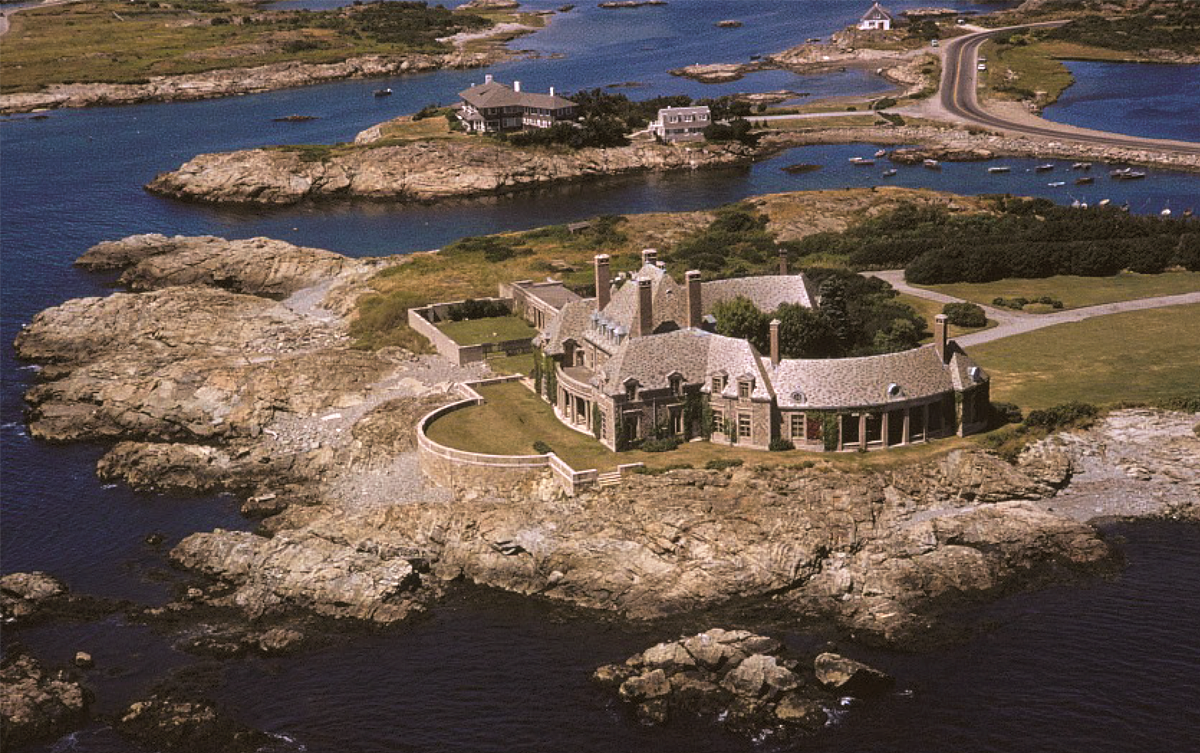
Seafair Aerial View, Newport
The mansion enjoyed barely two years of peaceful grandeur before nature intervened. Lacking a ledge reef to protect it from the brunt of storms coming off the Atlantic, Seafair’s existence today is a testimony to its strong rubble stone and slate composition. On September 21, 1938, the estate and its occupants found themselves directly in the path of what became one of the most catastrophic storms in New England history. September 21st was the highest tide of the year. A high-pressure area over the Eastern United States and another at sea prevented the storm from following a natural course and spinning out to sea, directing it instead on a long, straight northerly course up the Atlantic coast. Unlike today, the hurricane hit Newport from the ocean without almost any notice.
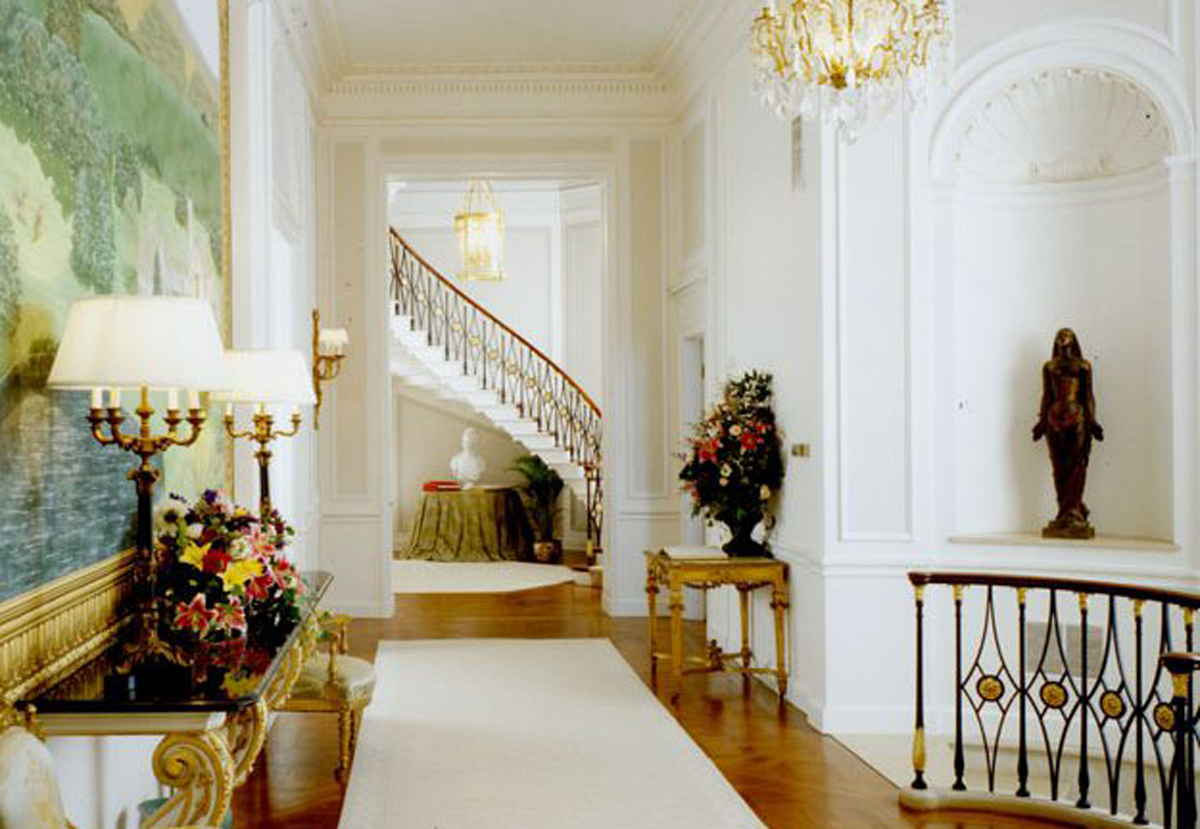
Seafair Hallway into Grand Staircase, Newport
The terror that unfolded at Seafair that night was harrowing. Guests experienced horrific gales, a boiling, cascading sea approaching 15 feet above mean high water, and a terrifying roaring wind of 120 miles per hour. Escape suddenly became the only reality. According to Private Newport, the guests were forced to flee dramatically — taking the grand staircase to the second floor, exiting the windows at the western end, crawling along the leeward side of the roof, climbing down to the ground, and making their way to Ocean Drive just in time. Soon thereafter the waves broke up the granite block sea wall, hurling huge pieces over the roof of the house — yet the mammoth, solid structure withstood the onslaught of the churning sea being thrown against its doors and windows.
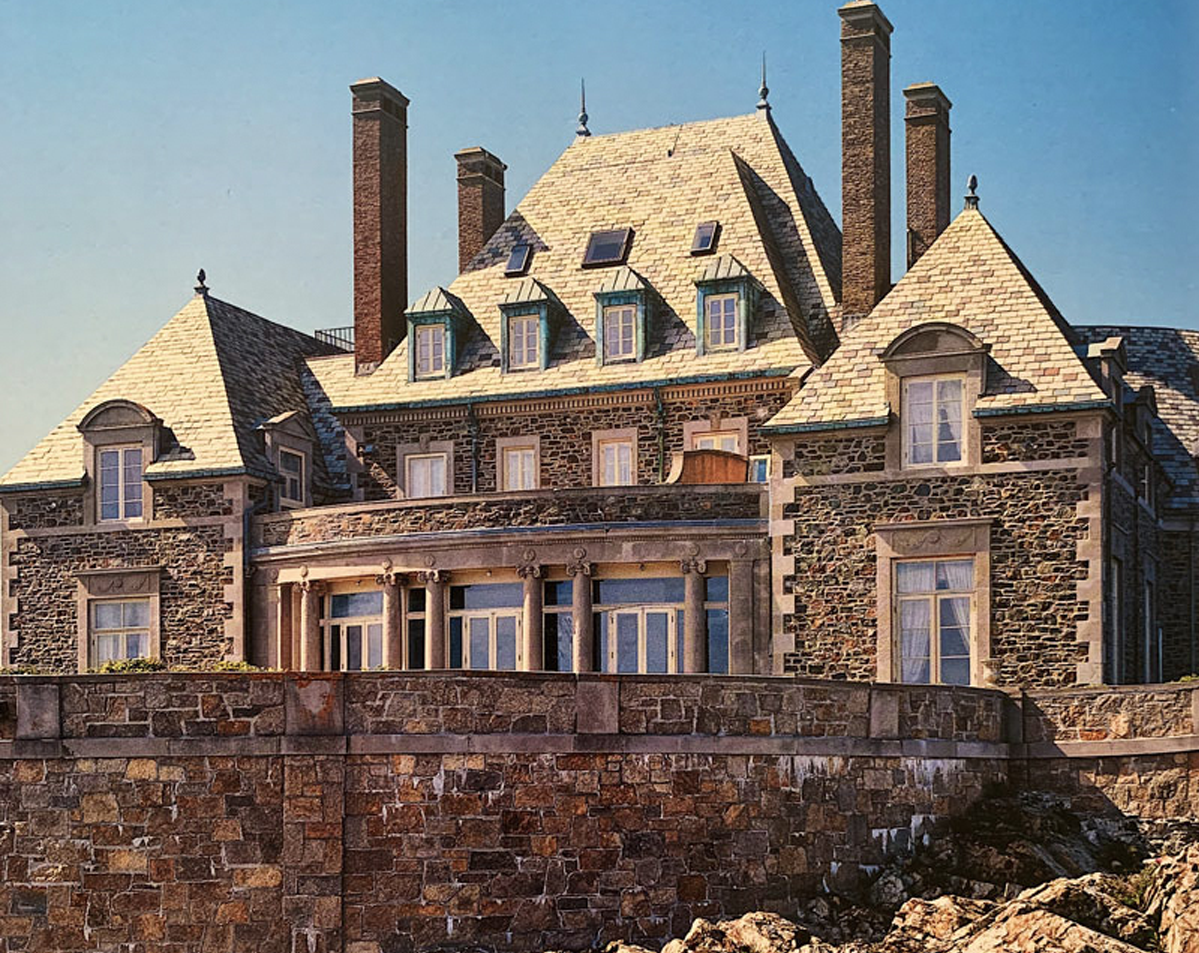
West End of Seafair, Newport
While the house survived, its owners did not recover as easily. Following the hurricane, the owners generally abandoned Seafair — not just due to storm damage, but from the mental anguish of just barely escaping their home alive. This was also during the Great Depression when many of Newport’s Great houses were being emptied of their staff and falling upon hard times. Seafair stood empty until the end of World War II, its interior damage was repaired but left largely uninhabited by the distraught family who had originally built it.
The decades that followed brought a procession of owners and indignities. In the early 1950s, the house was purchased by the son of the owner of the Hope Diamond and lived in until the 1960s. After that developers purchased the property, and the grand rooms were carved into apartments and ultimately condominiums. Then came a turning point: in 1997, Providence businessman Rick Bready purchased four of the six condominiums at Seafair and engaged a local architectural firm to guide an extensive restoration, consolidating those condominium units and returning the core rooms to their former use. In 2013, after adding a fifth unit, Bready listed the estate for $19 million.
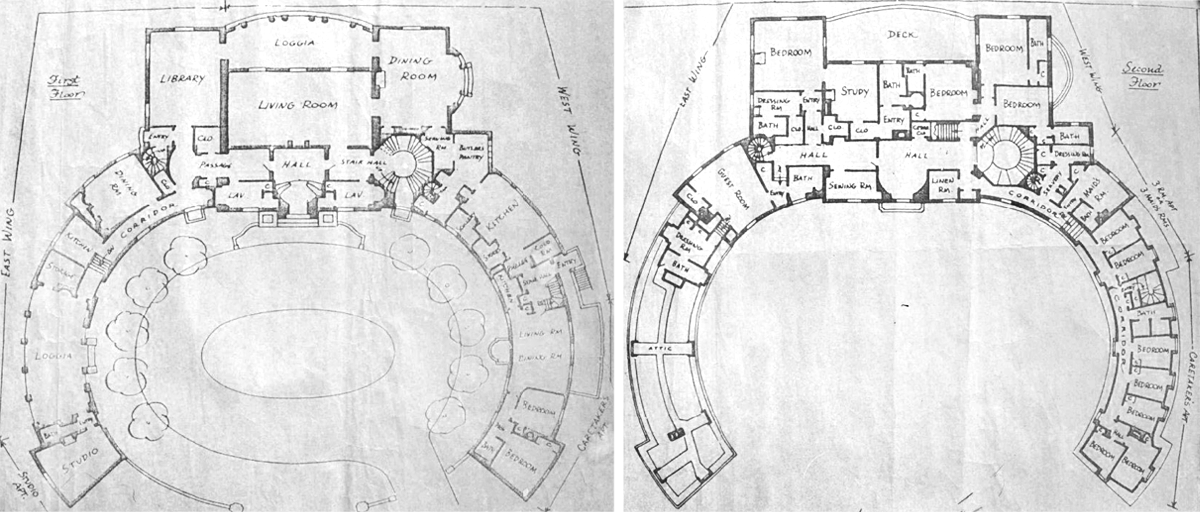
Seafair Original Floor Plans (Ground Floor & Second Floor)
In recent years, Seafair has largely been converted back into a single-family residence and is now owned by entertainer and car enthusiast Jay Leno and his wife. Throughout Newport, many of the grand houses that were carved up into smaller apartments and condominiums are now being purchased by a new generation of economic elites and converted back into single-family private residences. The estate today encompasses 15,851 square feet on a nine-acre plot, with a grand dining room, a formal entry hall with a dramatic spiral staircase, a ballroom, a chef’s kitchen, a paneled library, and eleven full bathrooms.
Nearly ninety years after the storm, the house’s nickname endures and Seafair remains Newport’s “Hurricane Hut.” It is a house that stared down the Atlantic’s fury and refused to yield and has now returned to its former glamor and glory, as beautiful as it ever was. Would that we could all look so good at ninety years of age!
A4 Architecture has been pleased to assist many of the owners of Ocean Avenue residences in guiding their home’s renovations. If you have a New England building project in mid where quality and fine design are critical, please reach out to the award-winning professionals at A4 Architecture to assist you in realizing your architectural dream. We look forward to hearing from you.
Ross Cann, RA, AIA, LEED AP, is an author, historian, and is the founding Principal of A4 Architecture located in Newport, RI. He holds honor degrees in Architecture and Architectural History from Yale, Cambridge, and Columbia Universities and has taught architectural history in a variety of settings for nearly thirty years.