

Newport Life Cover Article (2019)
The Invisible Premium: Magazine Publication Builds Lasting Property Value
In the hierarchy of luxury real estate marketing, a full editorial spread in a prestigious publication is often regarded as the pinnacle of honor. But beyond the immediate attention a feature article generates, there is a compelling and frequently underestimated argument for the long-term financial impact of publication. When a property appears in the pages of an authoritative design or architecture magazine, it acquires something that no subsequent renovation or staging exercise can replicate: a documented history, a recognized aesthetic identity, and an institutional endorsement that functions, over time, much like a certificate of provenance might function for a piece of art.
Status as a Financial Asset
The real estate market is not always purely quantitative. Buyers at the upper end of the market do not make decisions purely on the basis of square footage, location, or comparable sales data. They respond to narrative, heritage, and cultural legitimacy. A home that has been featured in Architectural Digest, House & Garden, or a similarly respected publication has had its design credentials independently verified by an editorial authority. That verification becomes part of the property’s identity — not just for the listing cycle in which it occurs, but for every subsequent sale.
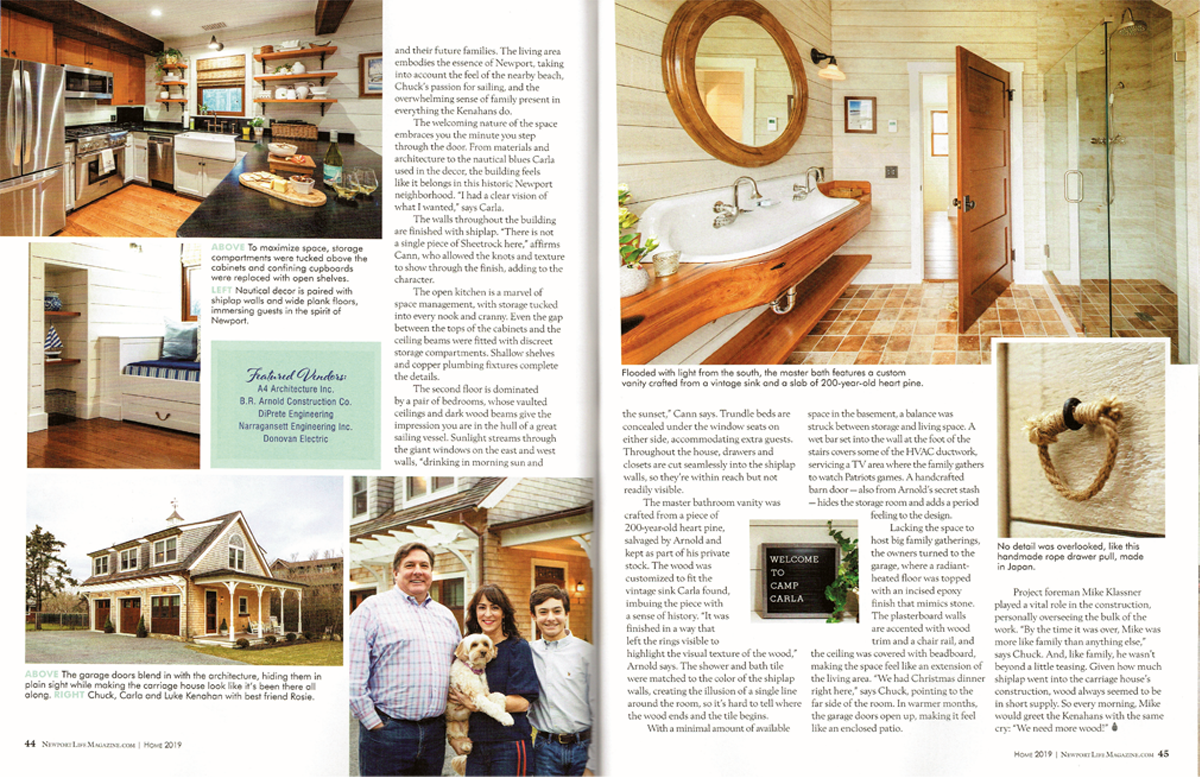
Newport Life Magazine (A4 Architecture Project)
This mirrors the well-established economics of historic designation. Multiple hedonic regression studies have found that properties carrying official recognition of historical or architectural significance sell at meaningful premiums. For instance, research on Chicago home sales demonstrated that landmark buildings command a small but consistent price premium over comparable non-designated properties. A study of Denver’s housing market found that historic district designation generates a 12–23% increase in transaction prices. In San Diego, historic designation through the Mills Act was associated with approximately a 16% uplift in residential values. The underlying mechanism is the same in each case: the status conferred by an external authority reduces buyer uncertainty, signals quality, and creates a form of scarcity that the market rewards.
Editorial publication in a respected magazine operates through an analogous channel. While it does not carry the legal weight of a heritage listing, it functions as a form of cultural endorsement — one that is archived, digitized, and increasingly searchable in an era when buyers and their agents conduct extensive pre-purchase research.
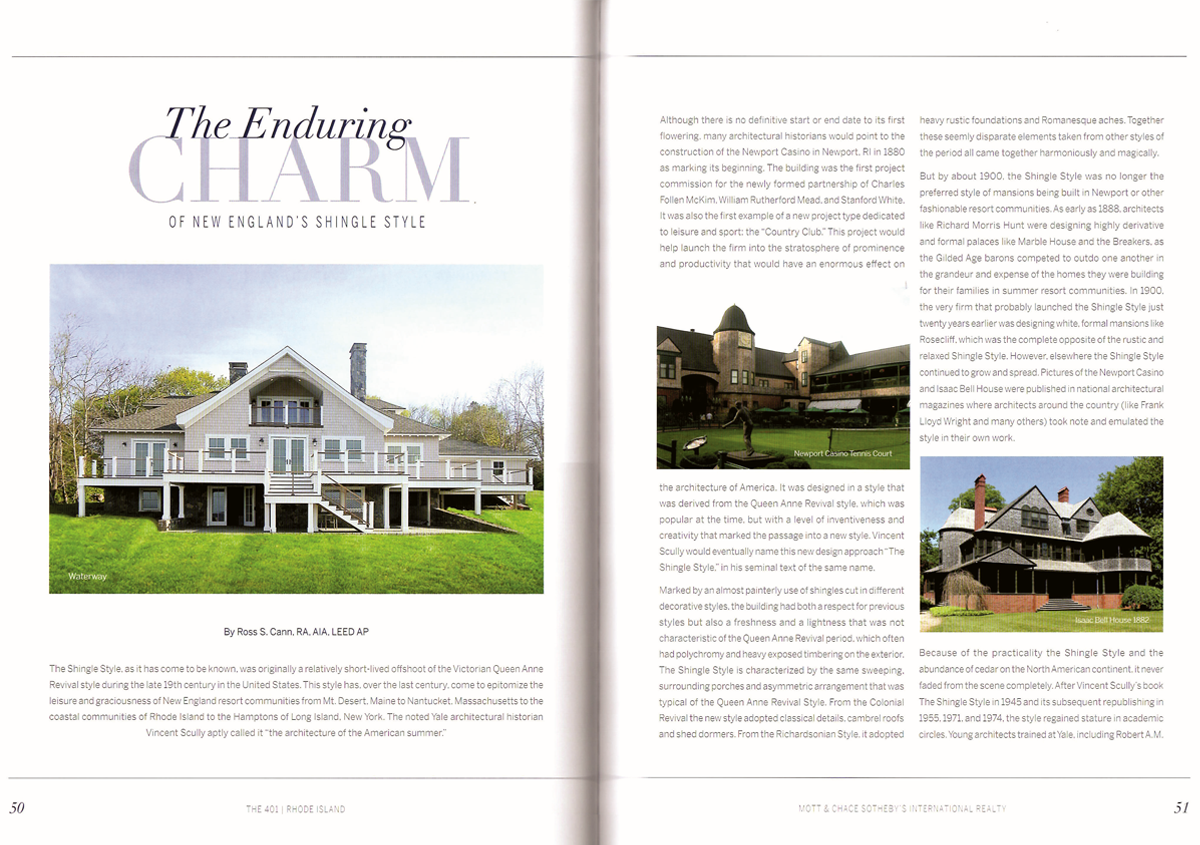
The 401 (A4 Architecture Projects)
The Provenance Effect
In the art market, provenance — the documented ownership and exhibition history of a work — is a primary driver of value. A painting with a traceable history of distinguished ownership commands a premium over an equivalent work whose history is unknown. Real estate is beginning to absorb a version of this logic, particularly in the premium and super-prime segments of the markets where the intangible qualities of a property can be as important as its physical attributes.
Academic research on media and property markets supports this connection. Studies examining the relationship between media sentiment and housing prices — including a 2026 analysis published in Real Estate Economics — have demonstrated that media attention has measurable predictive power over property price movements. A paper by Walker (2014) on the UK housing market found a positive relationship between the sentiment expressed in newspaper coverage and subsequent house prices. At the individual property level, editorial features in design publications function as concentrated, highly positive media events: they present the home at its most considered and aspirational, in a context chosen for its audience of affluent, aesthetically engaged readers.
Long-Term Compounding Benefits
The financial value of a magazine feature does not depreciate in the way that a marketing campaign does. It endures in archives, in online databases, and in the institutional memory of interior design and real estate communities. When a property returns to market years or even decades after its original feature, the coverage can be surfaced by a seller’s agent as part of the property’s documented history — a selling narrative that transforms the listing from a transaction into an acquisition of something with a verified pedigree.
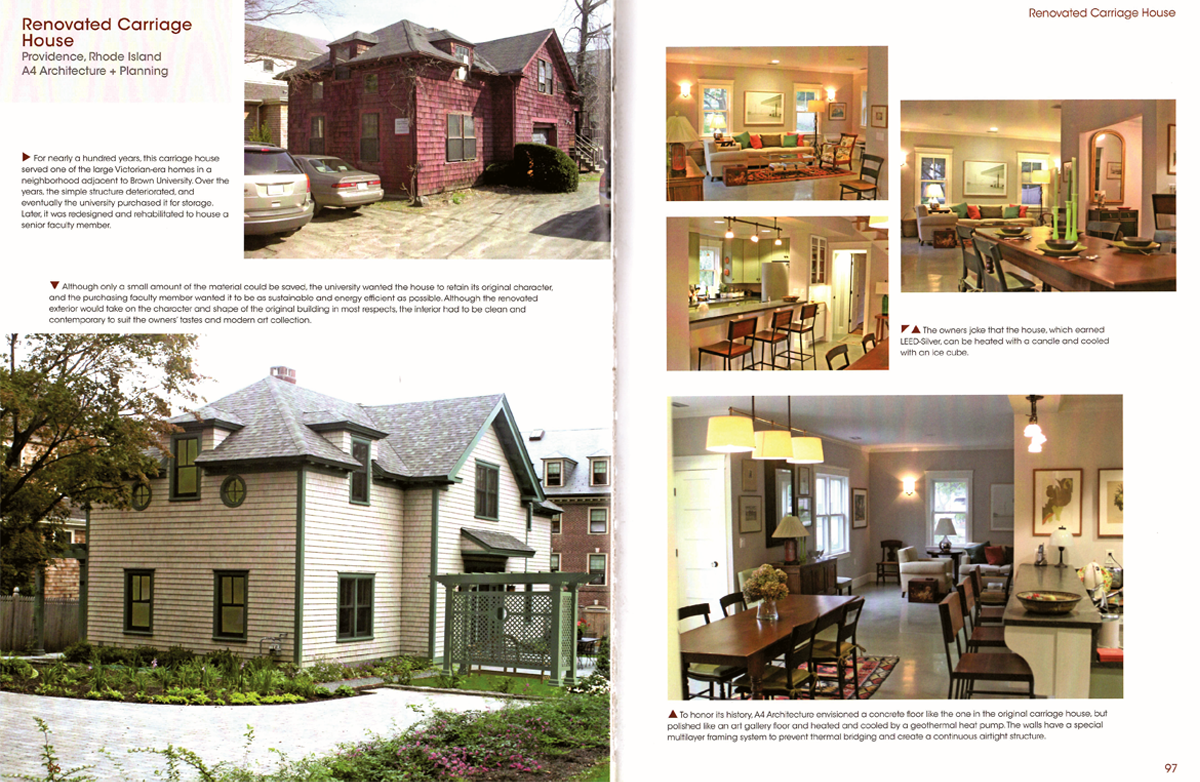
LEEDing the way, 2009 (A4 Architecture Project)
This is particularly true in markets where buyers are drawn from an international pool with limited local knowledge. For a purchaser unfamiliar with a neighborhood or region, evidence that a credible editorial institution considered the property worthy of a feature functions as a powerful and independent form of due diligence. It signals not only aesthetic quality but also a history of careful stewardship.
The long-term financial case for investing in editorial publication is, therefore, not simply a marketing argument. It is a value-creation argument. In a market where status and history are increasingly priced into transactions, a magazine feature may be one of the most enduring additions to a property’s financial profile that an owner can achieve.
A4 Architecture has been fortunate in having many of its projects published in various architectural magazines over the years. If you are interested in having the beauty of your project celebrated (and reap the financial reward that comes with that publication, please feel free to reach out to the award-winning team at A4 Architecture and we will do our best so see that you achieve that goal. While the competition to get a project published is high, the financial benefit for success is higher still.
Ross Cann has been a licensed architect since 1993. He holds honors degrees in Architecture and History from Yale, Cambridge, and Columbia Universities and is a LEED Accredited Professional and is Founding Principal of A4 Architecture in Newport, Rhode Island.