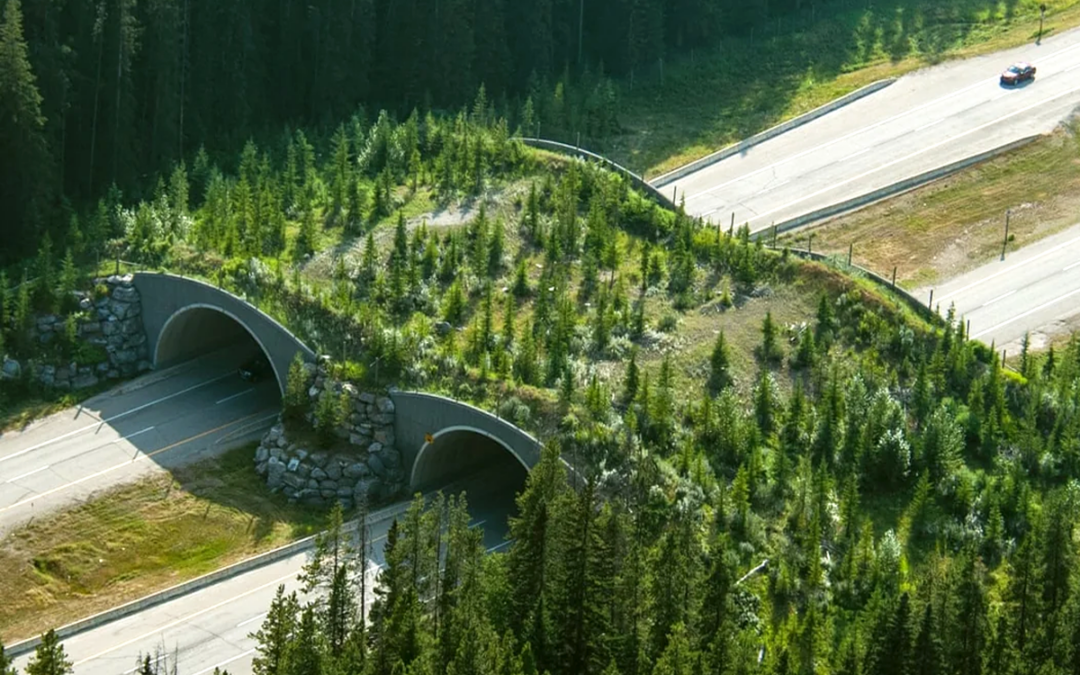
Banff National Park Wildlife Overpass, Canada (2006)
Architecture has two components: the building and the setting. As responsible citizens, A4 Architecture and the Newport Architectural Forum are both strong supporters of initiatives that lead to greater sustainability. This can happen both at the local level, site by site and project to project, but also at much larger scale as well.
From the jagged peaks of the Tetons to the windswept tundra of the Yukon, the Yellowstone to Yukon (Y2Y) Conservation Initiative represents one of the most ambitious ecological visions on the planet. Spanning 3,400 kilometers (2,100 miles) across two nations, five states, and two territories, Y2Y isn’t just about drawing lines on a map; it is about ensuring that the mountainous “spine of the continent” remains a functional, connected landscape where grizzly bears, wolves, and mountain caribou can roam just as they have for the many millennia before humans came to occupy North America. This is a thirty-year effort to build more than 200 bridges over (and tunnels under) roadways and railways. This not only has the potential to reduce wildlife fatalities along these routes by 90% but also reduce the number of human fatalities due to collisions and save billions of dollars over time for emergency response and vehicle damage.
Empowering the Local: The Project Wild Connection
A vision this vast requires more than just high-level policy; it thrives on “boots-on-the-ground” action. This is where the Project Wild community funding program enters the frame. While often recognized for its world-class environmental education, the program has evolved to become a vital catalyst for community-led conservation. By providing “seed money” and technical support to local projects, Project Wild empowers small mountain towns and regional advocates to secure the very corridors that make the larger Y2Y network possible. Whether it’s restoring a riparian area or funding a local “wildlife-friendly” fencing initiative, this community-centric funding ensures that the people living alongside these animals can be global active partners in their protection.
The Bottom Line: Why Wildlife Connectivity is Cost-Effective
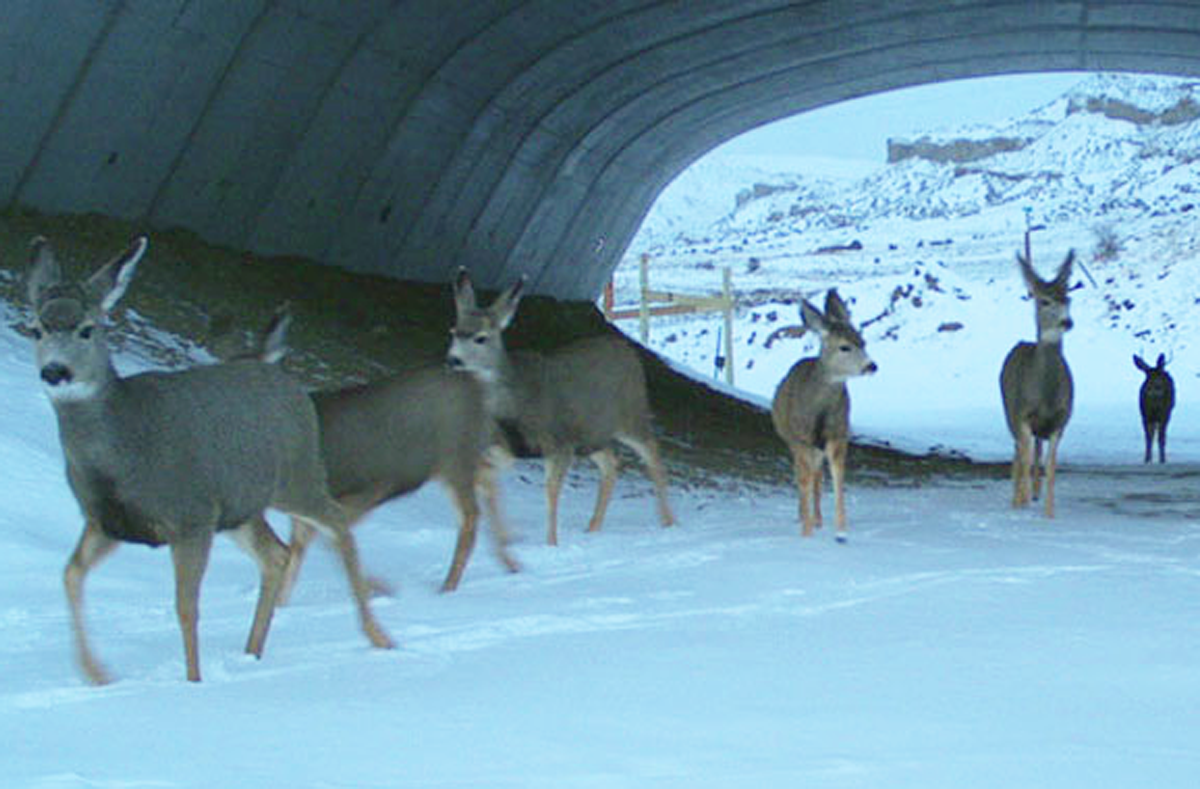
Highway 9 Underpass, Colorado
Critics sometimes eye the price tag of wildlife infrastructure—like the majestic overpasses in Banff or the new 2026 crossings near Rock Creek—with skepticism. However, the economic reality is clear: wildlife corridors are a bargain.
- They reduce Collision Costs: Wildlife-vehicle collisions cost the U.S. and Canada an estimated $8 billion annually in vehicle damage, healthcare, and lost resources.
- They provide Rapid ROI: Strategic crossing structures can reduce collisions by up to 96%. On high-risk highway segments, these projects often pay for themselves within 10 years.
- They create Jobs: Connectivity projects stimulate local economies by hiring regional contractors and supporting the multi-billion-dollar outdoor recreation industry that relies on healthy wildlife populations.
Long-Term Effectiveness: Beyond the Bridges and Tunnels
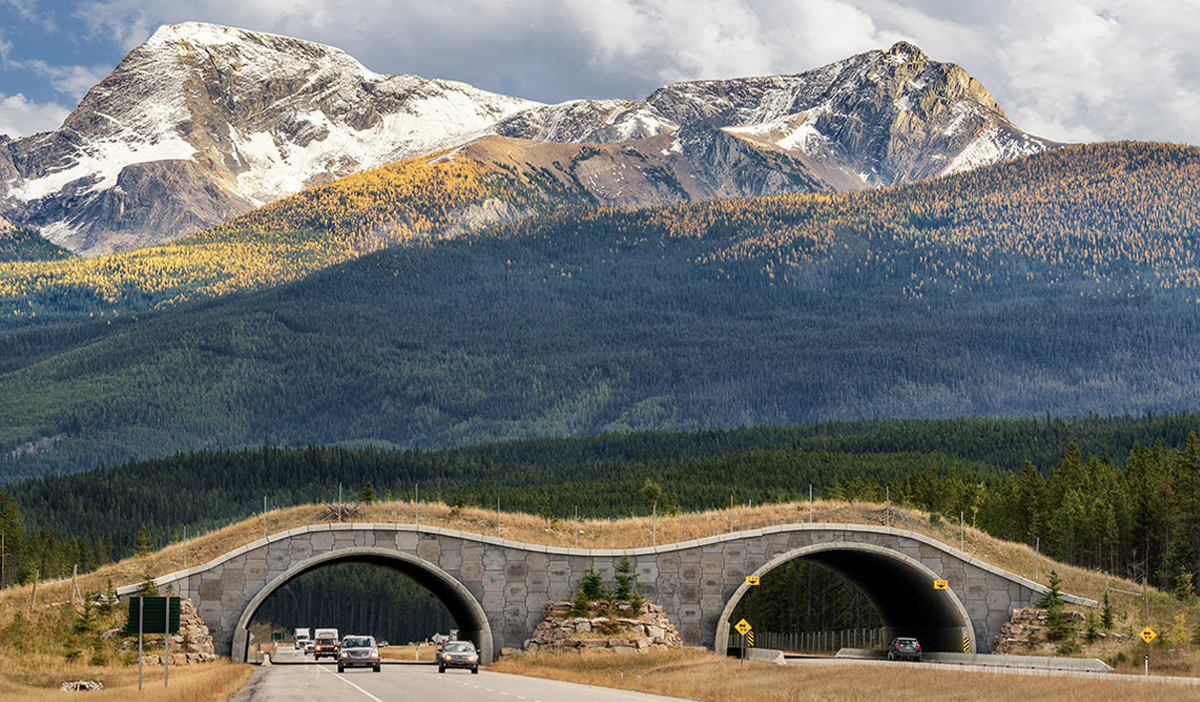
Wildlife Crossing Banff, Alberta Colorado
The true genius of Y2Y lies in its long-term biological “insurance policy.” In an era of shifting climates, species must move to survive. By maintaining a north-south thoroughfare, Y2Y allows animals to adapt their ranges as temperatures rise. Furthermore, connectivity prevents “genetic islands”—isolated populations that suffer from inbreeding. By keeping the gene pool flowing from Yellowstone to the Yukon, we ensure that these iconic species possess the genetic diversity needed to weather future environmental challenges.
Ultimately, the Y2Y project, bolstered by community-focused initiatives like Project Wild, proves that conservation isn’t an expense—it’s an investment in a resilient, wild, and economically sound future for the Rocky Mountains. Through Project Wild, A4 Architecture and the Newport Architectural Forum have been able to make modest contributions to the Y2Y project and help assure that humans and animals can live more compatible in the future. This amazing and cost-effective project can also inspire similar projects at a more local and modest scale.
A4 Architecture has been committed to developing sustainable architecture and site design for its projects since its founding in 2004. If you have a New England building project where quality, fine design, and sustainability are important, please reach out to the award-winning professionals at A4 Architecture to assist you in realizing your architectural dreams. We look forward to hearing from you.
Ross Cann, RA, AIA, LEED AP, is an author, historian, and is the founding Principal of A4 Architecture located in Newport, RI. He holds honor degrees in Architecture and Architectural History from Yale, Cambridge, and Columbia Universities and has taught architectural history in a variety of settings for nearly thirty years.