
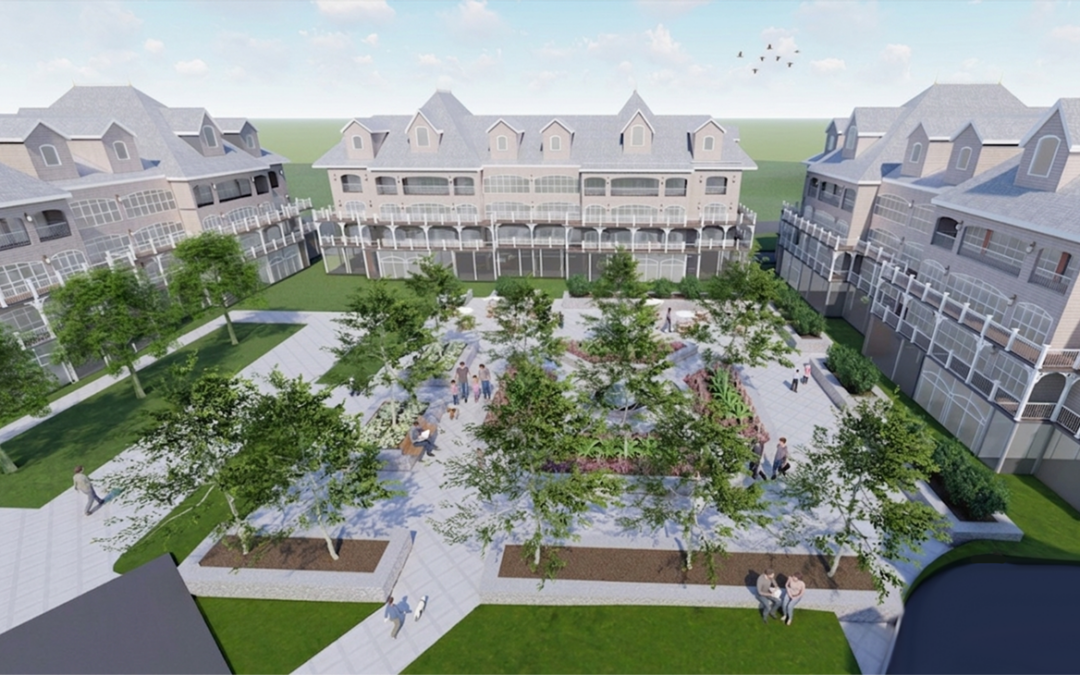
Multifamily Project (Designed by A4 Architecture)
Rhode Island has earned a very unwelcome distinction: it is the worst state in the nation in terms of housing production per capita. Over the last decade, it has had the lowest rate of total housing permits issued per 1,000 residents in the country. The consequences of this situation are severe and widening. In 2023, the median value of single-family homes increased by 15.1%, which was the greatest increase of any country. Meanwhile, one-third of all Rhode Island residents are struggling to afford housing, and the state has the second-highest growth rate among unsheltered families and individuals in the nation. (Boston Globe)
Multi-family housing, which is the dense, efficient housing type best suited to a small, urbanized state, has fared especially poorly. Building permits for multifamily homes have declined 66.9% since 2018. (Rhode Island Current) Only about 800 multi-family units were built between 2011 and 2023, while more than 55,000 smaller units like studios and one-bedrooms are needed to match demand. (The Boston Globe) In attractive cities like Newport, many condominiums and apartments are being recombined into larger units or even single-family mansions, making the challenge of creating additional housing units that much harder.
The Zoning Stranglehold
At the heart of Rhode Island’s housing paralysis is its fragmented, municipality-driven land use system. The state has 39 cities and towns, each with its own zoning codes, permitting offices, and planning boards — a remarkable level of local control for a state smaller than many American counties. Local officials wield zoning laws to either block or delay projects, sometimes for years, and neighborhoods push back ferociously against new development — a phenomenon known as NIMBYism (short for “Not In My Back Yard”). One developer described neighbors fighting projects “fanatically tooth and nail.” (WPRI) The local councils are elected by the people who live in the community and are fearful of change and the new units are being built by developers for people who are not yet part of the community, and so they have little to no electoral voice.

A4 Architecture Renovation of a lower end apartment into a luxury condominium
The opposition takes institutional form as well. For instance, Tiverton recently passed a six-month moratorium on the approval of multifamily homes, and Narragansett passed a series of land-use changes specifically designed to preempt modest reforms passed by the state legislature. (RI Current) In more rural areas, officials argue that new housing units would strain schools and infrastructure and that statewide mandates ignore the unique character of each community.
The Cost Problem
Even developers who navigate the zoning gauntlet face brutal economics. Regulatory fees for zoning, engineering, and permits can reach $90,000 per property — before a single nail is driven. Construction costs, labor shortages, and high interest rates compound the challenge. The number of private building permits issued per year has declined from over 5,000 annually in the late 1980s to under 1,000 today— a decades-long collapse that has left the state with an aging housing stock and little means to replace it. (GoLocalProv)
State-Level Efforts

A4 Architecture Renovation Expansion of a Multi Unit Development
Rhode Island has not been entirely passive. House Speaker Joe Shekarchi has championed nearly 50 housing bills into law over the last four years, and the state has invested substantially in housing programs. State leaders have allocated more than $300 million for housing programs in recent years. (WPRI) A new state Department of Housing was created in 2022, and the “Housing 2030” plan sets a goal of 15,000 total new homes permitted by 2030, which is nearly double the current pace.
There are modest signs of progress. The Housing Department’s annual report found 2,655 new housing units were permitted in 2024, an increase of 86% since 2022. (WPRI) But critics note that permits and completed units are very different things, and the structural barriers remain deeply entrenched.
The Accessory Dwelling Unit Test Case
The state’s struggle to build Accessory Dwelling Units (ADUs) — small secondary apartments on existing properties — illustrates how difficult even modest reforms are to implement. Despite a streamlined statewide approval process, only 82 certificates of occupancy for ADUs were issued across all of Rhode Island in 2025. By contrast, Massachusetts has permitted or approved more than 1,200 ADUs across their communities since implementing similar legislation.
Rhode Island’s housing crisis is ultimately a story of accumulated choices: decades of decisions by local officials, state legislators, and residents to prioritize neighborhood preservation over housing access. Reversing this long-term trend requires not just new laws, but a genuine cultural shift in how the citizens of the Ocean State think about growth. With rents still surging and homelessness rising, the cost of inaction grows harder to ignore and the importance of building more housing will continue to be ever more critical.

A4 Architecture is partnering with high-quality developers of multi-family housing to use clever and efficient design approaches to help create new housing units for families and individuals that are desperately needed. We look forward to working with more like-minded people and companies that want to address this critical market segment by building new housing for the community while keeping the design and construction quality of these new units high.
Ross Sinclair Cann, AIA is a historian, educator and practicing architect. He is the Founding Principal of A4 Architecture in Newport, Rhode Island and holds architecture degrees from Yale, Cambridge, and Columbia Universities. A4 Architecture is working to create high-quality, multi-family developments through Rhode Island and the surrounding states.